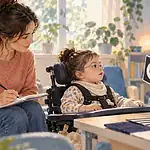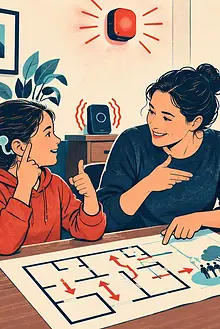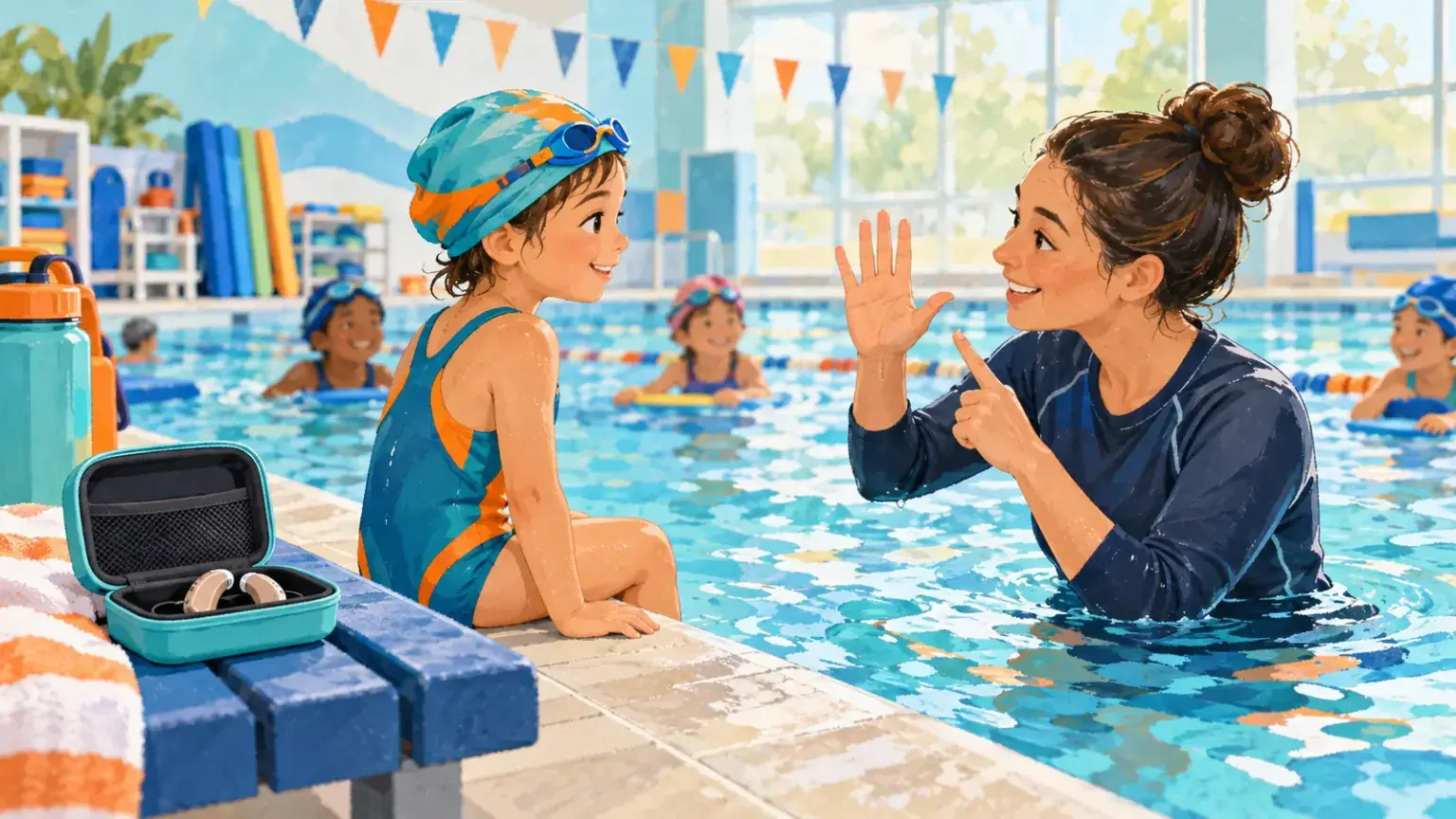
Sport should begin with the child’s interest, not a list of restrictions. Deaf and hard-of-hearing children take part in swimming, football, athletics, dance, cycling, martial arts, and many other activities. The practical work is to make instructions, start and stop signals, safety information, and team talk accessible in that particular setting.
Walk through the activity before the first session
Meet the coach when the space is quiet. Explain the child’s preferred communication and ask the child what they want shared. Walk from arrival through changing, warm-up, instruction, play, breaks, and collection. Identify moments that depend on sound: a whistle, shouted direction, lane call, fire alarm, or announcement from behind.
Replace each sound-only cue with an agreed visual or tactile option. Examples include a raised hand, flag, light, clear gesture, demonstration, scoreboard cue, or a buddy who gets the child’s attention. The child should know who to look toward, and the whole group can use the same signals so access does not single anyone out.
Make coaching communication visible
- Gain attention before explaining; do not speak while walking away.
- Face the child, keep hands and equipment away from the mouth, and avoid strong backlighting.
- Demonstrate the movement, then let the child try it.
- Give one or two steps at a time and check the plan, not just “Did you hear?”
- Use captions or written diagrams for longer tactical explanations.
- Repeat questions and teammate comments during a huddle.
In a pool, the child may not use hearing technology and faces are harder to see through spray and distance. Agree on poolside signals before entering the water. The coach should make eye contact, demonstrate from a visible position, and confirm understanding before the child pushes off.
Handle hearing devices by exact instructions
Water resistance is not the same as waterproofing, and device models differ. Check the manufacturer’s current guidance and ask the audiology or implant team about swimming, sweat, impact, retention accessories, helmets, and waterproof kits. Do not copy another family’s routine.
If a device comes off, place it in a labelled dry protective case under the agreed adult’s control. Do not leave small batteries or parts where young children can reach them. If the device stays on for a sport, use only compatible retention or protective equipment and make sure it does not compromise a required helmet. Support Hearing Technology Without Losing Communication provides a broader daily-care approach.
Plan safety without excluding participation
The coach still follows the sport’s ordinary safeguarding, supervision, head-protection, water-safety, and medical rules. Add communication access to those rules. Confirm how the child will know play has stopped, how they can call for help, and who performs a visual check during transitions.
A buddy system can help in a busy environment, but the buddy must not become an unpaid interpreter or be responsible for rescue. Adult staff retain responsibility. If the child has a medical condition affecting balance or has been advised to limit specific impacts, follow guidance from the child’s qualified clinical team.
Give the child repair and advocacy tools
Practise phrases or signs such as “Show me again,” “What was the whistle for?” “I need the coach facing me,” and “My device is off now.” A younger child might use an agreed hand signal. Let the child decide whether they want the team to learn a few useful signs.
Include the child in decisions about device use, changing-room privacy, communication with teammates, and competitions. A plan imposed without them may look safe on paper and fail in practice. Help Your Child Make Real Choices Without Taking Over includes broadly useful supported-decision principles.
Review after real participation
After two or three sessions, ask what the child missed, what felt easy, and what would make the activity more fun. Ask the coach what instructions were hardest to make visible. Adjust the plan, and record the successful signals so substitute staff can use them.
The right question is not whether deaf children can play a sport. It is what this child needs to receive information, protect their technology when relevant, and participate as a full teammate.