By EdCaptain editorial desk · Published
Research-based review · Overall editorial rating: 3.9 out of 5
Verdict: Rummikub is worth considering when a family wants a shared tabletop puzzle with genuine individual choices. For children aged 8+ who enjoy numbers and spotting patterns, the interesting question is not simply “Can I make a run?” but “Can I rearrange what is already here?” The trade-off is waiting: an unlucky opening rack can leave a child drawing tiles while others begin building.
This review assesses published rules and the physical Pressman Original set. It does not report hands-on testing. Family fit, predicted engagement and the scores below are editorial judgments about the mechanics; durability and actual child responses have not been tested. Read our review methodology and editorial policy.
Quick facts
Edition: Pressman Rummikub, The Original Rummy Tile Game, standard physical 1-pack, Amazon US ASIN B00000IZJB. This review excludes travel, six-player, children’s and digital versions.
Age and players: the linked US set specifies ages 8+ and 2–4 players. Our recommendations cover ages 8–18: supported learning at 8–9, increasingly independent rearrangement at 10–12, and more deliberate planning for interested teenagers at 13–18. Some international rules say 7 to adult; retain the stricter 8+ minimum for this US edition.
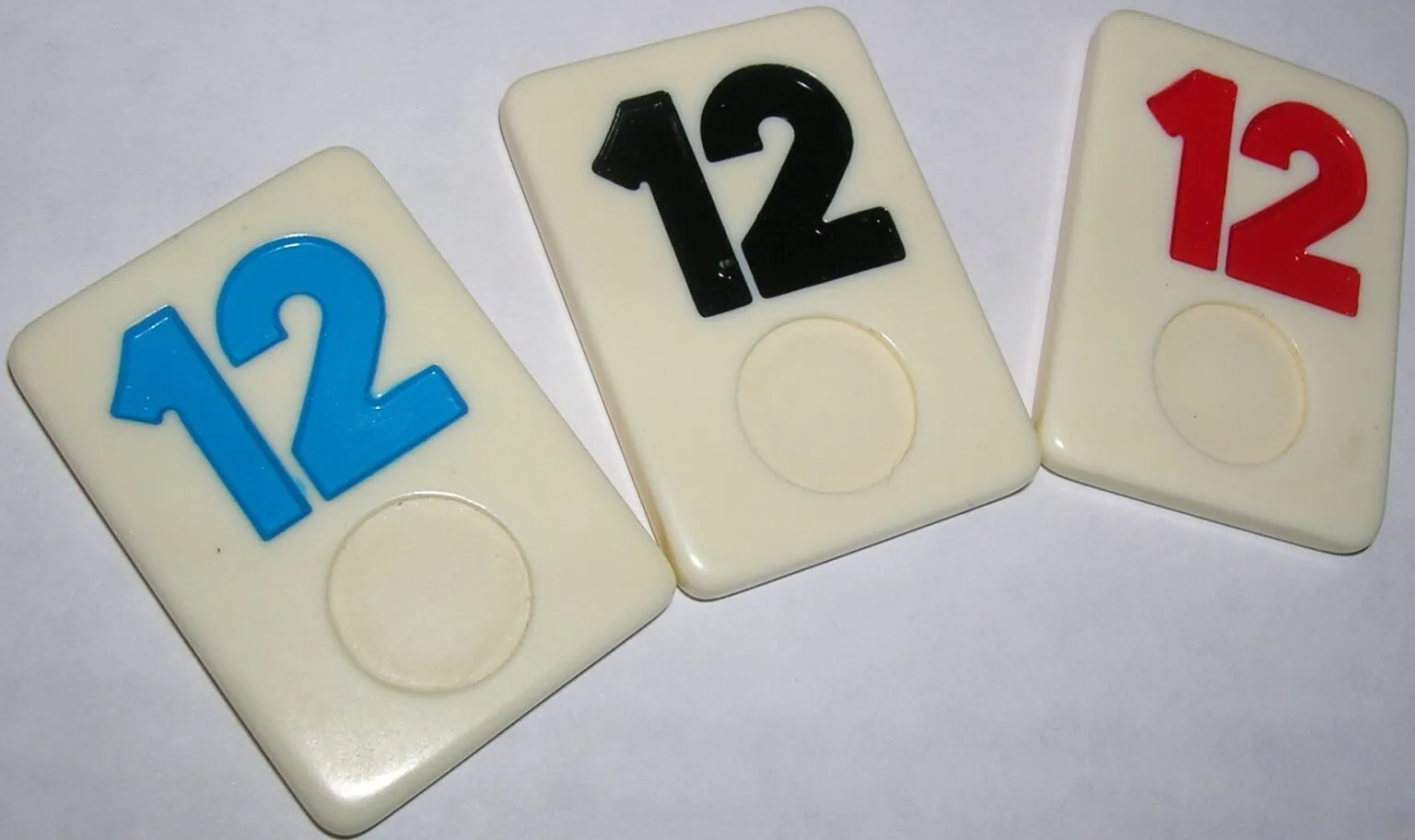
Contents: 106 plastic tiles, including two jokers, four racks and instructions. Number tiles run from 1–13 in four colours. All play happens with tangible pieces; no app, screen, account or battery is required.
Time: allow about 30–45 minutes for a first game including explanation, an editorial planning estimate rather than a verified manufacturer duration. Draws and thinking time can make a game longer.
Warning: the US listing carries a small-parts choking warning and excludes children under 3. The recommended playing age remains 8+. Keep loose tiles away from younger siblings and follow the warnings supplied with the set. See our health and safety information.
How the game works
Each player starts with 14 tiles on a private rack. Make groups of three or four equal numbers in different colours, or runs of at least three consecutive numbers in one colour. The opening play must total at least 30 using your own tiles. After opening, you can add to or rearrange shared sets, leaving every set legal. If you do not play, draw a tile and end your turn. Empty your rack first to win. A 1 cannot follow a 13.
Jokers can stand for missing tiles. Retrieval and reuse have specific conditions, so teach these from the supplied rulebook rather than treating a joker as a freely movable spare. For a first session, agree to play one game rather than a scored series.
That shared layout is the main attraction. You might be holding a tile that appears useless until someone changes a run. A child can watch a new possibility emerge without needing to attack another player directly. However, a long rearrangement can be difficult for everyone else to follow.
Who it suits, and who might skip it
Consider it for number-pattern fans who prefer thoughtful turns over quick reactions. There is no running text to read during a turn. Explain the rules in Hindi, English or another home language; a grandparent and child can discuss the same visible layout without needing trivia knowledge.
At ages 8–9, an adult may need to help check the opening total and distinguish a group from a run. At 10–12, invite the child to find two possible uses for a tile before choosing. Teenagers aged 13–18 may enjoy keeping options open and spotting opportunities after an opponent changes the table. These are suggestions for participation, not developmental promises.
Skip it if the family needs a reliably ten-minute game, a cooperative result or play without colour discrimination. Number recognition alone is not enough: groups depend on different colours and runs on matching colours. A busy table can also be demanding for someone with low vision or difficulty tracking several sets. Small tiles and private racks add handling and reach barriers.
Editorial ratings
Scale: 1 = poor fit, 3 = workable with trade-offs, 5 = excellent fit for the stated audience. These scores assess interested number-pattern players aged 8–18 in family play. They are research-based predictions, not customer ratings or measured learning outcomes.
| Indicator | Score / 5 | Reason |
|---|---|---|
| Age fit | 4 | The 8+ US minimum is appropriate to this recommendation; younger eligible players may need help with the opening total. |
| Ease of learning and setup | 3 | Groups are straightforward, but the opening threshold, rearrangements and joker rules need careful teaching. |
| Child engagement | 4 | A changing shared puzzle could keep pattern fans interested; waiting to open may feel slow. Engagement has not been observed. |
| Replay value | 5 | Different racks and shared layouts create fresh decisions without a finite pack of puzzles. |
| Opportunities to practise skills | 4 | Play invites sequencing, addition and checking alternatives; transfer to school achievement is not established here. |
| Quality of family interaction | 4 | Players can discuss visible possibilities, provided an experienced adult does not take over another person’s choices. |
| Accessibility and adaptability | 3 | No reading or speed race is essential, but colour, visual tracking and tile handling remain substantial demands. |
| Value for money | 4 | A dedicated set could earn regular use across generations; borrowing is a better first step if number puzzles rarely appeal. |
Calculation: (4 + 3 + 4 + 5 + 4 + 4 + 3 + 4) ÷ 8 = 3.875, rounded to 3.9 out of 5.
How to play it meaningfully
A realistic first round: start with two players at a clear, well-lit table. Before dealing, show a red 4–5–6 run and a three-colour group of 9s, then return the demonstration tiles to the pool. Explain that the first play needs 30 points. Deal normally, keep racks private and leave time for questions. Avoid introducing scorekeeping across several games on the same day.
Two useful adult responses: ask, “Is that a same-number group or a same-colour run?” Then offer, “Would you like a hint, or would you like me to wait?” Give help only after the child chooses. A slower decision is still the child’s decision.
Easier house variation, still ages 8+: play one open-rack teaching game and agree to waive the opening 30-point threshold. Keep the group and run rules. This removes one source of waiting but changes the official game, so name the change before starting.
Harder play or an access adjustment: interested older players can explain two possible rearrangements before selecting one in a practice game. Do not add a timer to make it harder. A partner can place tiles exactly where a player directs, confirming each movement; that preserves decisions while helping with reach or grip. Use even lighting, and let a player request colour descriptions without revealing anyone’s private rack.
If frustration builds: say, “You have drawn several times without a play; that can feel disappointing.” Offer a hint, an agreed pause with racks left in place, or an end to the game. Do not turn drawing an unhelpful tile into a lesson the child must endure. Adults can model checking a failed arrangement and calmly restoring it.
Try before buying
Borrow or swap a complete standard set and count the 106 tiles, including both jokers, before returning it. A family that enjoys card rummy may already own a satisfying alternative; the reason to choose Rummikub is the shared, rearrangeable tile layout rather than simply practising numbers.
For a no-buy taste of sorting, write numbers 1–13 in four labelled suits on scrap-paper cards and find runs and groups together. This is a separate pattern activity, not the full commercial game. If taking turns is the difficult part, EdCaptain’s mixed-age board-game trial offers a practical way to check whether each player has meaningful choices.
Check this edition on Amazon US
As an Amazon Associate I earn from qualifying purchases.
Check this edition on Amazon US: Pressman Rummikub, The Original Rummy Tile Game, physical standard 1-pack (ASIN B00000IZJB). This is the US marketplace. Confirm the selected set and contents before ordering; borrowing or a local purchase may suit families outside the US better.
Sources and edition notes
Checked 11 November 2026. Product facts come from the sources below; assessments of family fit and the proposed house variations are editorial inferences. The photo documents earlier equivalent numbered tiles, not the current box, racks or tested product quality.
Rummikub: official English rules supports setup, sets, opening play, rearrangements and joker conditions. Its international age label differs from the linked US set. Rummikub: Classic product information confirms the standard tile format. Amazon US: exact Pressman edition provides the edition-specific age, player count, components and warnings; no customer reviews inform this assessment. Linuxerist: original photograph and rights record documents the image and public-domain release.
Report an error or suggest an improvement
Was this useful?