By EdCaptain editorial desk · Published
Research-based review · Overall editorial score: 3.9 out of 5
Verdict: Classic Bananagrams is worth considering for a child who enjoys making words but dislikes waiting for a turn. Everyone builds at once, and an awkward group of letters can become a completely different grid. Its biggest family trade-off is the same feature that gives it energy: a confident adult can keep adding pressure while a less fluent child is still finding a first word.
This is an assessment of published rules and product information, without hands-on testing. Likely engagement, family fit and ratings are editorial inferences from the mechanics. We have not tested the tiles, durability or children’s responses. See our review methodology and editorial policy.
Quick facts
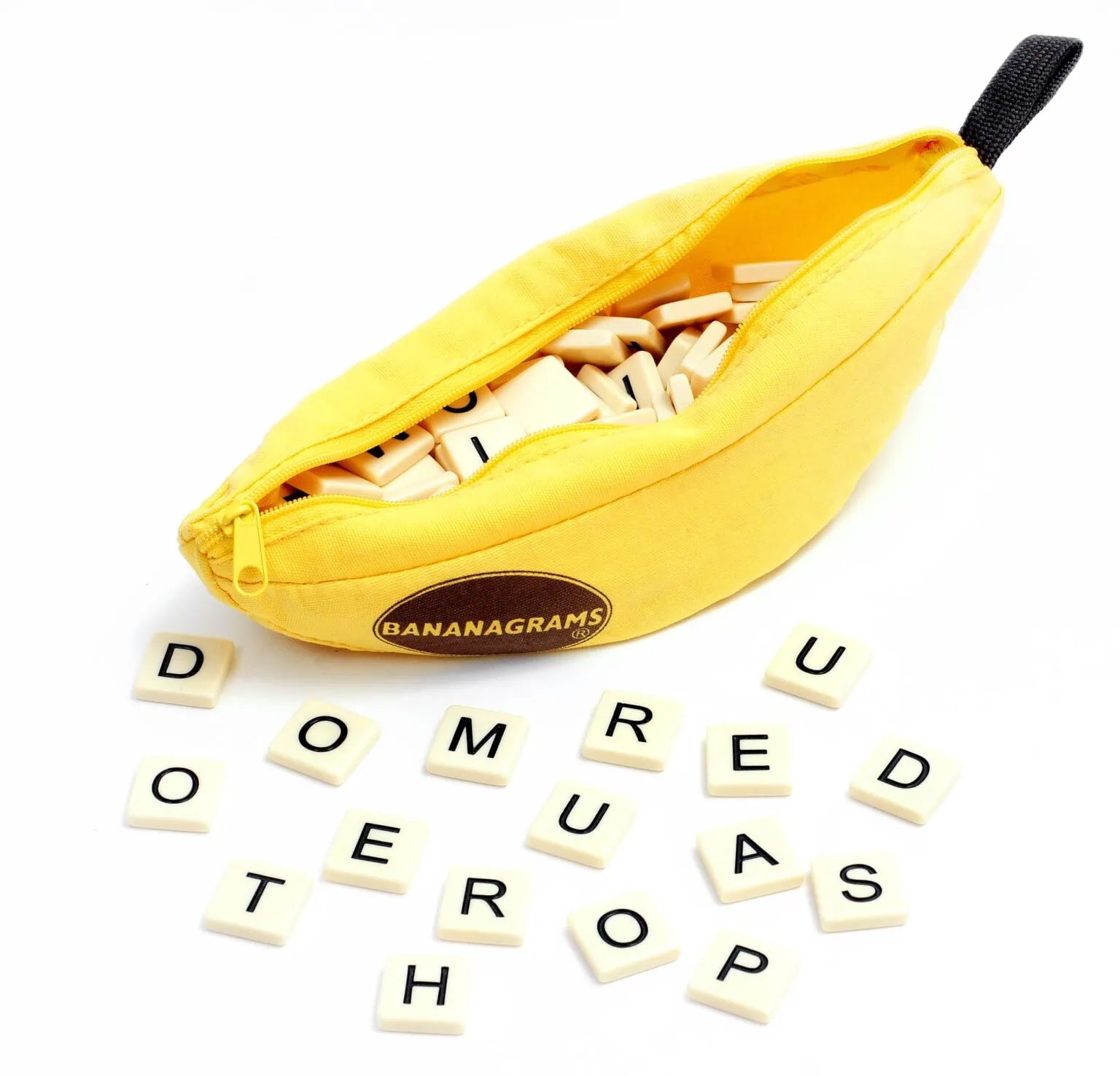
Edition: Classic English-language Bananagrams, the physical 144-letter-tile set in a yellow zipper pouch with instructions. The Amazon US listing identifies manufacturer Bananagrams, model 1295 Banagrams, ASIN 1932188126. Moose Toys now lists the Classic game; this review excludes My First, Double, Big Letter, Wild Tiles and digital versions.
Age: Manufacturer minimum 7+. Our recommendation covers ages 7–18 who can form and read English words independently, plus adults. For ages 7–9, start with an untimed practice; older children and teens may prefer the full race. Players: 2–8 competitively; an official solo mode is included. Time: Asmodee USA estimates 30 minutes; allow extra for teaching. All gameplay uses physical tiles, with no screen or app required.
Space and safety: The pouch is portable, but each player needs room for a growing grid on a stable table. The Amazon listing warns of small parts, unsuitable for under-threes. Follow the 7+ age guidance, keep tiles away from younger siblings, and pack them away after play. CPSC toy-safety guidance supports following age labels and keeping small parts away from under-threes. See also our health and safety information.
How the game works
Shuffle the tiles facedown into a shared pool. Each player takes 21 tiles with 2–4 players, 15 with 5–6, or 11 with 7–8. Everyone starts together and builds their own connected crossword grid. You may rebuild it whenever you like.
Using your last loose tile triggers a “peel”: everyone draws one more. You can exchange one unwanted tile for three, without affecting others. When fewer tiles remain in the pool than there are players, the first person to use all their letters calls the finish. The others check that grid; an invalid word eliminates that player from the hand and returns their tiles to the pool. The official rules PDF explains word restrictions and variants.
Who it suits, and who might skip it
Try it when a child likes experimenting with spelling and wants independent choices beside other people. A teenager can play solo while a parent prepares dinner, or similarly fluent cousins can race after a family meal. It offers a different problem from choosing a high-scoring move on a shared word board: here, you keep redesigning your own solution.
Skip the competitive version if spelling already feels like a public test. A seven-year-old and an adult may understand exactly the same rules yet face very different challenges. In an Indian or multilingual household, English fluency should not be mistaken for general ability. You can explain play in Hindi or another home language, but the English tile distribution does not become a balanced set for another script or language. Agree on a print dictionary and spelling convention beforehand; avoid interrupting play to debate regional spellings.
This is also a weaker choice for a family seeking lots of shared storytelling or collaborative decisions. Playing simultaneously can mean heads down over separate grids. The small tiles may be difficult to see or pick up, and there is no basis here for claiming that the classic edition is accessible to every player.
Eight editorial ratings
Scale: 1 = poor fit, 3 = workable with trade-offs, 5 = excellent fit for the stated audience. These judgments concern independent spellers aged 7–18 and their families. Each indicator has equal weight; actual engagement and physical quality have not been tested.
| Indicator | Score out of 5 | Reason |
|---|---|---|
| Age fit | 4 | A good fit for independent spellers from age 7; the age label alone does not make a speed race fair. |
| Ease of learning and setup | 4 | No board or score sheet is needed, but everyone must remember when a peel affects the whole table. |
| Child engagement | 4 | Rebuilding a grid offers frequent choices; predicted appeal is strongest for children who enjoy word puzzles. |
| Replay value | 5 | Different letter draws and freely rearrangeable grids create many fresh problems, including solo play. |
| Opportunities to practise skills | 4 | Players can try spellings, spot shared letters and revise a plan; these are opportunities, not measured learning gains. |
| Quality of family interaction | 3 | Simultaneous play removes turn waiting but can leave little room for conversation or helping another player. |
| Accessibility and adaptability | 3 | Removing the race helps, but small print, tile handling and English spelling remain substantial demands. |
| Value for money | 4 | Potentially useful for repeated family and solo play; an existing letter set may already meet the same need. |
How to play it meaningfully
A realistic first round: For a child aged 7+ who already spells short words, put out a small selection of familiar letters and build one shared crossing, such as CAT with TEA through the T. Then each person tries a little grid without racing. Aim for about five minutes, an editorial estimate. This is a teaching adaptation, not a full official game. Ask whether the child wants to try the standard starting draw next.
Two adult moves: Ask, “Would you like a hint, or more thinking time?” Wait for the answer before touching a tile. Then model flexibility: “I can take my word apart and use that letter somewhere else.” Keep the focus on changing a plan rather than correcting every spelling aloud.
Easier: Use a house rule with no peel calls: each player works at their own pace with a small starting selection, and may ask for a letter swap. Call it practice and allow a print dictionary. Do not count this as a competitive win under the official rules.
Harder or more accessible: Confident older children and teens can try the official solitaire challenge of using 21 tiles in as few words as possible. For a player who finds handling difficult, a partner can move tiles exactly as directed. Use a plain contrasting mat, good light and no timer; check whether the letters are readable before buying. These adjustments preserve choices, but may not remove every barrier.
If a child gets frustrated: Say, “The race is getting too fast. Shall we pause, make one word together, or finish here?” Accept stopping. Do not turn the remaining letters into compulsory homework or make the child complete a losing grid.
Borrow first, or try a no-buy word puzzle
Borrow or swap a complete classic set before buying if your family rarely chooses spelling games. An existing set of letter tiles can be enough for untimed word building; check its own age label and small-parts warning. For ages 7+, another no-buy option is to write a familiar word on scrap paper, then challenge each other to make shorter words from its letters. This separate activity tests interest in rearranging letters without reproducing a complete Bananagrams set or requiring a purchase.
Check the physical edition
Classic English Bananagrams · Amazon US
Physical 144-tile set and banana pouch, ASIN 1932188126. Check that Classic remains selected, rather than another language or edition. This link goes to the United States marketplace; check seller and delivery terms for your location.
As an Amazon Associate I earn from qualifying purchases.
Check this edition on Amazon US (paid link).
Sources and review basis
Checked 12 November 2026: Moose Toys Classic product page for contents and physical format; Asmodee USA specifications for age, competitive player count and estimated time; the linked official rules for play and solitaire; and the linked Amazon US listing for exact Classic edition, ASIN and warning. The manufacturer and rules include solo play even though Asmodee’s specifications start at two players. Photo provenance and permission are linked in its caption. No Amazon customer reviews inform these scores.
Report an error or suggest an improvement
Was this useful?