An unexpected scream, a true-crime detail or an intense fictional scene can stay with a child after the audio stops. Your first job is not to prove that the story was harmless. It is to help the child feel safe enough to tell you what landed badly.
Stop, settle and listen
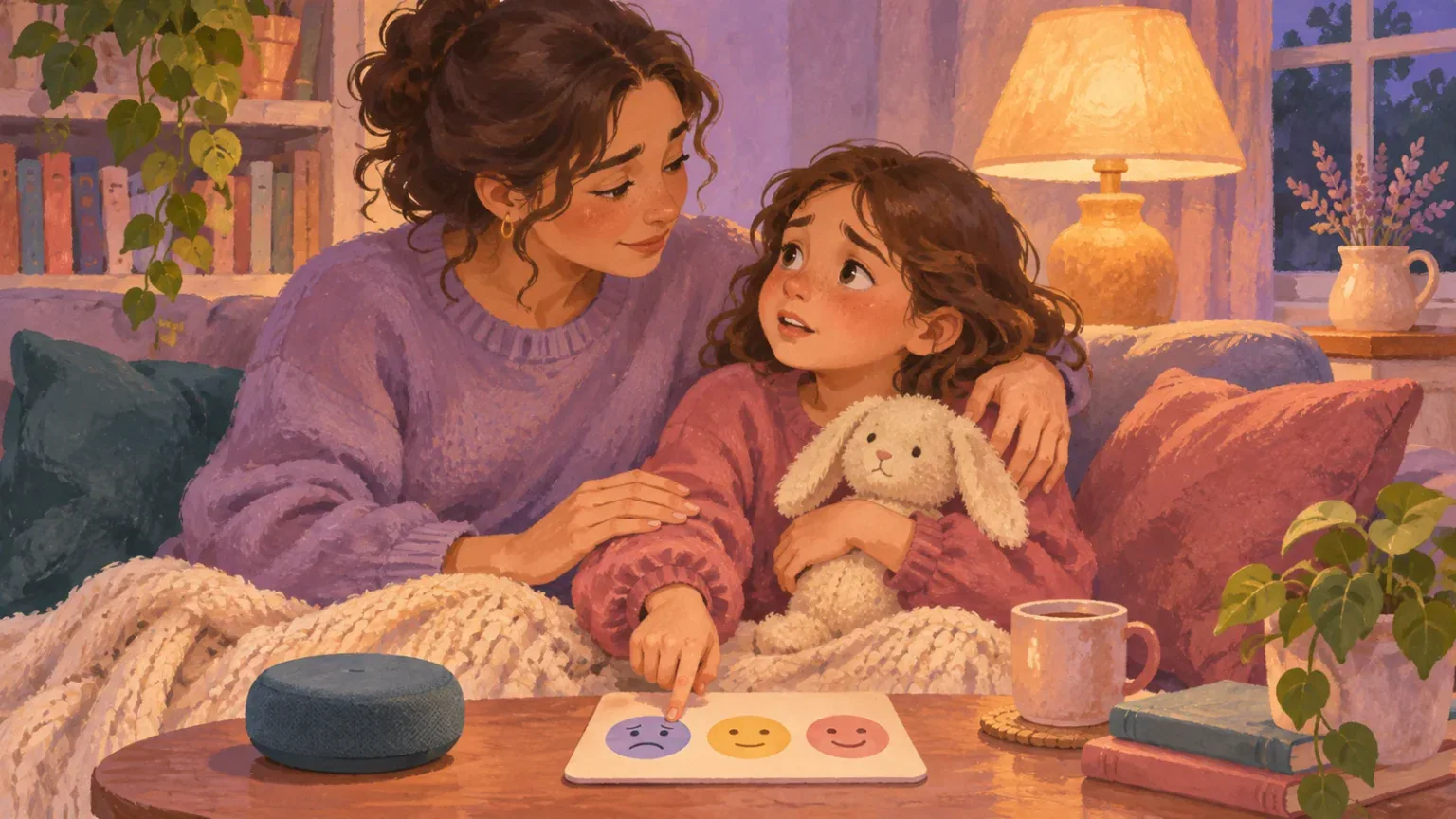
Pause the episode. Move away from the device and lower the stimulation around you. A simple opening is: “That sounded frightening. You are safe with me. What part is sticking in your mind?” Avoid replaying the scene to investigate it while the child is distressed.
Some children will talk immediately; others may draw, act it out or need time. Offer small choices: “Was it the noise, what happened, or not knowing what would happen next?” For a child who communicates differently, use feeling cards, pictures or a one-to-five scale. The one-minute feelings check-in cards can provide a low-pressure prompt.
Find out what the child believes happened
Audio leaves room for imagination. A child may think a fictional event was real, nearby or likely to happen to the family. Ask, “What do you think was happening?” and “Do you think it could happen here?” Then correct the specific misunderstanding in plain language.
With younger children, keep the explanation short: “That was an actor making a pretend monster sound. There is no monster in our house.” With school-age children, name the storytelling technique: music, silence and sound effects can make a scene feel more immediate. With teens, acknowledge that factual stories can still be edited for suspense and may omit context.
Do not force a brave finish
A child does not need to complete an episode to build resilience. Continuing while overwhelmed may simply deepen the association between podcasts and fear. Delete it from the queue, turn off autoplay and choose something familiar—or choose silence. You can revisit the topic later only if the child wants to.
The American Academy of Pediatrics advises adults talking about frightening news to ask what a child has heard and feels, give straightforward age-appropriate information, avoid graphic repetition and pause to discuss. Those principles also offer a careful way to respond to upsetting audio, even though a fictional podcast is not the same as a news event.
Help the body come down from alarm
Try a normal, concrete activity: drink water, turn on a light, cuddle a familiar toy, stretch, or check the room together once. Avoid repeated checking rituals that grow longer each time. At bedtime, return to the usual sequence rather than introducing hours of reassurance. You might say, “We checked once, and now we are going back to our bedtime plan.”
Invite a new ending if it helps: “What would make the character safe?” Drawing a calmer scene or recording a silly replacement sound can give the child a sense of agency. Keep it optional; not every child wants to process through play.
Watch what happens next
A brief fright often fades with reassurance and ordinary routine. Pay attention if fear persists, sleep is repeatedly disrupted, the child avoids everyday places, has frequent intrusive images, or cannot take part in usual activities. If distress is intense, lasting or getting worse, contact a qualified health professional. Seek urgent local help if a child may harm themselves or someone else.
Prevent the next surprise
Preview openings and endings, read episode notes, choose one item rather than an endless feed and keep a pause signal available. When listening together, the pause, wonder and stop routine creates natural check-ins.