A calm voice can sit comfortably inside a bedtime routine. The problem begins when choosing the episode takes twenty minutes, autoplay adds another show or a child needs the device beside the pillow to continue. The solution is not a promise that audio makes children sleep. It is a routine with a reliable beginning and end.
Decide what the podcast is for
Is it a ten-minute bridge between brushing teeth and lights out? Background for quiet drawing? A shared story before a caregiver leaves the room? Name the purpose and give it a time boundary. “One 12-minute story, then goodnight” is easier to follow than “listen until you feel sleepy.”
The American Academy of Pediatrics recommends regular daily and bedtime routines. Its sleep guidance specifically warns about screens before bed; that screen-light point should not be automatically transferred to audio. Even so, searching, watching the app and negotiating the next episode can keep bedtime active, so prepare the audio earlier.
Set up before the routine starts
- Choose one familiar, calm episode during the day.
- Download it and turn off autoplay.
- Set a sleep timer that ends at or before the episode finishes.
- Lower the volume enough for comfortable listening without straining.
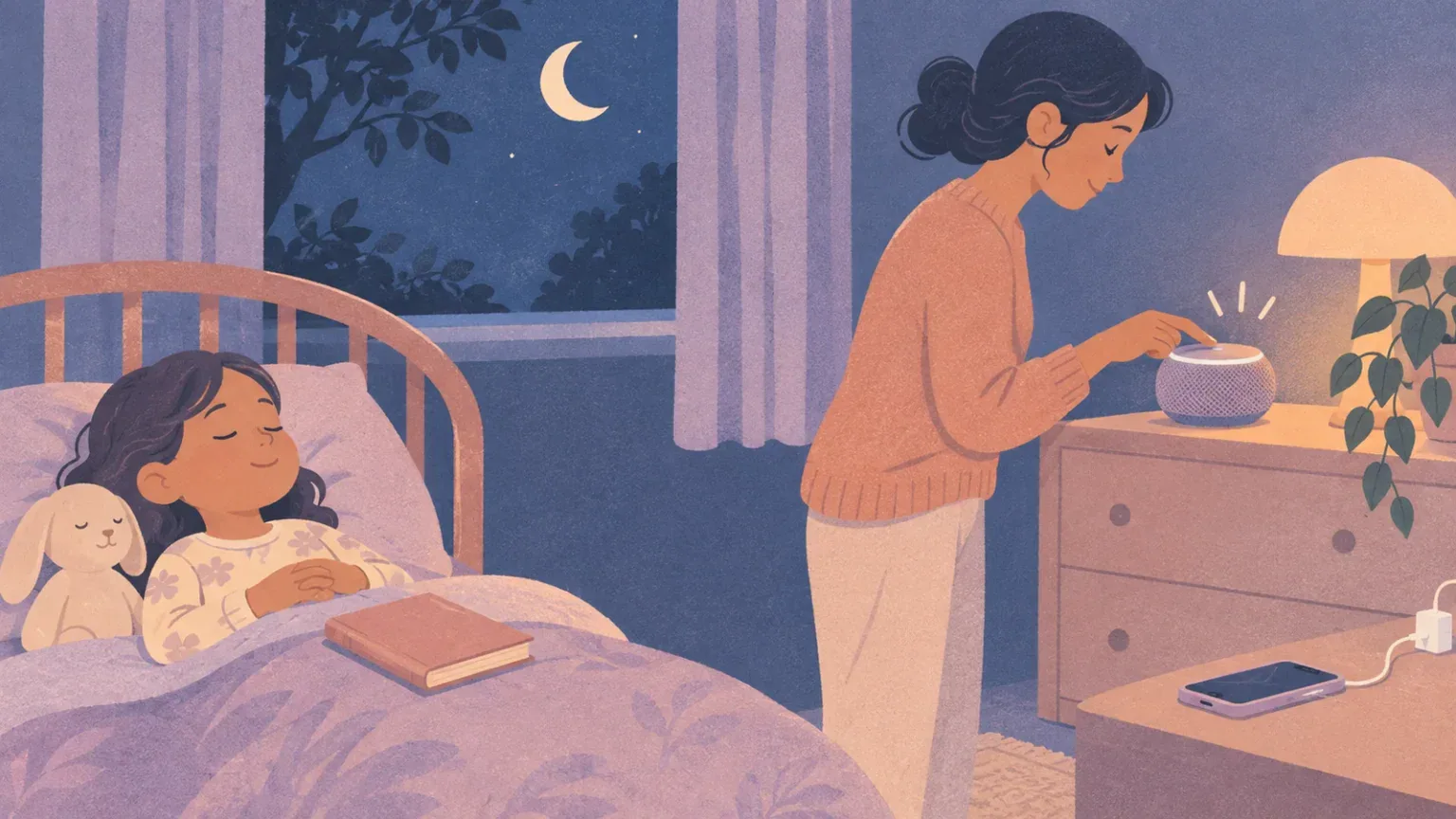
- Place the device where the child does not need to handle or watch it.
If the child uses a hearing device or needs sound for access, follow their established preferences and professional advice. Do not use uncomfortable headphones in bed or at unsafe volume.
Create an ending cue
Use the same short phrase when the audio finishes: “The story is over; now it is sleep time.” Add one predictable action such as a hug, a drink already waiting or switching off a small lamp. Avoid adding a new bargain after the cue.
For a toddler or preschooler, choose very short audio and stay nearby. School-age children can help choose from a two-episode shortlist earlier in the day. Teens may prefer independent listening; agree on a stop time, charging place and what happens if the device repeatedly keeps them awake. A bedroom device charging agreement can make expectations explicit without a nightly argument.
When “one more” becomes the routine
Do not debate the quality of the next episode at bedtime. Acknowledge the wish and hold the boundary: “You want another. We chose one, and we can save that episode for tomorrow.” Add it to a daytime list rather than playing it now.
If the child becomes distressed whenever the podcast stops, reduce the role gradually. Move from a long episode to a short one, then perhaps to a familiar song or a caregiver reading. Keep the rest of bedtime stable. A podcast should be one optional part of the sequence, not the only way a child can settle.
Review the effect, not the theory
For a week, note the planned lights-out time, when the podcast ended and roughly when the child settled. Also notice morning tiredness and bedtime conflict. If the routine is drifting later, shorten or move the audio earlier. If it is calm and ends on time, there may be no problem to solve.
Persistent trouble falling asleep, loud snoring, breathing pauses, marked daytime sleepiness or a major change in sleep deserves discussion with a qualified health professional. A podcast routine is not a treatment for a sleep disorder.
Keep listening connected
On some nights, listen together and use the pause, wonder and stop routine earlier in the evening. Save discussion for then so the bedtime version can remain simple and quiet.
Keep the content genuinely calm
Preview the emotional tone as well as the length. Mystery cliff-hangers, loud comedy and rapidly changing sound can be engaging but may not fit the final part of bedtime. A child may prefer a familiar episode because knowing the ending lowers the urge to stay alert. If any audio consistently makes settling harder, move it to daytime rather than trying to force it into the routine.