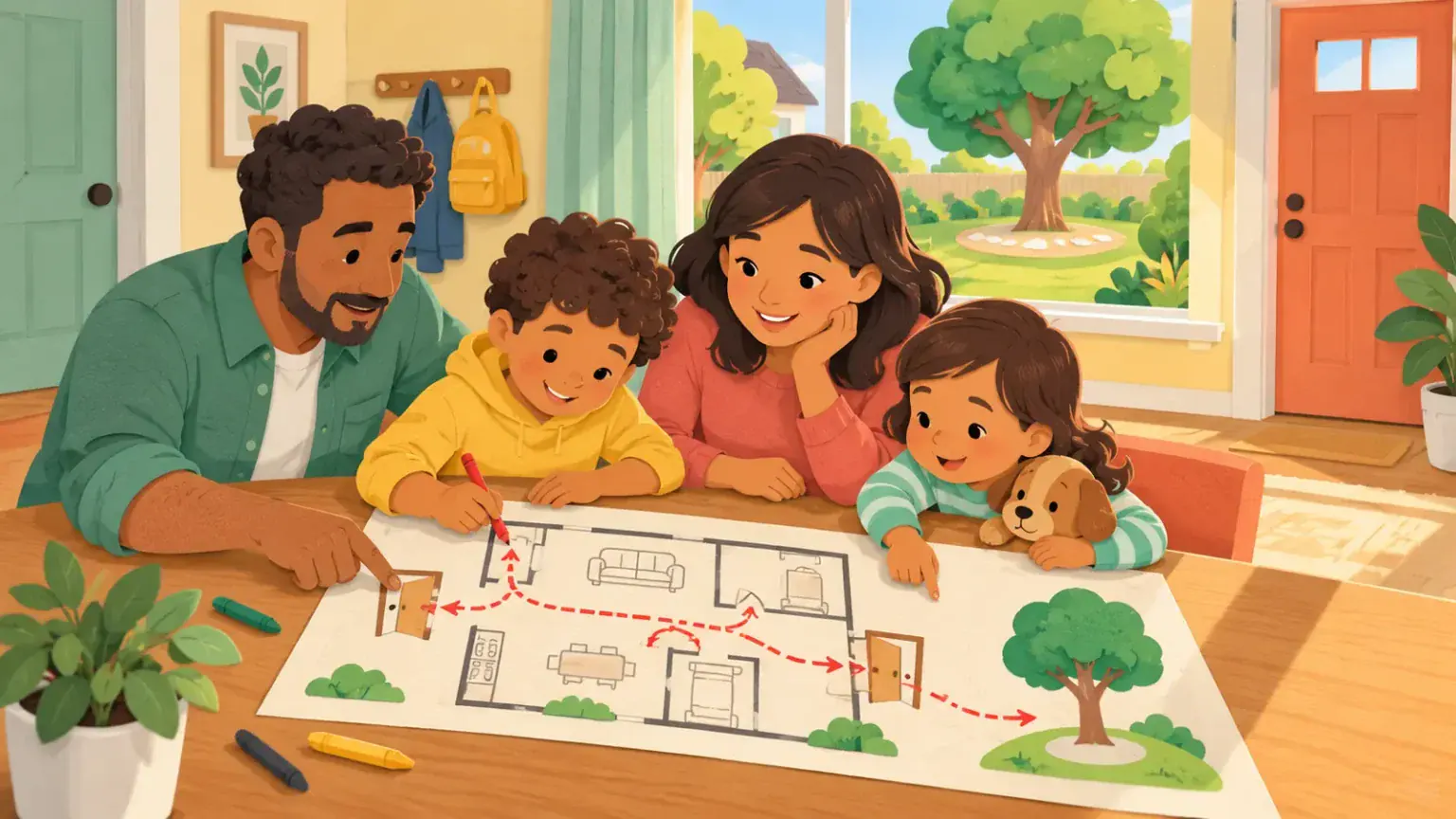
A fire-escape practice should teach a small number of actions without staging fear. Plan during daylight, tell children exactly what will happen, and keep the first session short. The goal is not speed at any cost; it is to make the route, adult responsibilities and outside meeting point familiar enough to use under stress.
Before the workshop
Set aside 45–60 minutes. Gather paper, pencils and your smoke-alarm instructions. Adults first check that exits open, hallways are clear and alarms are installed and maintained according to local guidance. In an apartment or high-rise, use the building’s official fire plan and local fire-service advice; never invent an elevator route.
Assign an adult to every baby, young child and person who may need physical, sensory or communication support. Plan a backup if the first adult is away. Keep mobility devices, glasses, hearing devices or essential equipment accessible without creating delay.
Map the home together
Draw each level simply, showing doors and windows. Identify two possible ways out of each room when feasible. Mark routes that are genuinely usable; a child should not be expected to open a heavy window, climb dangerously or use equipment they have never practised with.
Choose one outdoor meeting place in front of and safely away from the home where responders can see the family. Children need one rule: get outside, go to the meeting point and stay there. Nobody goes back for a toy, phone or pet.
Explain the sound and the sequence
Tell children that the alarm is loud because it needs to wake people. For a child sensitive to sound, preview a recording at low volume or use visual supports before testing the real alarm, without weakening the actual warning system. Offer hearing protection only if a fire-safety professional confirms it will not interfere with noticing the alarm.
Use simple language: “Alarm, adult helps, outside, meeting place.” Older children can learn to use a second exit if the first is blocked and to follow building instructions. Do not teach them to investigate smoke or fight a fire.
Practise once, calmly
- Announce the drill and place adults at their assigned positions.
- Use the alarm test button according to its instructions, or begin with a spoken cue if someone needs gradual preparation.
- Walk the planned route, close doors if the plan requires and it is safe, and gather at the meeting place.
- Count everyone and practise saying the home address to the adult who would call emergency services from outside.
Do not hide, add fake smoke, block exits or surprise sleeping children. A calm rehearsal teaches more than a dramatic test.
Debrief without blame
Ask: Could everyone hear or notice the cue? Did an exit stick? Was the route cluttered? Did the assigned adult reach the child? Fix environmental problems before repeating. If a child froze, practise only the first two steps another day with a trusted adult.
Share the plan with babysitters, relatives and overnight guests. Practise at least as often as local fire authorities recommend and whenever the home, household or mobility needs change.
Keep real-fire language direct
In a real fire, leave immediately, stay outside and call emergency services. Do not stop to collect belongings and do not re-enter. Tell firefighters if someone may be inside. The family plan supports evacuation; it never replaces working alarms, prevention or professional guidance.
EdCaptain’s calm safety-drills guide can help with language, while the emergency communication card keeps key details portable.
Adapt for sensory, mobility and communication needs
A visual sequence, tactile route marker or AAC message can make the plan accessible. A person who cannot use stairs or an ordinary exit needs an individual plan developed with the building manager, local fire service or other qualified professional. Do not assume a lift, refuge area or rescue method is safe without official guidance.
Practise the adult handoff as carefully as the child’s route. If one adult helps a child and another accounts for pets or calls emergency services, both need a backup. Review the plan after changes in mobility, sleeping rooms, medication, hearing or household membership.