Age guide: 4 to 10 years. Choose scenes that suit your child’s age and experience.
Children learn about people by watching what happens and trying out responses in pretend. These six games give you something to look at, talk through and act out. You are not looking for perfect answers. You are helping your child notice what is going on and decide what they might do.
1. Two plates
Time: 10 minutes. You need: two paper plates per player and a marker.
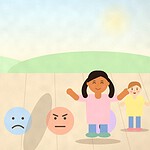
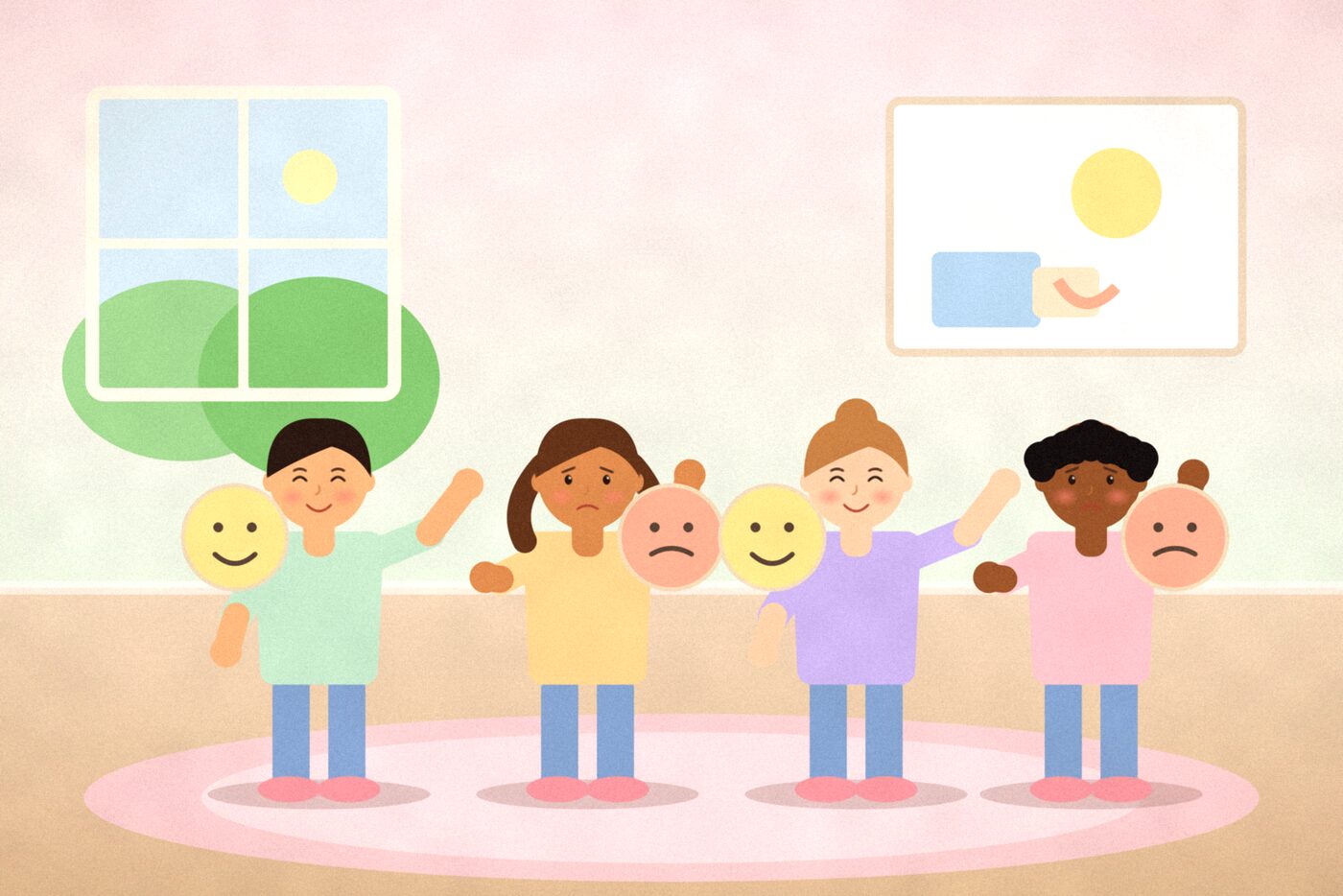
Each child draws a happy face on one plate and a cross face on the other. Describe a situation and everyone holds up the plate that shows how they would feel. “A friend invites you to their party.” “Someone takes the ball you were playing with.” “Someone shares their snack.” Ask why they chose it. Add a third plate with a question mark for “I am not sure” or “both”.
2. What just happened?
Time: 10 minutes. You need: a picture of a scene where something has just happened.
A picture could show a family in a kitchen all looking at a puddle on the floor while one person holds an empty jug. Ask your child what has just happened and how they know. Then ask them to imagine being someone in the picture. What would they do? You can act out scenes if you do not have pictures.
3. Spot the problem
Time: 10 minutes. You need: a photo, a picture book page or a short pretend scene.
Show or act out a situation: a glass tipping off a table, or a group playing while one child stands apart. Ask your child to say “uh-oh!” when they notice the problem. Wait a moment before explaining. The goal is to see what the problem is, so they may or may not offer a solution. Write down what they notice, and invite them to invent a scene for you to spot.
4. Plan and act
Time: 15 minutes. You need: a box and slips of paper with short scenes.
Write scenes such as “Your little brother wants to share your toy car. What do you do?” or “It’s Grandma’s birthday and you want to do something kind.” Your child picks one, plans for a few minutes, and acts it out with props or helpers. For serious scenes, such as someone falling and unable to get up, talk through the steps: stay calm, get an adult or call your local emergency number.
5. Why, why, why?
Time: 10 minutes. You need: a story you are reading.
Choose a character who is upset and ask why up to five times. “Why is he sad?” “Because he can’t go to the park.” “Why not?” “Because there is no one to go with.” Stop when you reach something interesting, or when it feels silly. Keep it light, and don’t use it to question your child about their own behaviour.
6. Draw the story
Time: 20 minutes. You need: paper and pencils.
Tell a short story using names that could belong to anybody, like Robin, Charlie or Alex, and no pictures. Ask everyone to draw it. Compare the drawings: who did you draw, how old are they, what are they wearing? Talk about why you chose that, and how people’s experiences change what they imagine.
Closing thought
A child who can describe a problem and picture another person’s feelings has a head start on solving it. For next steps, try helping your child comfort a sad friend.