Label one wall “True” and the opposite wall “False,” read out a statement, and watch everyone run to whichever side they believe is correct. Run to the Truth turns an ordinary set of trivia or opinion questions into a genuinely active, engaging group game.
Why this helps
Physically committing to an answer by running to a wall, rather than simply thinking it quietly, raises the stakes just enough to make everyone genuinely engage with each question, and watching who ends up on which side often sparks a livelier, more honest debate than a quiet show of hands ever manages.
What you need
Two signs, one reading “True,” the other “False,” or for an opinions version, “Agree” and “Disagree.” An open space between them. A prepared list of statements.
How to play
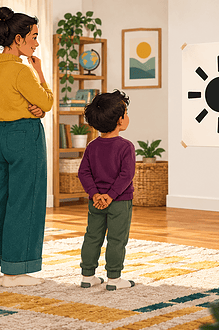
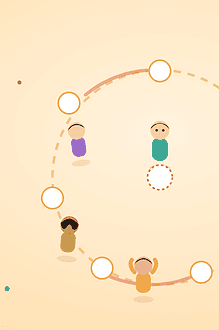
Hang the two signs on opposite walls, with open space between them. Gather the group in the middle and explain the rule: read a statement, and everyone runs to the side they believe is correct, or stays in the middle if genuinely undecided.
For a straightforward trivia version, prepare a list of true-or-false general knowledge statements suited to your group’s age and interests. Once everyone has picked a side, ask a few players from each side to explain their reasoning before revealing the correct answer.
The values version
For an older group, try the Agree or Disagree format instead, using genuine opinion statements with no single correct answer: “Pocket money should be tied to chores.” “It’s fine to disagree with a friend in public.” Let both sides explain their reasoning, and resist providing a “correct” answer, since the value here is in the explaining and listening, not in reaching a verdict.
Why physically moving matters
A quiet show of hands lets people quickly glance around and shift toward whatever the majority seems to be choosing. Physically running to a side, committing your whole body to an answer before seeing where anyone else goes, tends to produce more honest, independent answers, and a livelier, more engaged discussion once everyone’s picked their spot.
Two signs on opposite walls, a list of good statements, and a group genuinely running to defend what they believe is a simple, energetic way to turn ordinary questions into something everyone actually wants to get right.