By EdCaptain editorial desk · Published
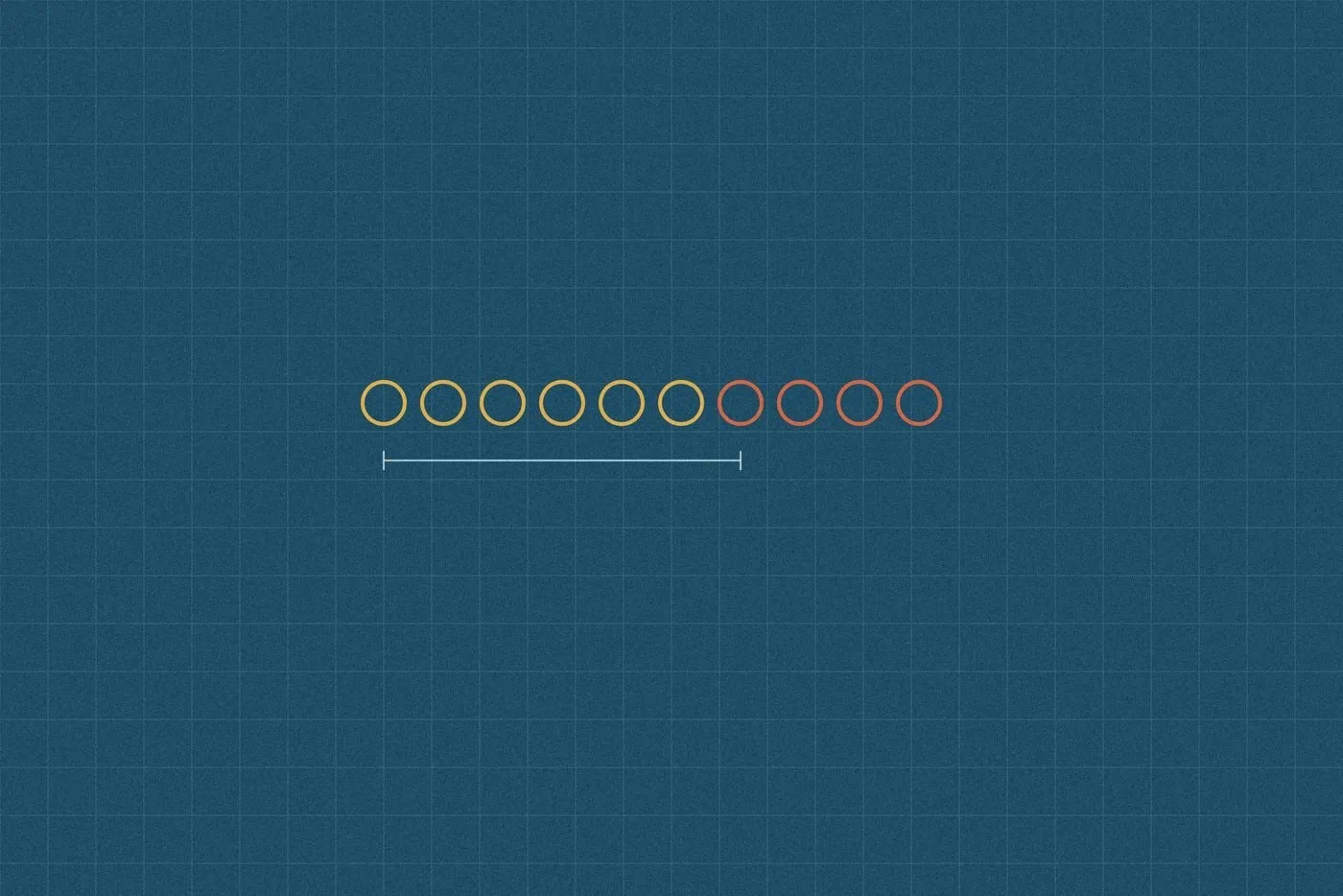
Ten beads on a string, split into two groups, and a simple question: how many are on each side? The Bead Split turns the abstract idea of addition and subtraction into something a child can physically see and move, using nothing more complicated than a string of ten countable objects.
What you need
Ten beads, buttons, or any small countable objects threaded on a string or lined up in a row. Paper and a pencil, optional.
How to play
Lay out ten beads in a row. Split them into two groups, say, by sliding some to the left and some to the right. Ask your child to count how many are in each group, then write or say the full sum: for example, “6 and 4 makes 10.”
Mix up the split each time and repeat, building familiarity with the different ways ten can be broken into two parts. Once that feels comfortable, split the beads into three groups instead of two, and later four, each time asking your child to find the total and write the matching sum.
For an older child ready for a bit more challenge, turn it into subtraction instead: start with all ten beads together, remove a group, and ask how many are left, “ten take away three leaves seven.”
Variations
Turn it into a quick competitive game with more than one child: call out a number between zero and ten, and race to be first to correctly split the beads to show it, explaining out loud how they got there.
Why it works
Addition and subtraction on paper are abstract until a child has physically done the underlying action, splitting a group, combining groups, removing part of a group, enough times that the number sentence and the physical reality genuinely connect. A string of ten beads gives a child something to actually move and recount, rather than asking them to hold the whole operation in their head from the start.
This also quietly builds a skill worth having well beyond this specific exercise: the habit of breaking a number down into convenient parts, which is exactly the strategy adults use without thinking when adding larger numbers mentally. A child who has spent time physically splitting ten into different pairs has a head start on that instinct.
A handful of beads and a few minutes of splitting and counting looks almost too simple to be doing much. But the physical, hands-on repetition is exactly what turns “ten take away three” from a sentence a child has memorised into something they genuinely understand, and that difference tends to show up in every harder sum that follows.