An ordinary object becomes terribly important when the storyteller invents a reason to carry it everywhere. What’s in the Pocket? is a friendly excuse to think on your feet and make each other laugh.
Get ready
For two or more players, allow 15–30 minutes. Choose a few clean, safe props or picture cards. A small fabric bag can replace a pocket. Imaginary objects work too, so nobody needs to hand over private belongings.
How to play
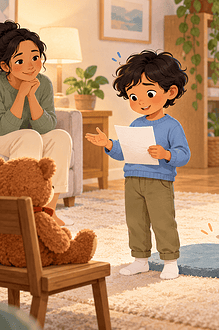
- An adult demonstrates with a safe prop or an imaginary one. For example: “I carry this tiny umbrella because the ants invite me to all their picnics.” Make clear that this is a pretend story.
- One player asks the next, “What’s in the pocket?” The next player reveals a prop, chooses a picture or mimes an object.
- The storyteller invents why that object matters. Let them take a pause to think, tell a short explanation or ask a partner to join in.
- Invite a kind response from the listeners: “I liked how the umbrella became a roof.” There is no need for a public vote.
- Pass the turn so everybody has an invitation to participate. A child can pass without explaining why.
- If the game is still lively, change the prompt: where did the object come from, or what surprising thing can it do?
A little preparation helps
Don’t search someone’s real pockets or ask for money, keys, identity cards, receipts or a phone. Avoid small objects, food props, batteries, magnets, cords and sharp items. An adult can handle a chosen prop while a child points or tells the story.
Let the telling fit the child
Speaking, signing, drawing, acting and communication aids all belong in the game. Quiet delivery can be just as interesting as a big performance. Avoid scoring children on eye contact, volume or willingness to stand in front of others.
With a larger group, play in pairs and invite volunteers to share. Finish by asking which detail made an object feel important. The pleasure is in making a small idea your own, not producing a polished speech on demand.
Original activity downloads
Watch the activity
Watch the original activity demonstration. Use the flexible participation and safety options above when you play.