A lump of modelling clay and genuinely nothing else needed. Clay Hands is one of the simplest activities on this list, and also one of the most quietly absorbing, for a baby exploring texture for the first time and for an older child building an entire cast of characters.
What you need
Modelling clay or playdough, in a few different colours if possible. For older children, optional extras: small shells, leaves, twigs, bottle caps, or other clean recycled odds and ends.
How to play
For a baby or very young toddler, this is simply about letting them feel the clay with their hands, squeezing, poking, patting, with no end goal at all beyond the sensory experience. Supervise closely and make sure it stays out of their mouth.
For an older toddler or pre-schooler, put out a box of clay in a few colours and let them create freely. Encourage them to press natural or recycled materials into the clay, a shell for texture, a twig as a tool, which adds a layer of exploration beyond the clay alone.
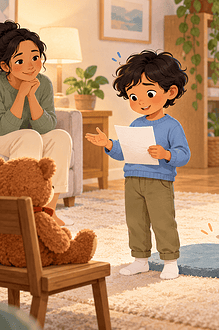
For a child old enough to enjoy storytelling, invite them to model the characters from a favourite story out of clay, then use the finished figures to act out the story, giving each character a voice and a bit of dialogue as the scene plays out.
Safety notes
For babies and very young toddlers, supervise constantly and keep clay away from the mouth. Check that whatever clay or dough you use is non-toxic and appropriate for the age group playing with it.
Why it works
Clay rewards a child for simply handling it, there is no wrong way to squeeze, roll, or poke it, which makes it one of the lowest-pressure creative activities available. For a child who feels anxious about “getting it right” in more structured activities, clay’s total tolerance for mess and experimentation can be genuinely freeing.
There is something worth noticing in how differently clay plays out across ages, from a baby simply discovering what squeezing feels like, to an older child building a small cast of characters and giving them a story. The material barely changes. What changes is everything the child brings to it, which is really the whole point of open-ended play.