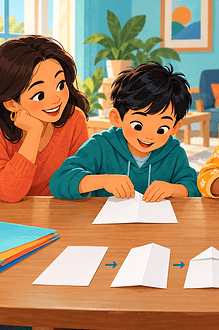
Hand everyone a sheet, ask for three ideas written silently, then pass the sheet along and let the next person add three more, building on what’s already there. Silent Idea Swap shows a family that some of the best brainstorming happens without anyone saying a word out loud.
Why this helps
Spoken brainstorming tends to favour whoever’s loudest or most confident speaking up first, while quieter family members often hold back genuinely good ideas simply because they didn’t get a chance, or felt too shy, to say them aloud. Writing silently and passing ideas along gives everyone equal space to contribute, and reading what others have already written often sparks new ideas nobody would have thought of alone.
What you need
A sheet of paper for each participant, with room to write several rows of three ideas each. Pens for everyone.
How to play
Pose a question or problem the whole family can think about, pick something genuinely open-ended, “how many different things could we do with this box?” works well to start. Each person writes three ideas on the top row of their own sheet, in complete, short sentences.
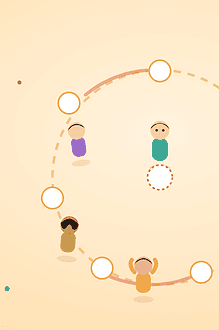
After a few minutes, everyone passes their sheet to the person on their right. Looking at the ideas already written, each person adds three more ideas on the next row, building on or branching off whatever’s already there. Continue passing and adding until several rows are filled.
Why the number of ideas tends to surprise everyone
With even a small family group repeating this a few times, the total number of ideas generated is usually considerably higher than anyone expected, since every pass adds fresh ideas sparked by what’s already on the page. Reviewing the full sheet together at the end, after all the passing is done, often turns up at least one or two genuinely surprising, creative ideas nobody would have reached alone.
Why this works especially well for a quieter family member
A child who tends to stay quiet during a loud, spoken brainstorm often has just as many good ideas as anyone else, they simply need a format that doesn’t require competing to be heard. Writing silently removes that competition entirely, and often reveals that the quietest person in the room had some of the most interesting ideas all along.
A sheet of paper passed silently around the table, each person adding to what’s already there, is a simple, genuinely effective way to get every family member’s best thinking onto the page, not just the ideas of whoever happened to speak up first.