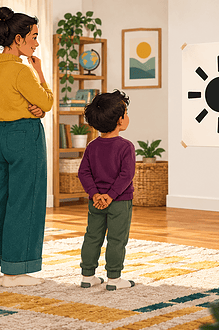
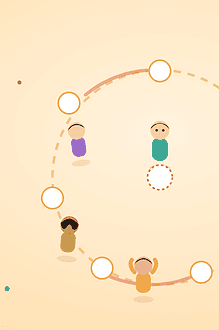
Standing on the edge of a group already deep in a game, trying to figure out how to actually join without feeling like an intruder, is one of the more common small social struggles a child faces. Joining In a Group Activity gives them an actual plan for that moment, instead of just hoping it works out.
Why this skill matters
A child who hovers awkwardly at the edge of a group, unsure how to enter, often ends up either walking away disappointed or barging in clumsily enough to get a cool reception either way. A child with a clear, practised way to join in gets included far more often, and with far less anxiety about the attempt itself.
The steps
1. Watch for a moment before jumping in. Understanding what the game or activity actually is makes it much easier to join smoothly.
2. Move closer and wait for a natural pause. Barging into the middle of an intense moment tends to land worse than waiting for a short, natural break.
3. Ask to join, or make a friendly comment about the activity first. A simple “can I play?” or “that looks fun, what are you doing?” opens the door clearly.
4. Accept the answer, and try somewhere else if it’s a no. Not every group says yes every time, and that’s worth preparing for calmly, rather than taking it personally.
How to teach this at home
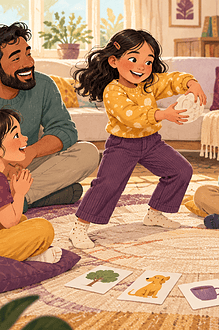
Practise the physical sequence with a sibling or friend at home, with one child playing a group already absorbed in an activity and the other practising the approach, which lets your child rehearse the timing and the words in a low-stakes setting. Talk through what a natural pause in a game actually looks like, since recognising it is half the skill.
Afterward, if a real attempt doesn’t go well, talk it through calmly rather than treating it as a failure: was there a different moment that might have worked better? Is there another group or activity worth trying?
Why handling a “no” is part of this skill too
Not every group will say yes, and a child who hasn’t prepared for that possibility can take a single rejection very hard, sometimes hard enough to avoid trying again at all. Including “accept the answer and try elsewhere” as a genuine step, not an afterthought, helps a child understand that one no isn’t a verdict on them, just one group, one moment, one activity that didn’t work out this particular time.
A clear plan for watching, waiting, and asking turns an anxious, uncertain moment into something a child can actually approach with real confidence, which tends to make the whole business of making new friends feel considerably less daunting.