Hand everyone an identical sheet of paper, give the exact same folding and tearing instructions with eyes closed, and then compare the wildly different results. Eyes Closed, Same Instructions shows, more clearly than almost any explanation could, how differently people interpret the exact same words.
Why this helps
Everyone in this game hears the identical instructions, in the identical order, and still produces a noticeably different result, which makes a genuinely important point concrete: giving clear instructions is harder than it feels, and hearing the same words doesn’t guarantee the same understanding.
What you need
One sheet of paper per player.
How to play
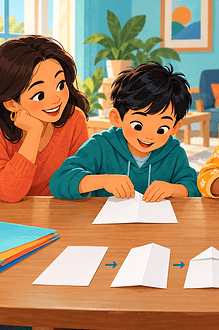
Give each player a sheet of paper and ask everyone to close their eyes, promising not to peek. Hand out the instructions one step at a time: fold the paper in half, tear off the bottom right corner, fold it in half again, tear off the bottom left corner.
Once the steps are finished, ask everyone to open their eyes and unfold their paper. Compare the results around the group, they’ll typically look quite different from each other, despite everyone following the exact same spoken instructions.
The conversation worth having
Ask the group directly: how is it possible that we all heard the same instructions and ended up with such different results? What does this suggest about how we give and receive instructions in everyday life? Has anyone ever given someone directions that were technically correct but still led to confusion?
Why this matters beyond the paper
This small, physical demonstration makes a genuinely useful point: even clear, simple instructions, followed in good faith, can produce very different results depending on how each person interprets them. That’s worth remembering the next time an instruction given clearly still somehow gets misunderstood, the gap often isn’t about anyone doing anything wrong.
A sheet of paper, a few simple folds and tears done with eyes closed, and a group looking at their surprisingly different results is a quick, memorable way to show that even simple, identical instructions rarely land identically for everyone.