Age guide: Parents and caregivers of children aged 0–18
Your child has done something wonderful, funny or simply very them. You want to share it. Before tapping “post”, take a moment to separate enjoying the memory from making it available to other people.
The short answer
- Consider whether the image or story needs to be shared outside the family at all.
- Involve your child in the decision when they can participate, and respect a refusal.
- Check the audience and identifying details, including those in the background.
- Remember that a limited audience reduces exposure but cannot guarantee control over copies.
UNICEF describes sharenting as sharing information about children beyond the family circle, including photos and stories. Its guidance encourages parents to consider children’s privacy, dignity and participation. That is a useful pause even when a post is affectionate.
1. Ask whose story you are telling
A photograph of a family picnic is different from a detailed account of a child’s friendship problem, medical experience or difficult behaviour. Ask whether the post shares something your child may later wish had stayed private.
Avoid using a distressing or embarrassing moment as entertainment. You can ask other parents for support without identifying your child or providing intimate details.
2. Give “no” real meaning
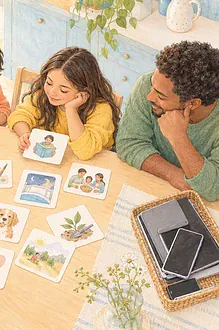
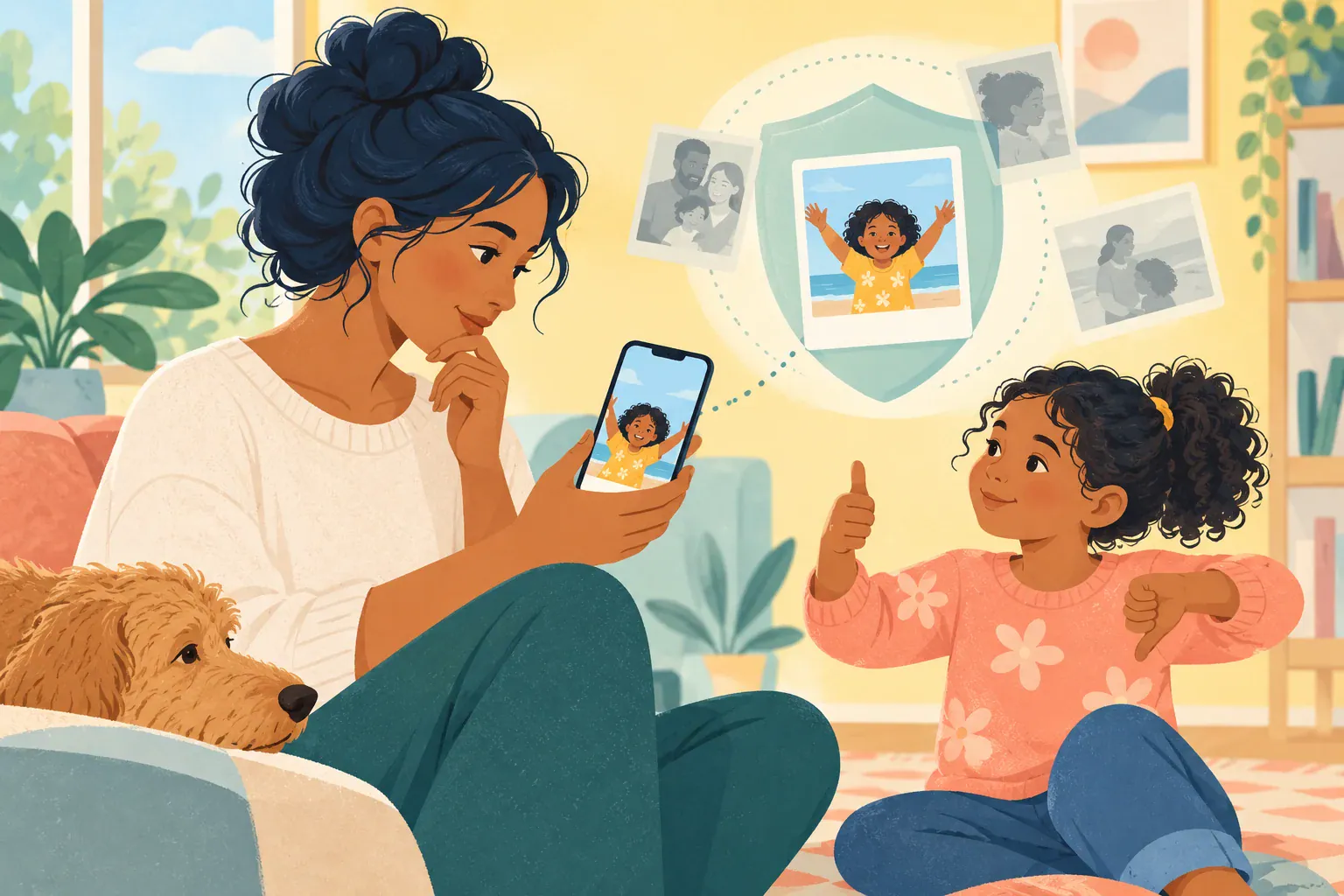
When a child can take part, explain where you want to share the image and who might see it. Accept their answer without teasing or telling them they are spoiling the memory.
- Ask again for a different audience or purpose rather than treating one yes as permanent permission.
- If they change their mind, take reasonable steps to remove the material you control.
- For babies and younger children, make a protective decision on their behalf; silence is not permission.
3. Look beyond your child’s face
Check for a school badge, house number, address label, timetable, identifiable route or location data. A caption can reveal as much as the photograph. Avoid announcing a regular place and time where your child can be found.
Think about other children in the image too. Their family may have privacy or safeguarding reasons you do not know about.
4. Choose the smallest audience that meets the purpose
- Send a selected picture directly instead of posting a large album publicly.
- Review the membership of private groups before assuming everybody there is trusted.
- Ask relatives not to repost or forward without checking.
- Consider keeping some memories in a private, securely managed family collection.
No sharing method eliminates every risk. The point is to make an intentional choice rather than assume a privacy setting guarantees secrecy.
5. Practise the boundary you want children to learn
Try saying: “I liked this photo, but it is your image too. You can say no.” That makes asking permission an everyday family action, not only an online safety lesson aimed at children.
A five-question check before posting
- Does this need to be shared?
- Would my child reasonably be comfortable with it later?
- Have I checked identifying details?
- Have the people involved agreed where possible?
- Is this the smallest appropriate audience?
SuperMOMs and superDADs can celebrate a child without making every good moment public. Keeping a memory just for your family is also a way to value it.
Keep exploring
- Social media age limits: have the conversation before the argument
- Parental controls without the panic: your first setup checklist