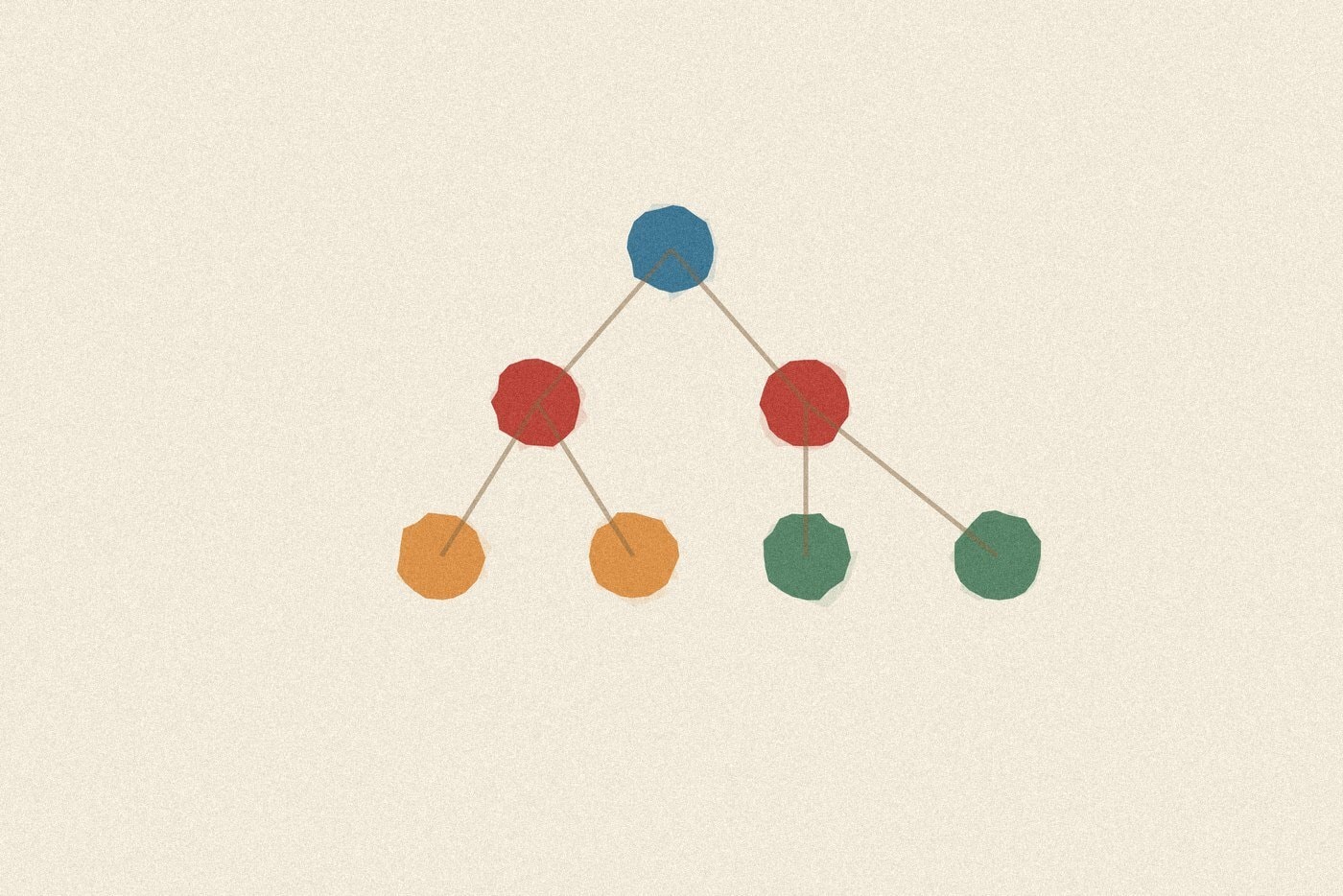
A simple sketch of branches, your child’s name in the centre, and the names of everyone connected to them radiating outward. The Family Tree Project turns something children often half-understand, how they relate to an aunt, a step-sibling, a grandparent they’ve never met, into something drawn, discussed, and genuinely understood.
What you need
A large sheet of paper. Pencils or crayons. Help from family members, in person or by phone, to fill in names your child doesn’t already know.
How to play
Start by asking your child to draw a picture of their family, however they imagine it, before introducing anything formal. Talk about what they’ve drawn.
Then introduce the idea of a family tree: a simple diagram showing family members and how they relate to each other, with your child at the centre. Sketch a basic structure together, parents on one level, grandparents on the level above, siblings and cousins to the sides, and let your child fill in names as they know them, asking family members for help with anyone they’re unsure of.
Use the moment to talk through family relationships directly: what makes someone a cousin versus a sibling, what a half-sibling is, and whether a family’s closest relationships are only ever about blood ties. There’s no single correct answer here, families take many different shapes, and the conversation is worth having openly rather than steering toward one definition.
Talking about connection, not just names
Once the tree is filled in, go further than just labelling it. Ask your child: who is your favourite family member, and why? When you have a problem, is there someone in this family you’d talk to about it? Why do you think it matters to share what’s bothering you with someone who cares about you?
Follow this with something practical: agree together on two or three small, specific things your child could do in the next couple of weeks to show family members they care, a hug before school, a note to a sibling, helping with a chore without being asked. Revisit it together after a couple of weeks and talk honestly about what actually happened.
A note on different family shapes
Family trees can be a genuinely sensitive topic for children whose family looks different from a simple two-parent structure, through loss, separation, adoption, or distance. Keep the activity open and flexible rather than insisting on one template, and let your child define their own tree in whatever way reflects their actual family, with warmth rather than a rigid “correct” structure imposed on them.
What ends up on the page matters far less than what happens around it: a child asking a grandmother who someone was, a parent explaining how a cousin fits in, a family, for an afternoon, actively talking through who belongs to whom and why that connection matters. That conversation tends to outlast the drawing itself by years.