Acne can arrive just as a young person becomes more aware of how they look. The temptation is to attack every spot with scrubs, masks and several active products at once. That often leaves the skin sore without making the routine easier to sustain.
Start by separating acne from blame. It is not caused by laziness or “dirty skin.” Puberty hormones increase oil production inside the skin’s pores. A calm, consistent routine is more useful than constant checking or criticism.
The three-step foundation
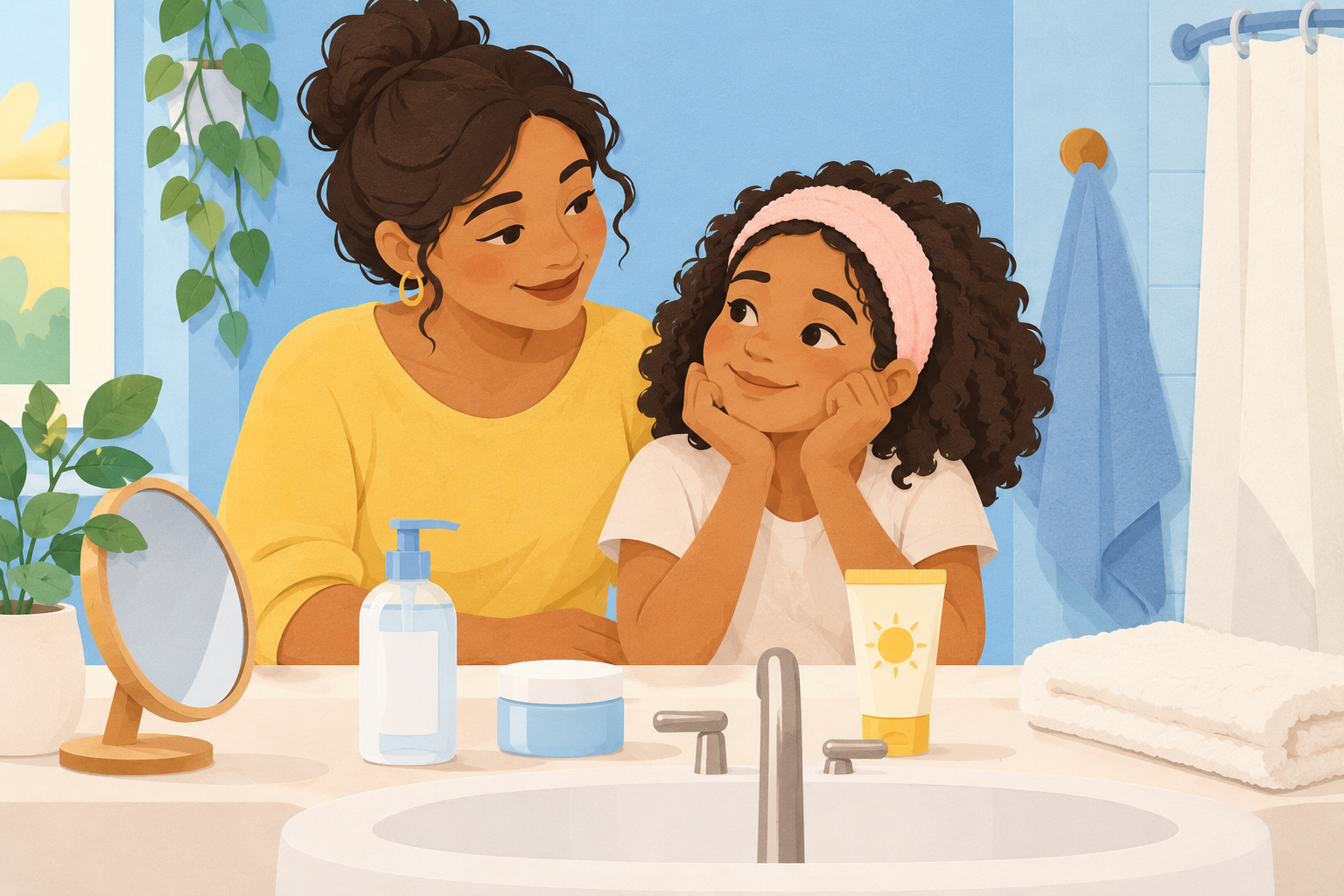
- Cleanse gently. Wash the face in the morning and evening with warm water and a mild cleanser. Use fingertips, not a rough cloth or brush. Wash again after very sweaty activity.
- Moisturise if needed. Choose a light product labelled non-comedogenic, meaning it is less likely to block pores. Moisturiser can make an acne routine more comfortable, especially if treatment dries the skin.
- Protect from the sun. Use a broad-spectrum sunscreen suitable for acne-prone skin. This matters for every skin tone, and it can help prevent dark marks from becoming more noticeable.
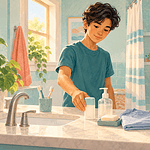
Give the routine a visible home near the sink. A teen may prefer choosing and paying attention to their own products, while a younger tween may need one quiet reminder. Aim for independence, not inspection.
Introduce one change at a time
Many non-prescription acne products contain ingredients such as benzoyl peroxide or salicylic acid. Ask a pharmacist or clinician what suits your child’s age and skin, then introduce only one product at a time. Start cautiously and follow the label. Burning, swelling or a severe rash is a reason to stop and seek advice.
Avoid squeezing spots, gritty scrubs and repeatedly washing during the day. Picking increases irritation and can contribute to marks or scars. Heavy, oily hair or cosmetic products may also worsen acne where they sit against the skin.
Keep social-media skin care in perspective
A ten-step routine made for adult skin can be expensive and irritating for a tween or teen. Ask your child what outcome they want: less pain, fewer breakouts, less shine or simply reassurance. That question moves the conversation away from chasing flawless, filtered skin.
If appearance is becoming a source of shame, keep comments neutral and read our guidance on body image and online comparison. A broader puberty conversation can also normalize oily skin and other changes.
When professional help is worthwhile
Acne treatment takes time. A clinician or dermatologist can help if acne is painful, deep, leaving scars or dark marks, spreading across the chest or back, or not improving with a consistent simple routine. Seek support sooner if your child is withdrawing, being bullied or feeling very distressed. Prescription treatment should be chosen for the individual; do not share another person’s acne medication.