New hair under the arms, on the legs, face or around the genitals is an ordinary part of puberty. It does not need to be removed for cleanliness. A young person may want to keep it, trim it or remove some of it. That decision can change over time.
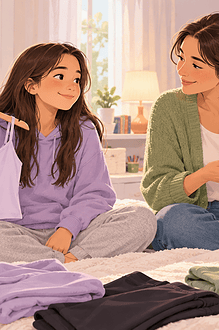
Begin by asking what is behind the question. Is the hair uncomfortable, or has someone teased them? Are friends shaving, or did an advertisement imply that hair is unacceptable? Listening first keeps the conversation about the child’s comfort rather than adult expectations.
Separate hygiene from appearance
Body hair can hold sweat, but regular washing and clean clothing are usually enough for hygiene. Shaving does not prevent puberty body odour. If smell is the main concern, start with the routine in our guide to puberty body odour and deodorant.
Try: “Hair growth is normal. You do not have to remove it. If you want to, I can show you safer options.” This gives information without turning hair removal into a requirement.
If your child chooses to shave
- Choose a calm time. A rushed morning before school is not ideal for a first attempt.
- Use a clean personal razor. Do not share razors, and replace a dull or rusty blade.
- Soften the hair. Warm water and a gentle shaving gel or unscented soap can reduce dragging.
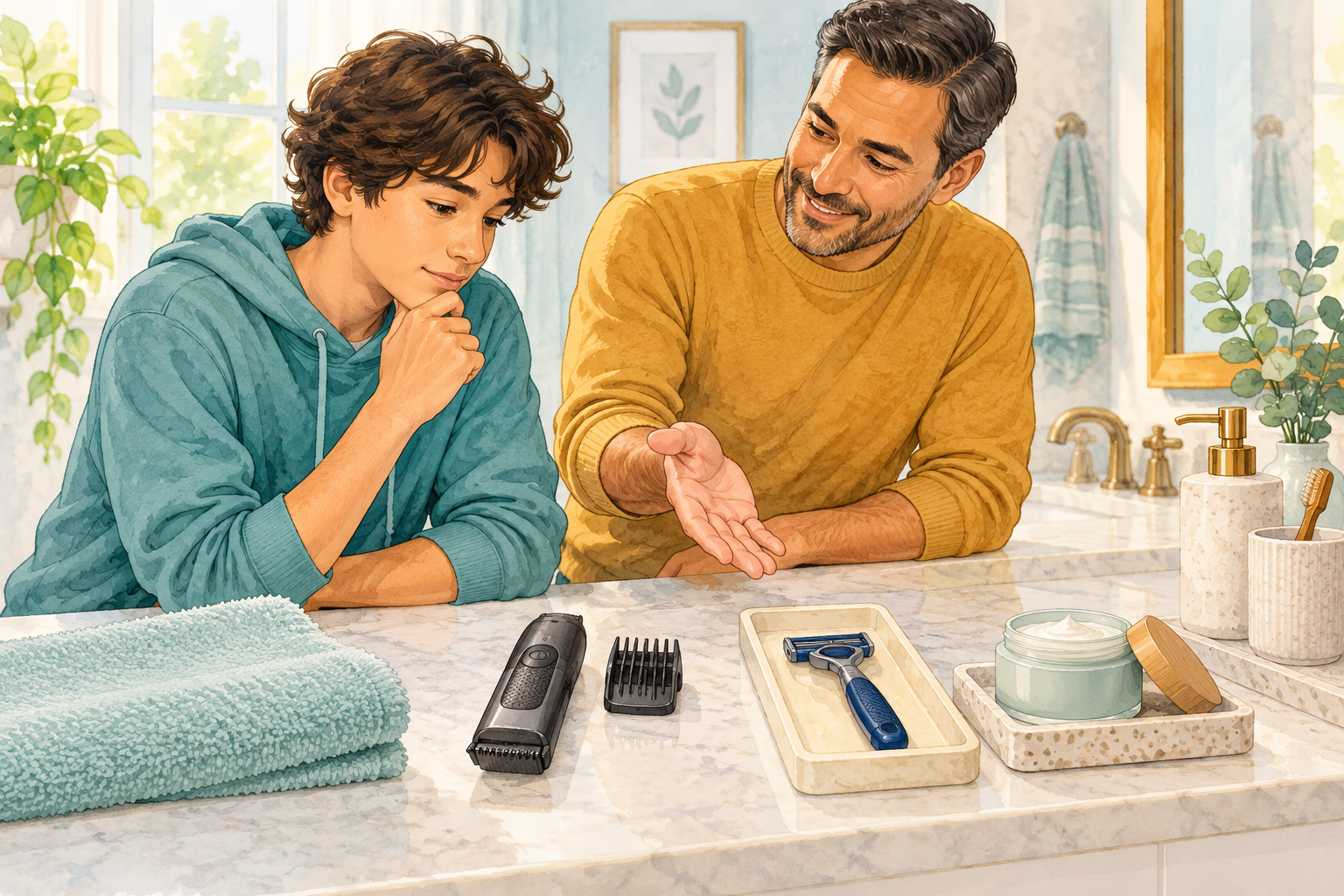
- Demonstrate lightly. Use short strokes without pressing hard. Shaving in the direction of hair growth may reduce irritation.
- Rinse and moisturise. Pat the skin dry and use a plain moisturiser if needed. Stop if the skin becomes very sore.
- Store the razor safely. Let it dry and keep it away from younger children.
For an anxious child or one with motor difficulties, an electric trimmer with a guard may feel more manageable. A caregiver can demonstrate on their own arm or leg rather than taking over the child’s body. Always ask before touching or assisting.
Areas that need extra care
Genital skin is easily irritated. Trimming is generally simpler than a very close shave, and a child should never feel pressured to remove pubic hair. Chemical hair removers can burn sensitive skin and should not be used on genitals or broken skin. Follow product age limits and instructions, patch-test when advised, and ask a pharmacist if unsure.
Confidence matters more than smooth skin
Do not make jokes about moustaches, leg hair or “looking grown.” If teasing or online comparison is driving distress, read our guidance on body image and comparison. Support the child’s choice while making clear that another person’s preference does not control their body.
When to seek advice
Ask a clinician about sudden or unusually heavy hair growth accompanied by other symptoms, severe skin reactions, repeated painful ingrown hairs or signs of infection such as spreading redness, warmth, swelling or pus. Puberty signs at an unusually young age also deserve medical discussion.