A first whiff of stronger body odour can catch both a child and a parent by surprise. It is also an ordinary part of puberty. Sweat itself is not a sign that a child is dirty. During puberty, certain sweat glands become more active, and bacteria on the skin break down sweat and oils, creating a stronger smell.
The most helpful response is practical and private. Avoid jokes, public reminders or comments such as “You stink.” Try: “Your body is changing, so it may be time for a new washing routine. I can help you find one that feels easy.”
Start with a small daily routine
A routine is easier to follow when it has only a few clear steps:
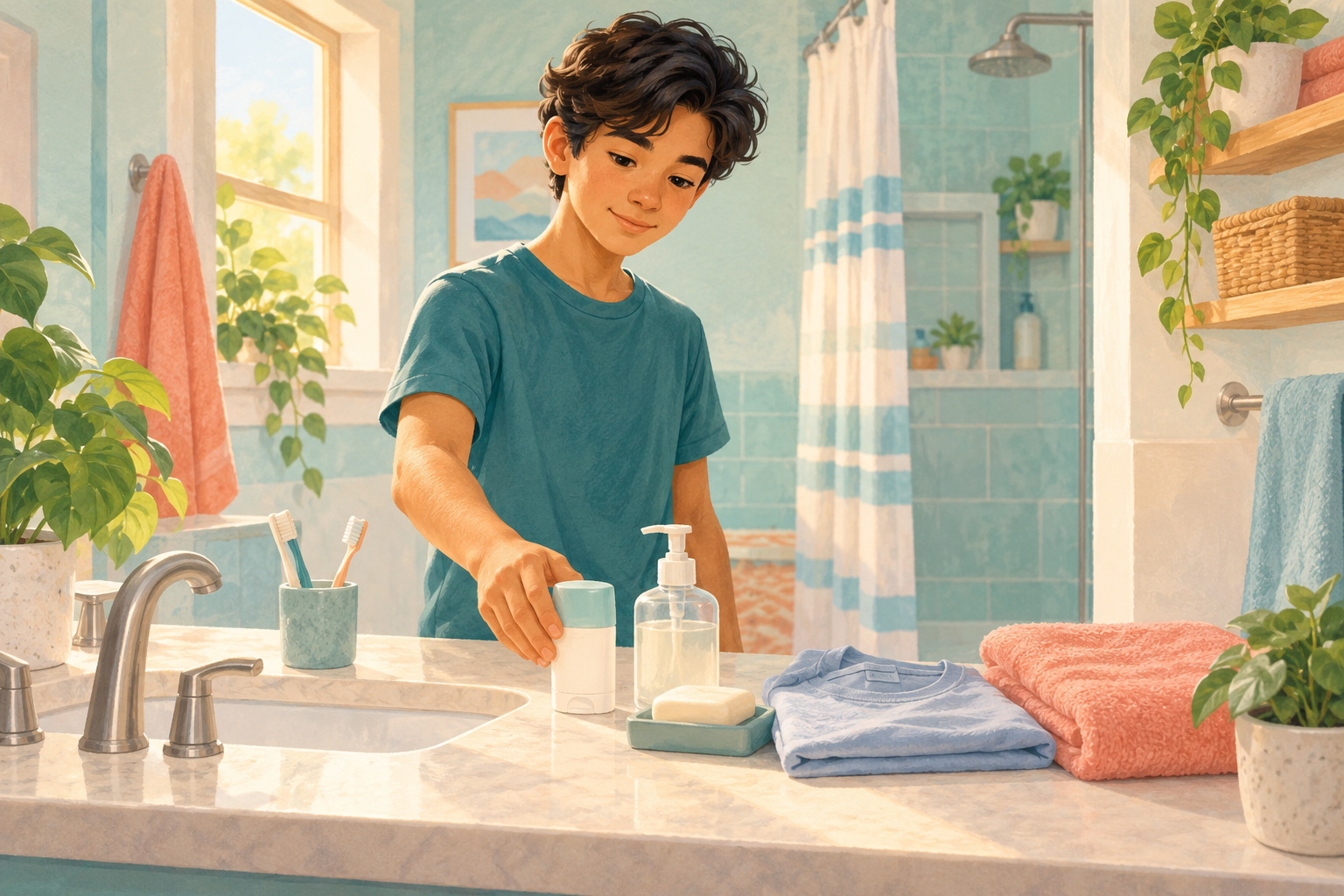
- Wash once a day, paying attention to underarms, feet and the groin. Ordinary soap or body wash and water are usually enough.
- Dry well, especially between toes and in skin folds.
- Put on clean underwear, socks and a shirt. Clothing can hold yesterday’s sweat even after the skin is clean.
- Air or wash sports clothes promptly. A damp uniform left in a bag will smell stronger the next day.
- Keep a backup plan for long school or activity days: a clean shirt, socks or a small washcloth in the bag.
Let your child help choose the shower time and products. A child who dislikes strong scents may prefer an unperfumed wash. A visual checklist can help a younger tween or a child who finds multi-step routines difficult.
Deodorant, antiperspirant or neither?
Deodorant helps reduce or cover odour. Antiperspirant reduces sweating. A child does not have to use either, but many find one useful. Begin with a mild product and apply it to clean, dry underarms. Stop if it causes burning, a rash or persistent itching.
If your child worries that deodorant means something is wrong, make it ordinary: “This is another care item, like toothpaste.” Do not share roll-ons, and remind them that more product is not necessarily better.
Protect confidence while teaching the skill
Body odour can become a source of teasing. Give feedback one-to-one and focus on the routine, not the child’s worth. If another adult needs to help, agree on discreet language beforehand. It can also help to revisit your broader puberty conversation so changes feel expected rather than alarming.
If a child is suddenly avoiding school, changing clothes repeatedly or scrubbing their skin, ask gently about teasing or worry. Our guide to body comparisons and self-image may help you keep the conversation respectful.
When to ask for medical advice
Talk with a clinician if odour appears alongside puberty signs at an unusually young age, is very sudden or unusual, persists despite regular washing and clean clothes, or comes with a painful rash, excessive sweating or other symptoms. Do not use harsh antibacterial products or home remedies on irritated skin without advice.