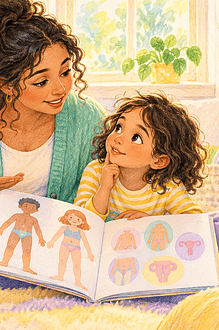
One breast bud appearing before the other can feel alarming to a child who expected both sides to change together. In puberty, development often begins on one side first. The breasts may grow at different rates, feel tender and remain somewhat different in size even after development is complete.
Reassurance should not dismiss the child’s discomfort. “This is common” and “I can see why it feels strange” can both be true.
What a breast bud can feel like
A breast bud is a small, firm area beneath the nipple. It may be sensitive when pressed or bumped. A child might first notice it while dressing, lying on their stomach or during sport. Avoid repeatedly checking or squeezing it, which can increase tenderness and anxiety.
If your child is worried that the bud is a dangerous lump, explain that ordinary breast development can begin this way. If you are uncertain, a clinician can examine it without making the conversation frightening.
Comfort without making appearance the focus
- Offer a soft crop top, camisole, training bra or sports bra if your child wants one.
- Let them choose when and whether to wear it. Development does not create an obligation to hide their body.
- For sport, a well-fitting supportive garment may reduce movement and tenderness.
- Choose soft fabric without scratchy seams for a child with sensory sensitivity.
- Knock before entering and protect privacy while the child changes.
Avoid comparing breast size with relatives or peers. Do not tell a child that one shape is more attractive or “womanly.” Keep attention on comfort, health and the child’s preferences. If online comparisons are adding pressure, our article on body image and social media can help.
Useful words for an awkward moment
Try: “Bodies rarely grow in perfect symmetry. One side often starts first, and the other may catch up. Some difference can remain, and that can still be healthy.” Then pause. The child may want information, a garment, a medical appointment or simply no more discussion that day.
Place this change in the wider sequence of puberty without promising an exact timetable. Breast development often begins before the first period, but every child’s pace differs. If menstruation is likely to be relevant, prepare practically with our first-period guide.
When to ask a clinician
Arrange medical advice for a new distinct lump that does not seem like a typical breast bud, redness or warmth, nipple discharge, skin changes, persistent or worsening pain, fever, or a difference that is causing substantial physical or emotional distress. Seek advice about puberty timing if breast development begins before age eight or has not begun by the age your local clinician considers expected.
Most concerns in teenagers are not cancer, but a professional examination is the right way to assess a symptom rather than guessing at home.