By EdCaptain editorial desk · Published
General educational guidance. No qualified clinical review is recorded for this article. Health and safety information.
A first period should not arrive as a frightening mystery. One calm conversation, a small supply kit and permission to ask imperfect questions can make the experience much less unsettling.
Talk before it happens
Explain that a period is bleeding from the uterus as part of the menstrual cycle. Use clear body words and keep the first explanation short. You might say: “At some point during puberty, you may notice blood in your underwear. It is called a period. It is a normal body process, and you can always ask me for help.”
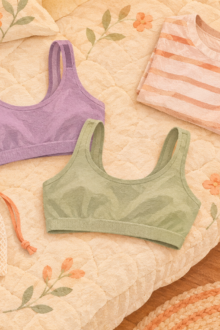
Periods commonly begin around age twelve, but timing varies. Do not wait for a birthday deadline. Breast development often begins before the first period, and an NHS guide recommends preparing in advance. Include children who may menstruate even if they do not identify as girls, and do not tease children who are early or late.
If you want broader conversation starters about changing bodies, use our practical puberty-conversation guide.
Build a simple first-period kit
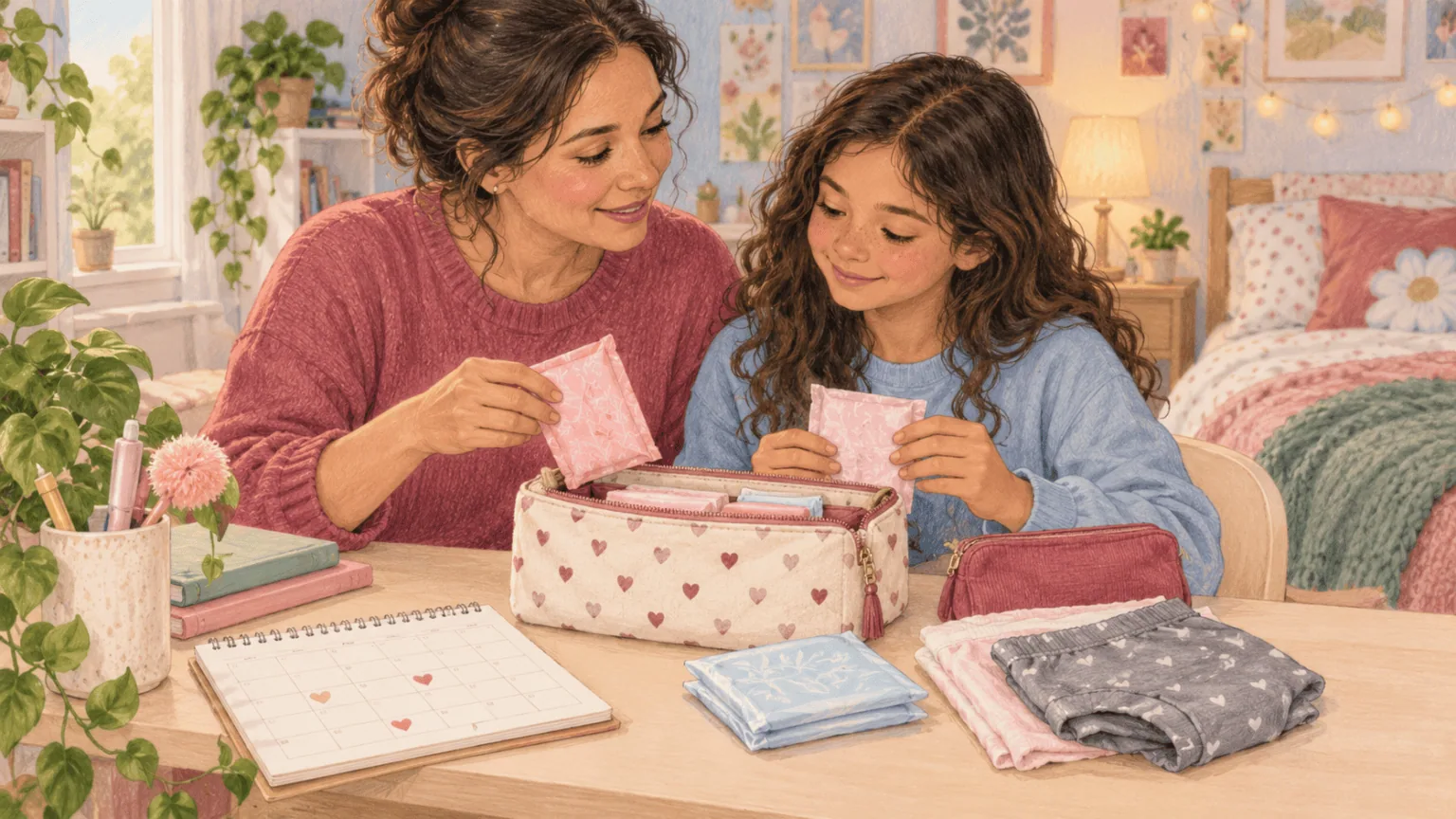
Let your child help choose a discreet pouch. Include:
- two or three pads in original wrappers;
- a spare pair of underwear;
- a small sealable bag for soiled underwear;
- unscented tissues or wipes if useful;
- a brief note with the name of a trusted adult to contact.
Show how a pad attaches to underwear and how to wrap a used one for a bin. Follow product instructions and explain that products need changing regularly. A child can explore other period products later; there is no prize for starting with the most complicated option.
Make a school and outing plan
Ask who they could approach at school: a teacher, nurse, counsellor or office staff member. Check the school’s bathroom and supply arrangements where possible. Practise one sentence: “I think my period started and I need a pad and somewhere private.” Keep a second pouch in a school bag or with a trusted adult.
If clothing is stained, reassure your child that it can be handled quietly. Tie a jumper around the waist if needed, change clothes and rinse fabric with cool water when practical. Avoid turning the event into a public family announcement.
Set realistic expectations
The first cycles may be irregular while the body adjusts. Bleeding may look red or brown. Some people have cramps, tiredness or mood changes; others notice little. Children can usually continue school, swimming and physical activity with a product that works for them.
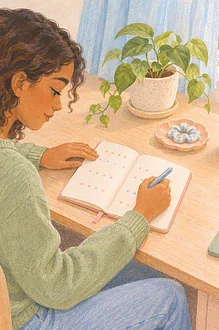
Track the first day, duration and any symptoms, but do not make the calendar a surveillance project. Your child should have privacy and access to supplies in every home where they stay.
Know when to ask for medical advice
Contact a qualified clinician if bleeding is extremely heavy, pain stops ordinary activities, your child feels faint or unwell, periods are causing significant distress, or you are worried about timing. Seek urgent help for severe pain, fainting, breathing difficulty or bleeding that seems dangerous. Guidance differs by person and country, so avoid giving someone else’s medicine or hormone treatment.
Puberty can also intensify body comparisons. If that becomes part of the conversation, responding to body criticism without reassurance battles may help.
The best preparation is practical and unembarrassed: a child knows what is happening, where supplies are and which adult will help without making it a spectacle.