Age guide: 3–8 years. Adapt the activity to your child’s interests and abilities.
There is a difference between wanting a creative afternoon and wanting paint on the curtains. You are allowed to care about both. The trick is to set a manageable boundary around the materials while leaving the ideas open.
Start with one small art space
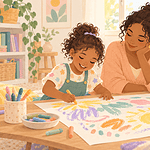
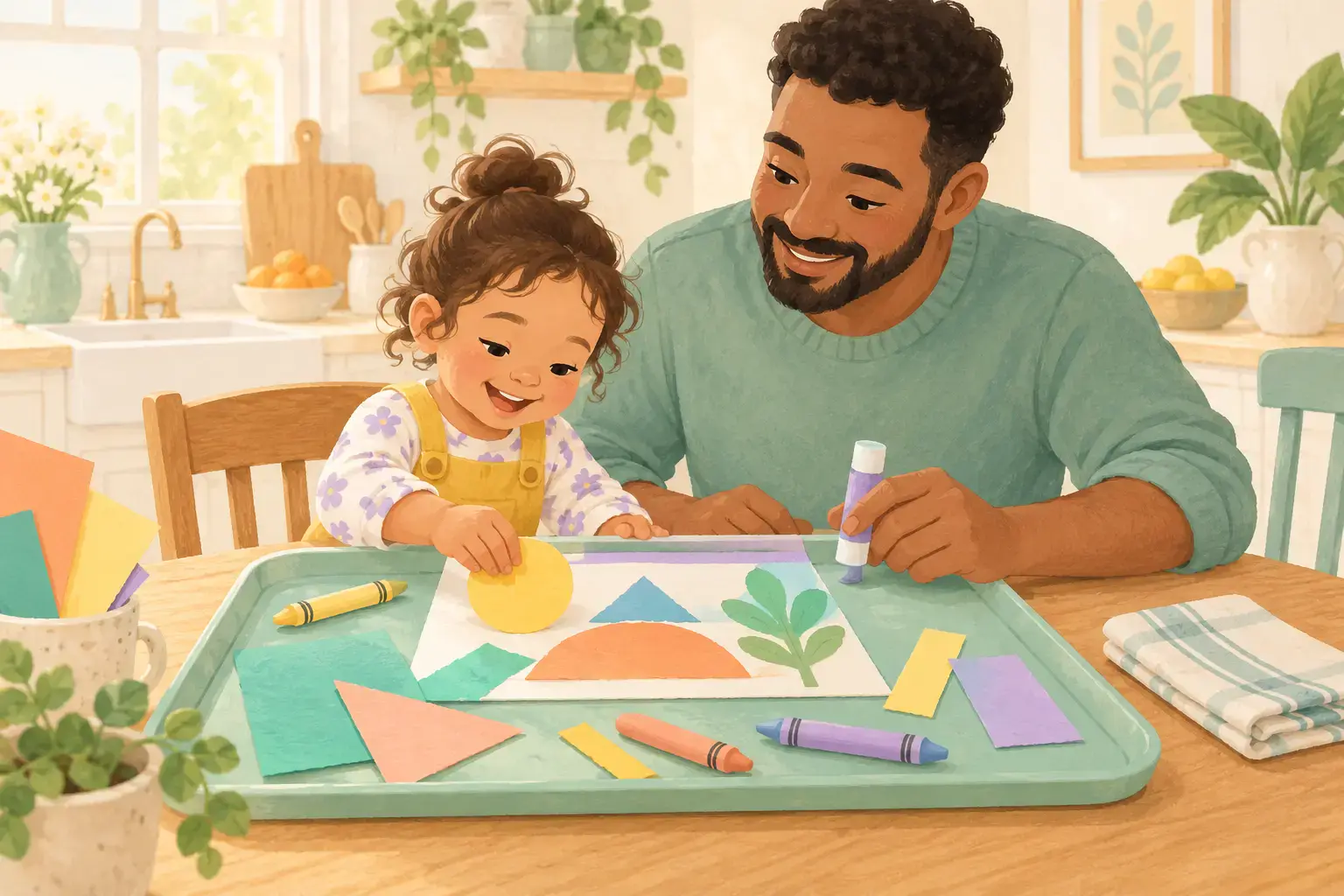
A large tray, a washable mat or one cleared section of table can be enough. Put the materials within comfortable reach and explain where they can be used: “The glue stays on this mat. The picture is yours to decide.”
That separates a household rule from an artistic instruction. You are setting up somewhere workable, not deciding what the child’s finished artwork must look like.
Offer fewer materials, with more possibilities
A simple starting kit could include:
- One large sheet or piece of clean cardboard.
- A few chunky crayons.
- Large paper pieces to arrange.
- An age-appropriate glue stick, used with supervision.
Loose glitter, tiny decorations and several open paint pots are optional. Leaving them out does not make the session less creative. Choose materials for the youngest child who can reach the space, including siblings.
Try a picture that can change its mind
Invite your child to arrange the paper pieces before attaching them. They might make a landscape, a creature, a pattern or simply a pleasing arrangement. Let them move things around as much as they like.
If they want to draw instead, that is fine too. NAEYC’s process-art guidance emphasises exploration rather than reaching one prescribed result. A limited set of materials can still offer plenty of decisions.
Make clean-up part of the invitation
Show where tools will go and where a finished or unfinished piece can rest. Keep a cloth nearby. Give a clear warning before the activity needs to end, especially if your child is absorbed.
- Let the child return a few safe items they can manage.
- Keep adult responsibility for spills or hazardous materials.
- Do not make a young child repair an accident beyond their ability.
- Leave time for the work to dry before carrying it through the house.
On the day you have almost no energy
Offer dry materials, draw outside with suitable chalk, or save the art for another day. You do not need to turn your kitchen into a studio to prove that you support creativity.
If a material feels unpleasant to your child, offer another way to take part. They might use a tool, choose where a piece goes or watch first. Messy hands are not a requirement.
For your next session, change just one thing that made the last clean-up difficult. A smaller glue supply or a better drying spot may do more for family art time than another elaborate project plan.