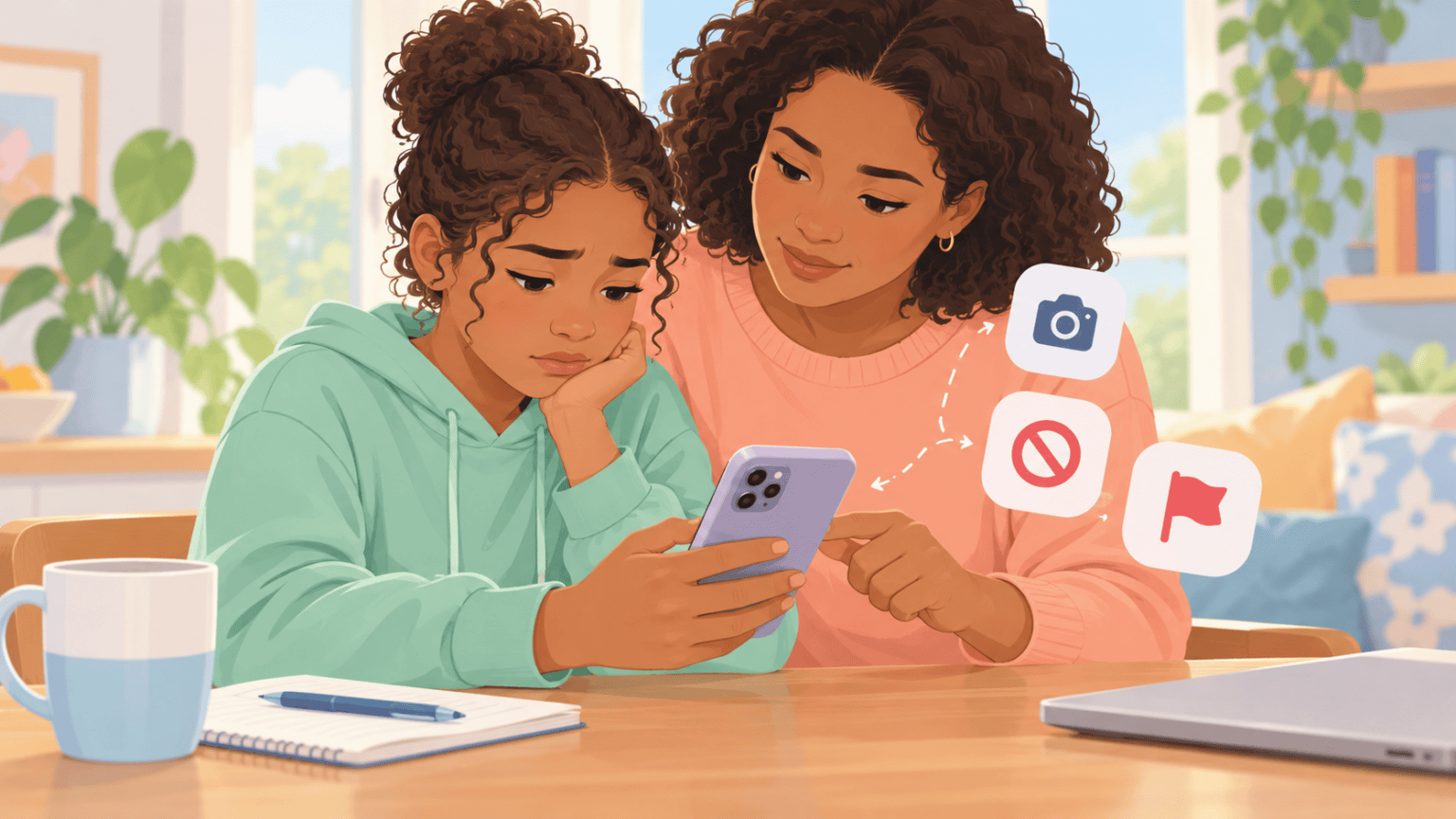
Finding cruel messages, rumours or a humiliating image on your child’s phone can trigger panic. Begin with the sentence your child most needs: “I’m glad you showed me. This is not your fault, and we will work through it together.”
Check immediate safety
Ask whether there are threats, sexual images, blackmail, stalking, an adult involved, or a plan to meet offline. If anyone is in immediate danger, contact local emergency or safeguarding services. Do not forward or publicly repost harmful material.
Preserve evidence before blocking
- Take screenshots showing the message, account, date and time.
- Save links, usernames and a brief timeline.
- Do not argue or retaliate from your child’s account.
- Use the platform’s block, mute and report tools.
- Review privacy, passwords and location sharing together.
Let your child know before you change settings or contact others, unless urgent safety requires immediate action. Taking over the device without explanation can make future disclosure less likely.
Bring in the right adults
If classmates are involved, share specific evidence with the school and ask how online behaviour connected to school will be documented and addressed. Keep records of contacts and agreed follow-up. A one-off rude message and a repeated campaign may require different responses, but both can hurt.
Support recovery
Do not make your child disappear from every online space as the automatic solution. Agree on temporary breaks or safer ways to stay connected. Keep ordinary sleep, meals and supportive friendships going. Ask, “Do you want listening, practical help or company?”
Seek qualified support if distress persists, school attendance changes, or your child withdraws from usual activities. Take self-harm or suicide talk seriously and seek urgent local help.
Related: left out or bullied and when a child does not want to talk.
Agree on what happens next
Before ending the conversation, choose one action for today and one review point. For example, report the account now and check with school tomorrow afternoon. This reduces the feeling that the problem is endless. Tell your child which adults will receive information and what details you will share. Keep checking quietly even after the visible posts stop, because exclusion or rumours may continue offline.