A toddler’s bite or hit can feel shocking, especially when another child is crying and other adults are watching. Start with safety, not a courtroom investigation. Young children can act quickly when frustrated, excited, crowded, tired or unable to express what they need. The behaviour needs a firm response without labelling the child as mean or bad.
In the moment: stop and separate
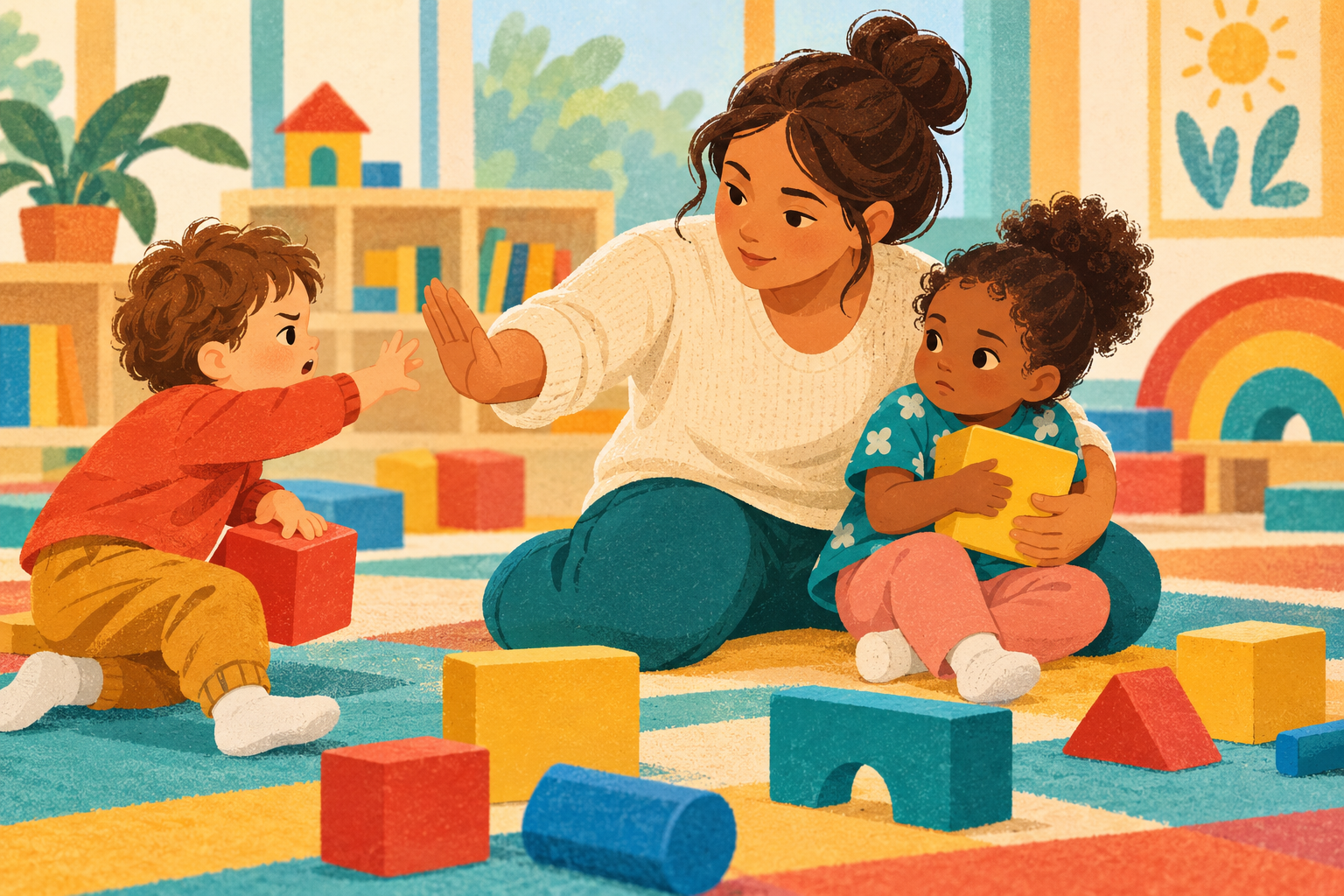
Move close and block the next hit with an open hand, or separate the children. Say one clear sentence: “I won’t let you hit. Hitting hurts.” If biting has happened, attend to the injured child and follow appropriate first-aid advice. Do not bite or hit back to “show how it feels.”
The American Academy of Pediatrics advises stepping in when children are fighting or a child is hitting or biting, then keeping them apart until they are calm. This is protection, not humiliation. Avoid demanding an instant apology while the child is still overwhelmed.
Use fewer words, then wait
A long lecture is hard to absorb during distress. Stay nearby, lower your voice and give the child time. The CDC’s emotion-coaching guidance puts safety and calm before naming feelings or solving the problem.
Once your toddler can engage, name a possible feeling without excusing the action: “You were angry that the block was taken. It is okay to be angry. It is not okay to hit.” If your guess is wrong, that is fine; the child can correct you or simply hear the language.
Teach a replacement the child can actually use
Practise outside the hot moment:
- hold up a hand and say “Stop”;
- call an adult for help;
- trade, take turns or choose another toy;
- stomp feet on the floor, squeeze a cushion or move away;
- use a simple sign, picture or communication device for “mine,” “turn” or “break.”
Role-play for ten seconds with toys. Keep the replacement easier than the behaviour you are trying to stop.
Prevent the next collision
For a week, note what happened just before the hitting or biting. Common practical changes include closer supervision during crowded play, duplicate high-interest toys, a snack before playgroup, shorter visits or help with turn-taking. Notice gentle behaviour specifically: “You gave the truck back with safe hands.”
If another child was hurt, help your toddler take a concrete repair step after calm, such as bringing an ice pack, checking “Are you okay?” or helping rebuild. Forcing the word sorry is less useful than learning how to make things safer; see our guide to apology and repair.
When to ask for professional advice
Talk with your child’s healthcare provider if aggression is frequent, severe, causing injuries, happening across settings, paired with loss of skills or difficult communication, or not improving despite consistent support. Seek urgent help if anyone is in immediate danger. Support should fit the child’s development and communication needs, not assume one method works for every family.
For conflict over possessions, help children share without a tug-of-war.