Age guide: 3 to 8 years. Shorten or lengthen the rounds to suit your child.
Some of the best stories happen while you wait for the bath to run or the traffic to move. These four need nothing but a few minutes and a bit of silliness. Each one lets your child steer, which is the point: your job is to keep the story going, not to correct it.
1. Move the story
Time: 5 to 10 minutes. You need: a clear patch of floor.
- Say one sentence to start, such as “Once there was a rabbit hopping through the wood.”
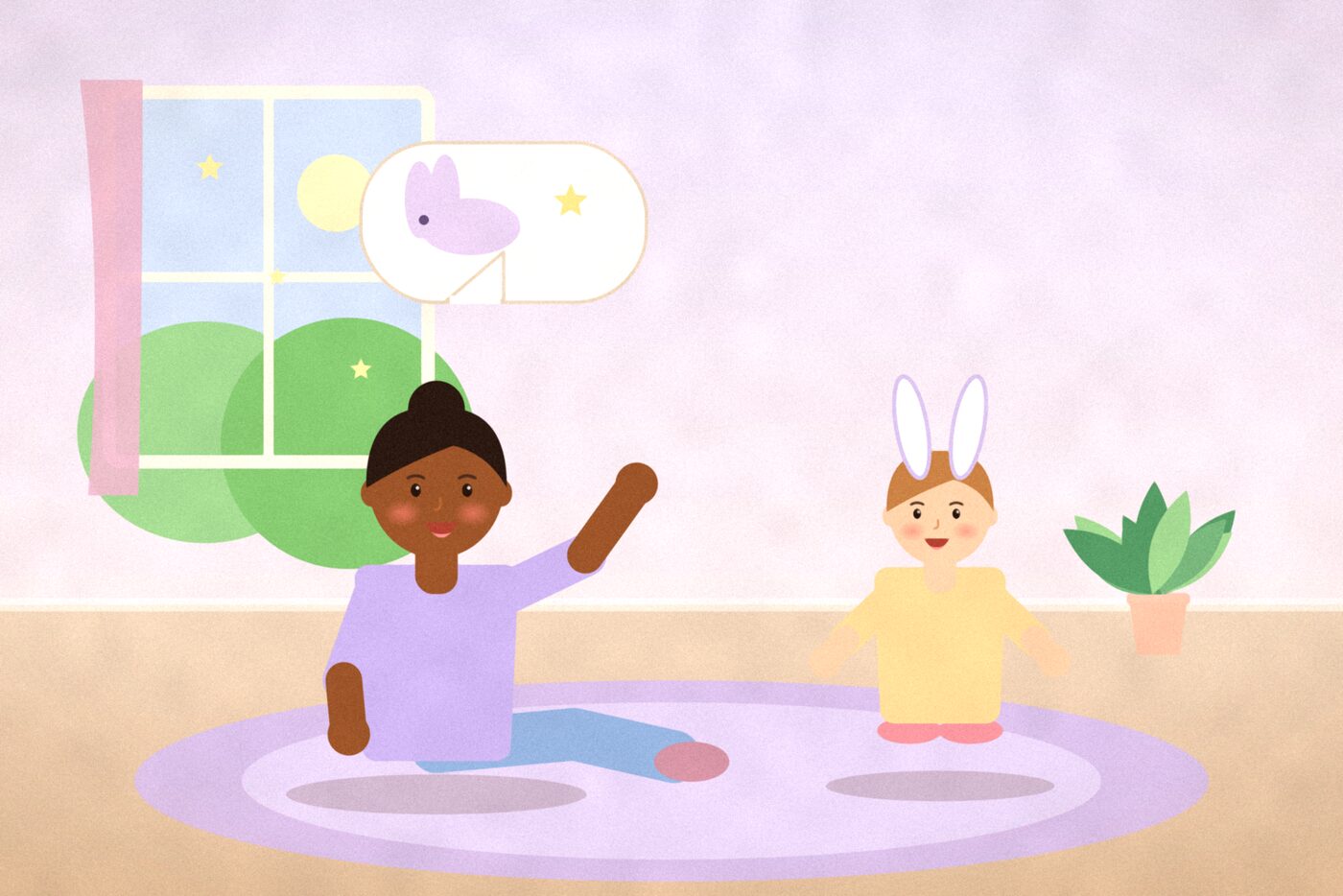
- Everyone hops like that rabbit. Call “freeze” after a few seconds.
- Invite one person to add the next sentence: “The rabbit heard a noise.” Now everyone moves like a nervous rabbit.
- Keep going, with each new idea giving the whole group a new way to move: a big bear, a slippery fish, a very tall tree.
If a child freezes up on turn, offer a choice: “Shall the bear come along, or the rain?” With a toddler, you can narrate and let them move. Keep the space free of sharp furniture corners.
2. What if I…?
Time: 5 to 15 minutes. You need: paper and a pencil, if you want to write the stories down.
Give your child the start of a sentence and let them finish it. “What if I found a door in the garden wall…” “What if our cat could talk for one day…” “What if I got lost in a forest…”
Write down what they say, word for word, even when it wanders. Read it back, then ask whether they want to add more. Some children like to draw the ending, act it out or tell it again to a grandparent on a call. Pick sentence starters from what they are already curious about this week, such as a camping trip, a new school or a book you read together.
3. One word at a time
Time: 5 minutes. You need: two or more players.
Choose a theme, like the beach or a football match. Go around the circle with each person adding a single word to one shared story: “We… ran… into… the… sea…” Expect nonsense. That is half the fun, and laughing counts as success.
If the story collapses, start again with a new first word. For younger children, slow right down and accept a pause. Older children might add a rule, such as every sentence has to end on a word that begins with S.
4. Your story, any way you like
Time: 15 to 30 minutes in total. You need: paper, crayons, blocks or whatever your child chooses.
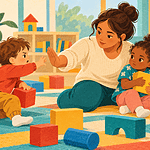
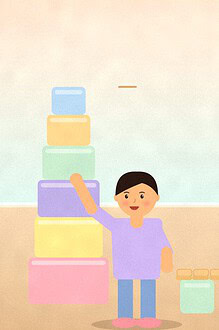
Ask for a small true story: something they did at the weekend. It does not need to be exciting. Tell them they can tell it however they like. They could draw it, build it with blocks, sing it or act it out.
Give them time to plan without hovering. A few minutes before you want to hear it, say, “Five more minutes, then I would love to see.” Then let them share it with you, or with a sibling, or just show you without a word.
When you respond, notice the plan more than the product: “You decided to start with the bus. I liked how you showed the part where it was loud.” Some children may need a nudge to organise their idea. A simple “What happened first?” is plenty. If it is a story with a clear beginning, middle and end, you can say so, but let it be their version.
Why these work for tired parents
None of them needs preparation, and none has a wrong answer. If you would like a story built from a picture, try a picture-based storytelling game. If your child says there is nothing to do, a gentle nudge towards a game of their own may help.