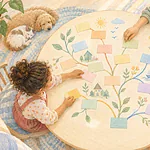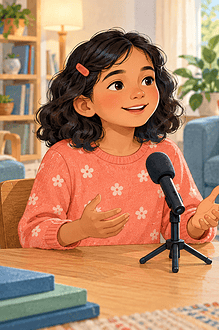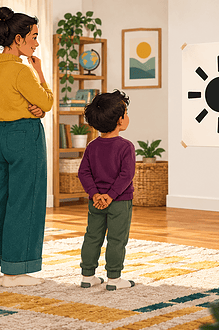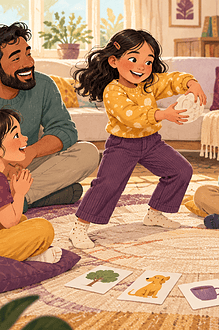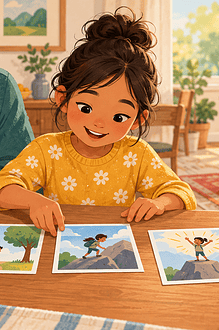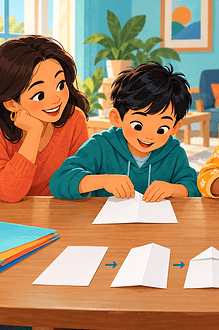
What happened just before the picture was taken? What might happen next? This storytelling game gives everyone a turn to invent an answer. A surprising detail, an unexpected voice or a very ordinary object can be enough to get a story going.
Get ready
Allow about 15–30 minutes for two or more players. Choose a few child-appropriate pictures you own or have permission to use. A family drawing works just as well as a printed card. Keep a timer nearby only if the players enjoy a timed challenge.
How to play
- Put the pictures face down. Demonstrate one turn yourself so children can hear how an unfinished idea can grow into a story.
- A player chooses a picture and takes a quiet moment to think. They can describe what came before the scene, what happens next, or an imaginary adventure inside it.
- Let the player tell the story in their own way. They may speak, sign, act, draw or tell it with a partner. If you use a timer, agree a comfortable length together rather than requiring every child to speak for 45 seconds.
- Invite listeners to name one detail they enjoyed: “The umbrella turning into a boat surprised me.” Keep feedback specific and kind.
- Pass the turn around. Anyone can pass, return later or choose another picture. Finish after a round while people still want to play.
A gentle example
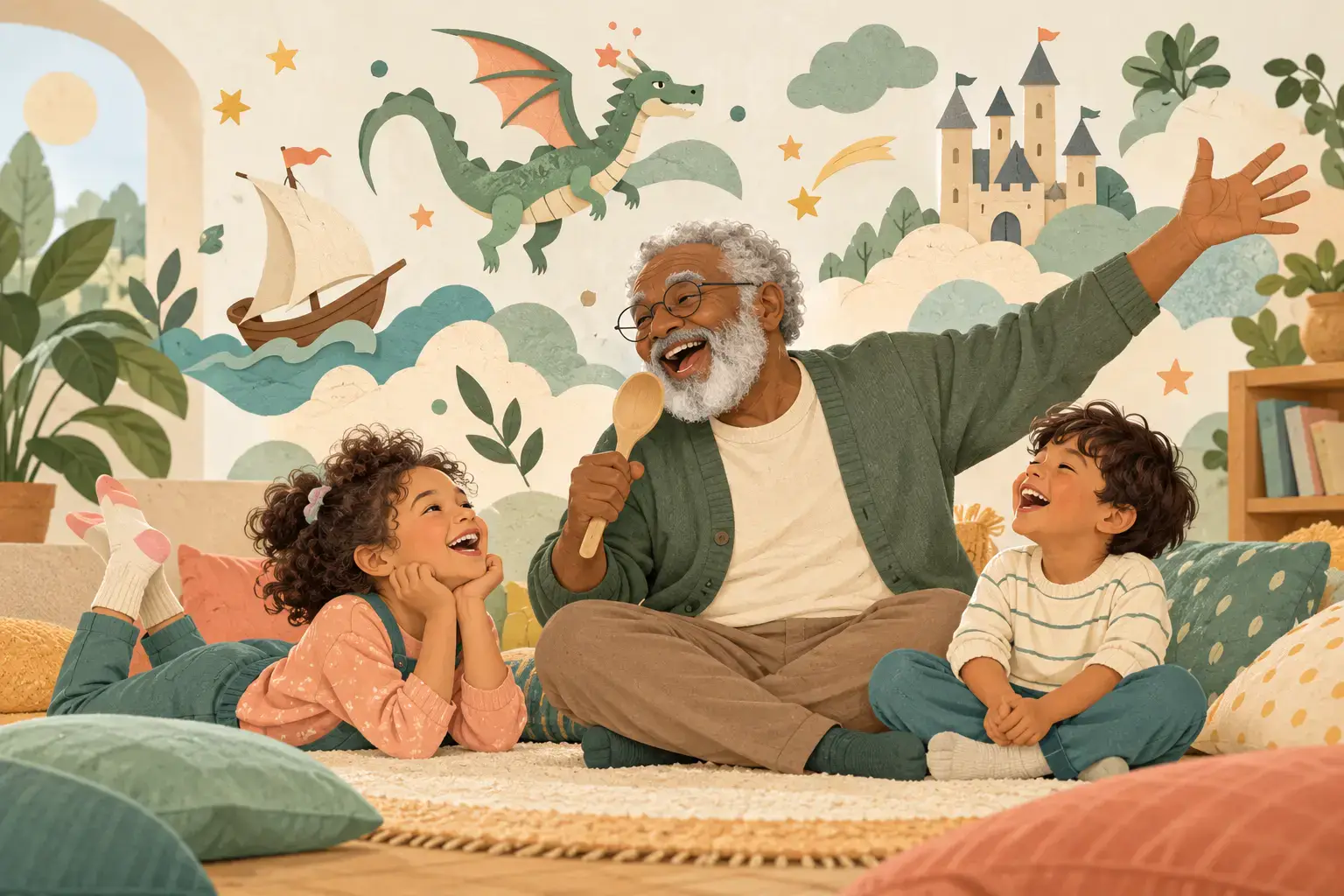
A picture of a spoon could begin: “The spoon was tired of stirring soup, so it became the microphone at a concert for garden birds.” This is a made-up starting point. Your child can take the story somewhere completely different.
Keep the audience on their side
There is no need to vote for the best storyteller. If an older group wants points, agree the rules before starting and avoid ranking children by popularity. Don’t require eye contact, a loud voice or a particular performance style.
For a smaller challenge, each person adds one sentence to a shared story. Afterwards, ask which detail helped the story move forward. Leave the game as play; there is no need to turn every funny moment into a lesson.