Age guide: 3 to 8 years. Adjust the objects for the youngest children (see safety).
A cloth bag, a few ordinary objects and some curiosity are enough for a surprisingly long game. These five ideas use touch, listening and guessing. They give children a reason to find words for what they notice, and to explain how they made up their minds.
Before you start: safety first
- For children under 3, avoid anything small enough to fit inside a toilet roll tube. Small items are a choking risk.
- Leave out sharp edges, glass, coins, batteries and small magnets entirely.
- Watch for allergies if anything food-related is involved, and keep sealed containers taped shut.
- A child who does not want to put a hand in a bag can look inside first, or hold the object in view.
1. Invent it
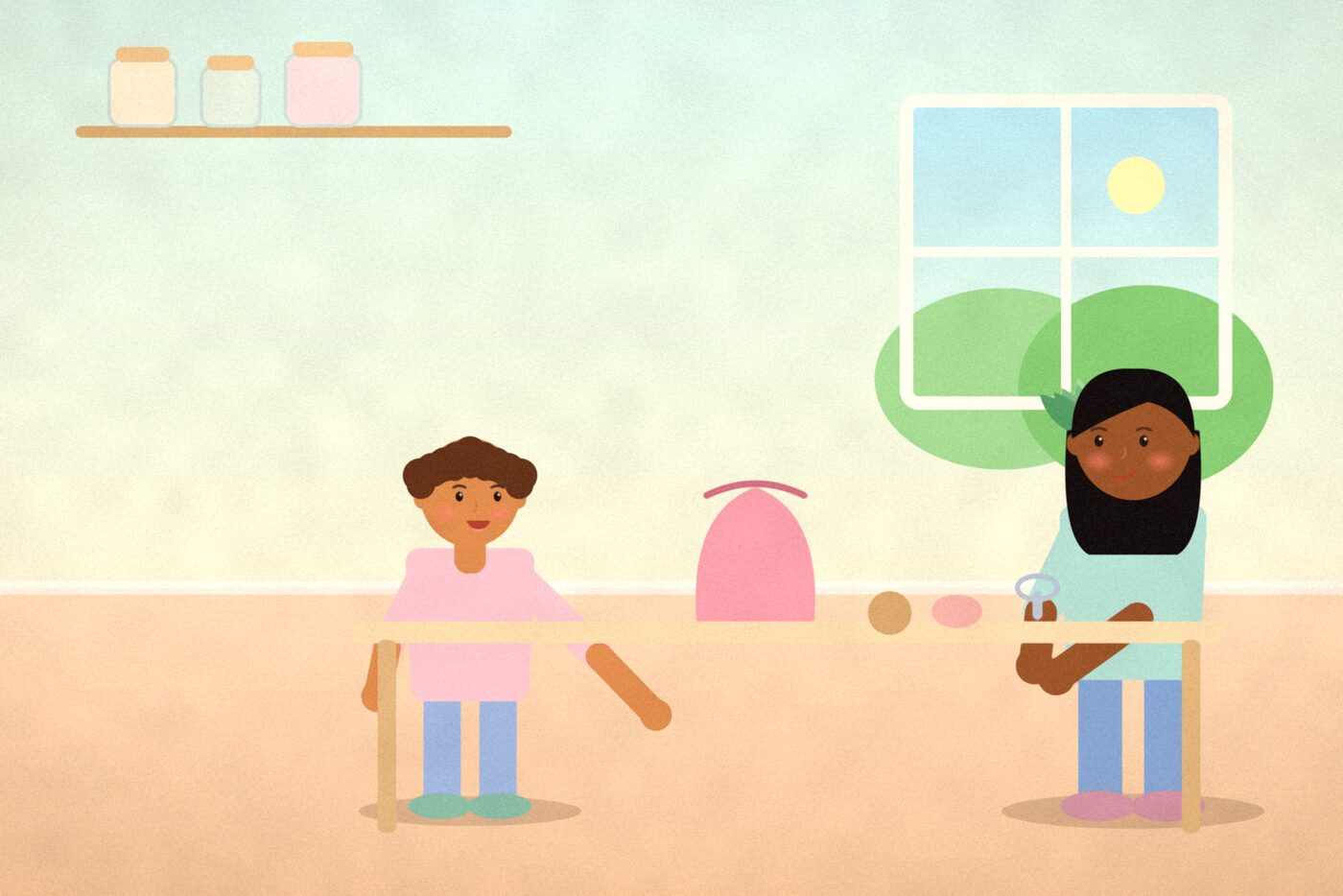
Time: 10 minutes. You need: an opaque bag and a few oddly shaped kitchen or garden items, such as a whisk, a garlic press or a big pine cone.
- Put one object in the bag.
- Your child feels it without looking and does not try to name it.
- Ask them to invent a name and a use for it. “It is a tickle-stick for giants.”
- Others can invent their own versions before you reveal the real one.
The aim is imagination, so welcome every answer.
2. Real or made up?
Time: 10 minutes. You need: two or three bags, each with one different object.
Hand over a bag and tell your child what is in it. Sometimes tell the truth and sometimes make it up: “This is a fish-catcher.” Let them feel the bag and ask questions. Then ask: real or made up? Ask them what made them decide.
Reveal the object each time. Children often enjoy being the storyteller for the next round, which is good practice in giving clear, believable clues.
3. Describe, don’t name
Time: 10 minutes. You need: a bag and a few familiar objects.
One person reaches into the bag and describes only what they feel: “It is bumpy and cold and has a handle.” Everyone else guesses. The describer must not say what it is, even if they know. If the guessing is too easy, add more objects. If it is too hard, announce a theme such as “kitchen things”.
4. Shake, listen, decide
Time: 10 to 15 minutes. You need: four to six lidded containers, taped shut, each holding something different, like rice, dried pasta, cotton wool or a spoonful of water.
Tell your child the challenge: find out what is in each one without opening it. Let them make a plan first. They might shake, tip, weigh in their hands or listen close to their ear. Ask what clues they gathered and what each guess is based on, then open them one by one.
5. A basket of puzzling things
Time: a few minutes a day. You need: a small basket and a changing selection of safe, unfamiliar objects, such as a tea strainer, a large shell or a nutcracker with no sharp parts.
Each morning, let your child choose one that they do not know. Ask them to describe it and guess what it is for. Leave the basket out for the rest of the day. You may hear new words appearing in their play. If you like, jot them down.
For another clue-based game that needs only your voice, see a game of guessing with yes-or-no questions.