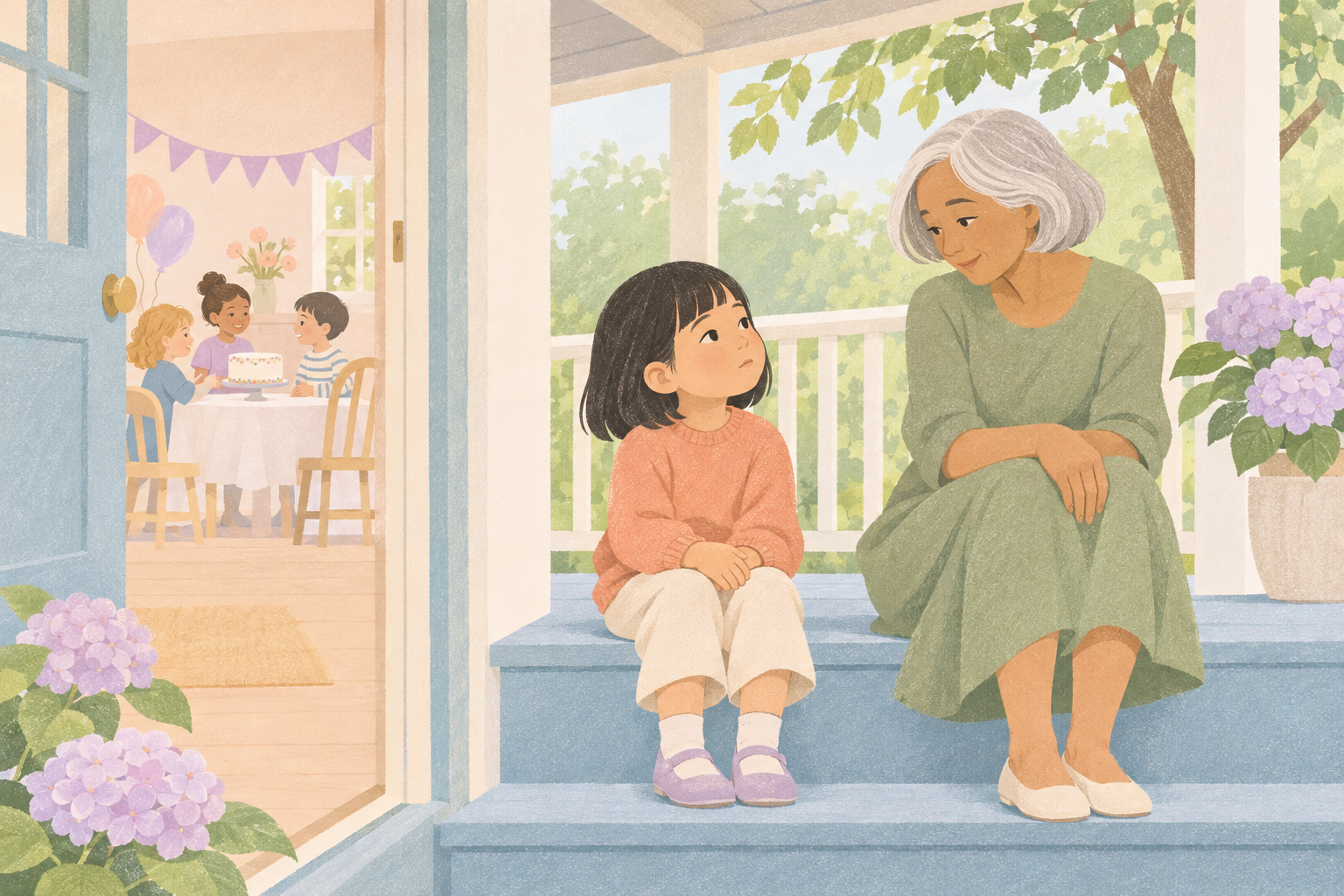
Everyone crowds around the cake. Your child was happily playing a minute ago, but as soon as the singing starts, they cover their ears and burst into tears. You can take a break together while the song carries on. A quiet “Come with me” is enough to get you both moving.
This can happen even when the birthday is for somebody else. The song may start all at once, several people may move closer, or your child may be startled by the clapping that follows. You can help them through the moment and work out later which part bothered them.
Find a quieter spot together
Move to the edge of the room or to a quieter place where you can stay together. At a house party that might be a hallway the host has said you can use. In a restaurant it might be near the entrance, away from servers carrying food and from doors opening onto traffic. If your child pulls towards the door, go with them and choose a safe place to stop.
Keep your first sentence short. “That started suddenly. I’m here.” Sit nearby or offer a hand if your child usually likes that. If they want space, stay close enough to supervise and let the room get quiet around them. A toddler may settle on your lap. A preschooler might point to the chair they want. A child who communicates by gesture or device can show you what they need in their usual way. You can wait before asking questions.
When another adult notices you leaving, an ordinary “We’re taking a little break. Enjoy the cake” keeps the moment private. You can let the host know where you are when you get a chance. If you’re on your own with more than one child, bring them with you or check that another agreed adult can supervise the sibling who wants to stay.
Offer a way back once the song is over
Listen for clapping, cheering or another sudden burst of sound before you say it’s quiet. Then give your child a choice they can actually use. “The song’s finished. Do you want to go in and get some cake, or sit here a bit longer?” If they don’t answer, give them another minute. You could offer to walk back together, watch from the doorway or find a seat farther from the group.
Some children want to get straight back to the game. Others are ready to go home. Let your child show you what they can manage. If they’d like to acknowledge the birthday, they can wave to their friend later or hand over a card when the room is calmer. Leaving the room during the song still leaves plenty of ways to join the celebration.
Work out which part was hard
Later, when you’re both doing something ordinary, try “I saw you cover your ears when they brought the cake out. What did you notice?” A child might remember the first loud note, the clapping, the crush of people near the table, or a different detail entirely. If they’re too young to tell you, pay attention to what you saw. Did they perk up as soon as the song finished? Were they already tired and looking for a break before the cake came out? Use those clues to decide what to change next time.
One upsetting song gives you limited information about how your child experiences sound. If ordinary sounds often feel too loud or painful, talk with your child’s doctor. The NHS advises seeking care for that pattern and explains when a hearing specialist may be involved.
Make a small plan for the next invitation
- Ask for a quiet heads-up. Text the host before the party. “Could you let me know just before the song? We may step out for a minute and come back.” This gives you time to move and lets the host carry on with their plans.
- Show your child the sequence. “First the games, then the cake. There might be singing. We can sit by the door or take a break with me.” Use pictures, a hand signal or a brief conversation, depending on what they understand best.
- Agree on help at school or a drop-off party. Tell the adult in charge what you’ve seen and what helps. Agree on a nearby place the child can go with supervision, who will check in with them, and how they can rejoin. For a child who prefers privacy, a word or gesture to the adult can be enough.
If you’re planning your child’s own celebration, EdCaptain’s guide to planning a low-pressure birthday has ideas for choosing what happens around the cake. For distress in other crowded or noisy settings, see how to respond when your child feels overwhelmed.