An inclusive classroom plan does more than place a deaf or hard-of-hearing child near the teacher. It ensures direct access to language, teaching, peers, safety information and the informal talk where much school life happens. The right mix depends on the child’s language, hearing profile, technology, age and preferences. Ask the student what works; do not assume one accommodation fits every lesson.
- Start with language and communication access
- Improve the listening and viewing environment
- Make spoken and recorded information visible
- Plan technology and downtime
- Include participation, fatigue and wellbeing
- Cover assessment, emergencies and activities
- Review with evidence and student voice
- Sources and further reading
Start with language and communication access
Record the child’s primary and additional languages and modes: a signed language, spoken language, written language, cued speech, AAC or a combination. Specify when a qualified interpreter, transliterator or captioning service is needed. A classroom aide who knows a few signs is not a substitute for fluent language access.
Plan direct communication with teachers and peers, not only communication through an adult. Arrange opportunities to learn and socialize with people who share the child’s language where possible. For younger children, ensure all-day access during play, meals, transitions and clubs—not just formal instruction.
Improve the listening and viewing environment
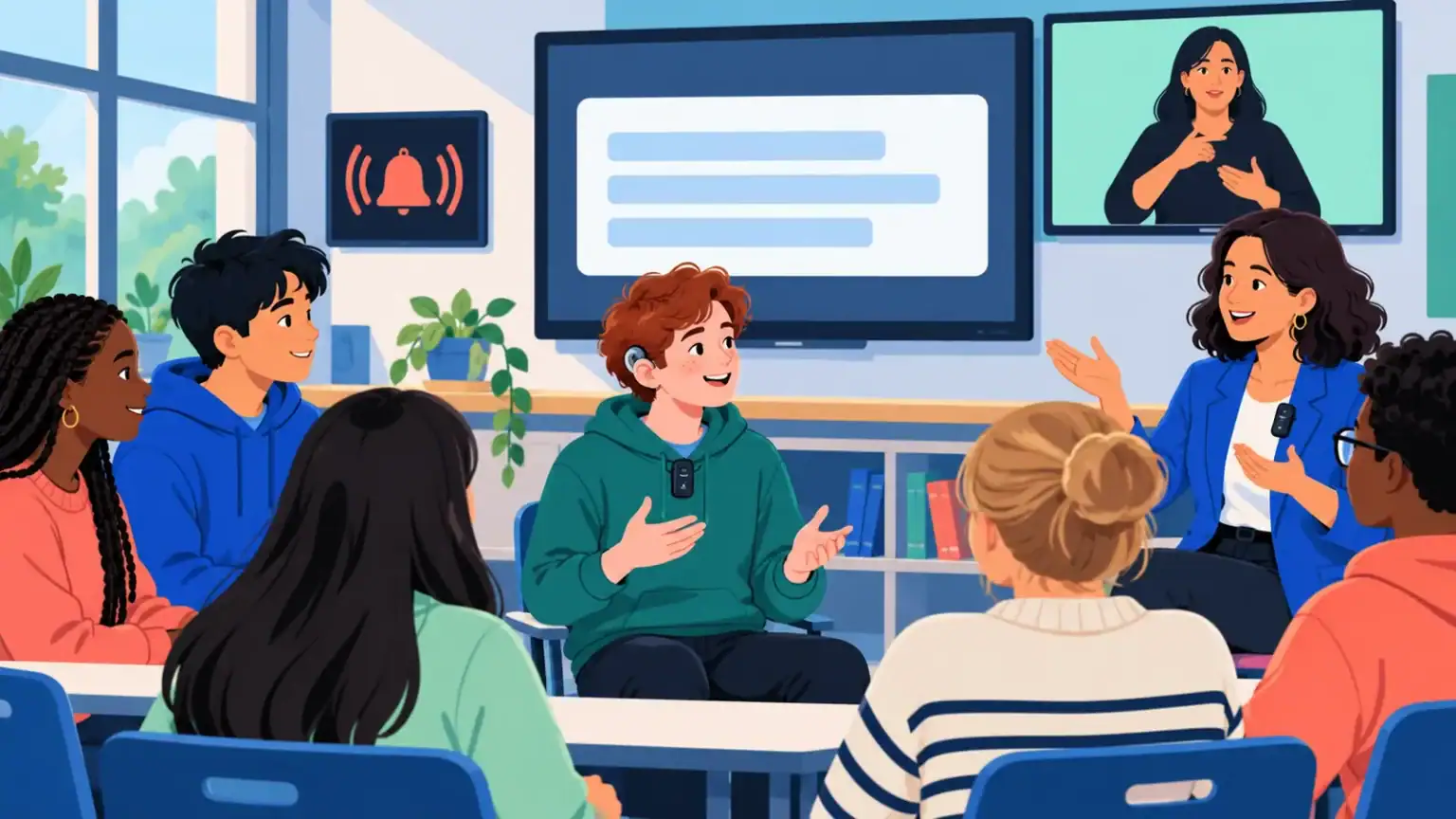
- Seat the student where they can see the teacher, interpreter, board and classmates without constant turning.
- Keep faces visible and avoid speaking while writing with your back turned.
- Reduce avoidable background noise and reverberation; use soft furnishings or acoustic treatment where available.
- Provide good, even lighting and avoid placing a speaker in front of glare.
- Use one speaker at a time and identify who is talking.
- Repeat or summarize peer comments before responding.
Preferential seating should be flexible. The best place for a science demonstration may differ from the best place for group discussion. A child should not be isolated at the front away from friends simply because adults wrote “front row.”
Make spoken and recorded information visible
Provide accurate captions for videos and live content when needed. Auto-captions can make serious errors, so check them and correct key vocabulary. Share slides, new terms and reading materials in advance. Write homework and changes to routine rather than relying on an announcement across a noisy room.
Visual schedules, demonstrations and diagrams benefit many learners, but they should support—not replace—complete language. Allow the student to look between materials, interpreter and teacher. Do not require note-taking while they are watching signed or visual instruction; provide notes or a copy.
Plan technology and downtime
If the child uses hearing aids, implants or a remote microphone, name who checks the system, stores backup supplies and contacts audiology or family. Agree when the microphone is muted and how it captures peer discussion. Technology must not transmit private staff conversations.
Write a downtime plan. If a device fails, the child still needs captions, interpreting, written instructions or another established route. Never exclude a child from learning because equipment is being repaired. Our assistive technology guide explains how access tools and teaching work together.
Include participation, fatigue and wellbeing
Listening, speechreading and watching an interpreter require sustained attention. Build short visual or quiet breaks without making the child miss essential teaching. Watch for headaches, withdrawal, copying, slower responses or end-of-day exhaustion. Review workload and access rather than calling the student inattentive.
Ensure group work is genuinely accessible. Small circles, good lighting, turn-taking and shared written ideas can help. Teach classmates communication etiquette without making the child deliver every awareness lesson. Address bullying, imitation of signing, device grabbing and exclusion promptly.
Cover assessment, emergencies and activities
Assessments may require extra time, a quiet room, captions, an interpreter, visual instructions or approved technology. The plan should describe access, not lower expectations unrelated to hearing. Include assemblies, sports, music, trips, transport and after-school clubs.
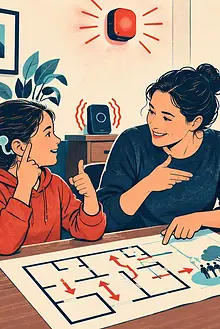
Provide visual or vibrating alarms and a named emergency communication procedure. Make sure substitute teachers and trip leaders receive essential access information without sharing unnecessary medical details.
Review with evidence and student voice
Set a date to review the plan. Gather observations across subjects, device data where appropriate, language and learning progress, fatigue, friendships and the student’s own report. Ask concrete questions: “When is it hardest to follow classmates?” “Do captions arrive in time?” “Can you talk directly with friends?”
If listening concerns are still being assessed, our hearing assessment guide explains the process. The plan should evolve as the child, curriculum and technology change. Inclusion is achieved when access is built into the day, not when the child works harder to fill every gap.