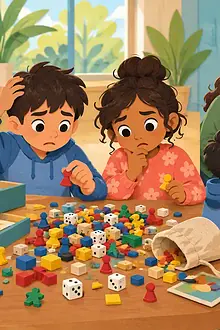
A price is not simply the amount a seller hopes to receive. It has to relate to costs, usefulness, alternatives and what a buyer can reasonably understand. This fictional activity lets older children discover why revenue is not the same as profit.
Choose a harmless pretend product
Use something simple such as three handmade bookmarks, labelled storage cards or a fictional snack stand drawn on paper. Do not prepare food for sale, use copyrighted characters, collect customer details or spend real money. The goal is the calculation.
Make a cost sheet
- Materials actually used
- Packaging or delivery, if the scenario includes them
- Expected waste or failed samples
- Equipment that must be borrowed or bought
- Time needed to make and serve
- A small buffer for an overlooked cost
The SBA advises prospective businesses to calculate startup costs and explain how revenue will be earned. In a child activity, use rounded pretend amounts and make assumptions visible.
Calculate cost per item
- Add the batch costs.
- Divide by the number of usable items.
- Choose a price above that cost if the fictional venture needs a surplus.
- Multiply price by likely sales, not by every item made.
- Subtract total costs from revenue to find the fictional result.
If materials cost 18 tokens for six usable bookmarks, the material cost is three per bookmark. Selling at four creates one token before accounting for time or unsold items.
Add the fairness questions
Is the price clear? Is the product described honestly? Can buyers say no without pressure? Is anyone working without recognition? Would a cheaper version reduce waste? Fair pricing does not mean the lowest possible number; it means the terms are understandable and the plan does not depend on misleading people.
Test three scenarios
Change one assumption: two items do not sell, material cost rises or making each item takes twice as long. Recalculate. Older teens can compare a one-time equipment cost with repeated costs. A calculator is appropriate because choosing the right numbers matters more than mental arithmetic.
Keep adults responsible
Any real sale needs adult oversight, local permission and safe payment arrangements. Never ask children to meet buyers, publish an address or invest savings they cannot afford to lose.
Related EdCaptain guides: needs and wants in context, comparing the real cost, and planning within a fixed budget.
Distinguish three money words
- Revenue: all the pretend money received from sales.
- Cost: money or resources used to make and offer the product.
- Profit or loss: what remains after costs are subtracted from revenue.
Use different coloured counters so children can see the movement. Ten items sold at five tokens produce 50 tokens of revenue. If total costs were 38, the fictional profit is 12, not 50.
Include time without pretending it has one universal price
Ask how long the batch takes and whether the work is enjoyable, tiring or replacing another commitment. Older children can test a pretend hourly amount, but explain that real wages, taxes and labour protections are governed locally. A child venture must never interfere with school, rest or safe play.
Run the unsold-stock round
Make eight samples but sell only five. Recalculate revenue and decide what happens to the remaining items. Can materials be reused? Would making smaller batches reduce risk? Discounting may recover some cost, but buyers still deserve honest information.
Review the result
Ask whether the price covered the costs, whether the amount of work felt reasonable and whether the product offered real value. If the result is a loss, change one assumption rather than blaming the maker. Possible revisions include a smaller batch, different material, simpler packaging or stopping the idea.
Keep every figure fictional unless an adult has chosen to supervise a real, lawful activity. The calculation is a thinking tool, not a promise of income.