A budget becomes meaningful when it helps a plan fit inside a limit. In this activity, the family plans a pretend picnic, film afternoon or celebration using fictional prices. No one shares household income, debt or bills. The challenge is to make choices, total the list and revise it without treating the first plan as a failure.
Choose the event and the limit
Write a simple brief: “Plan a picnic for six people with 30 tokens.” Decide what the plan must include, such as water, a place to sit and one activity. Add optional items such as decorations, a special dessert or transport upgrades. The CFPB recommends making lists and plans before shopping; this game makes that habit visible.
Build a price menu
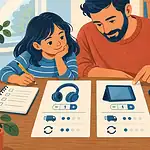
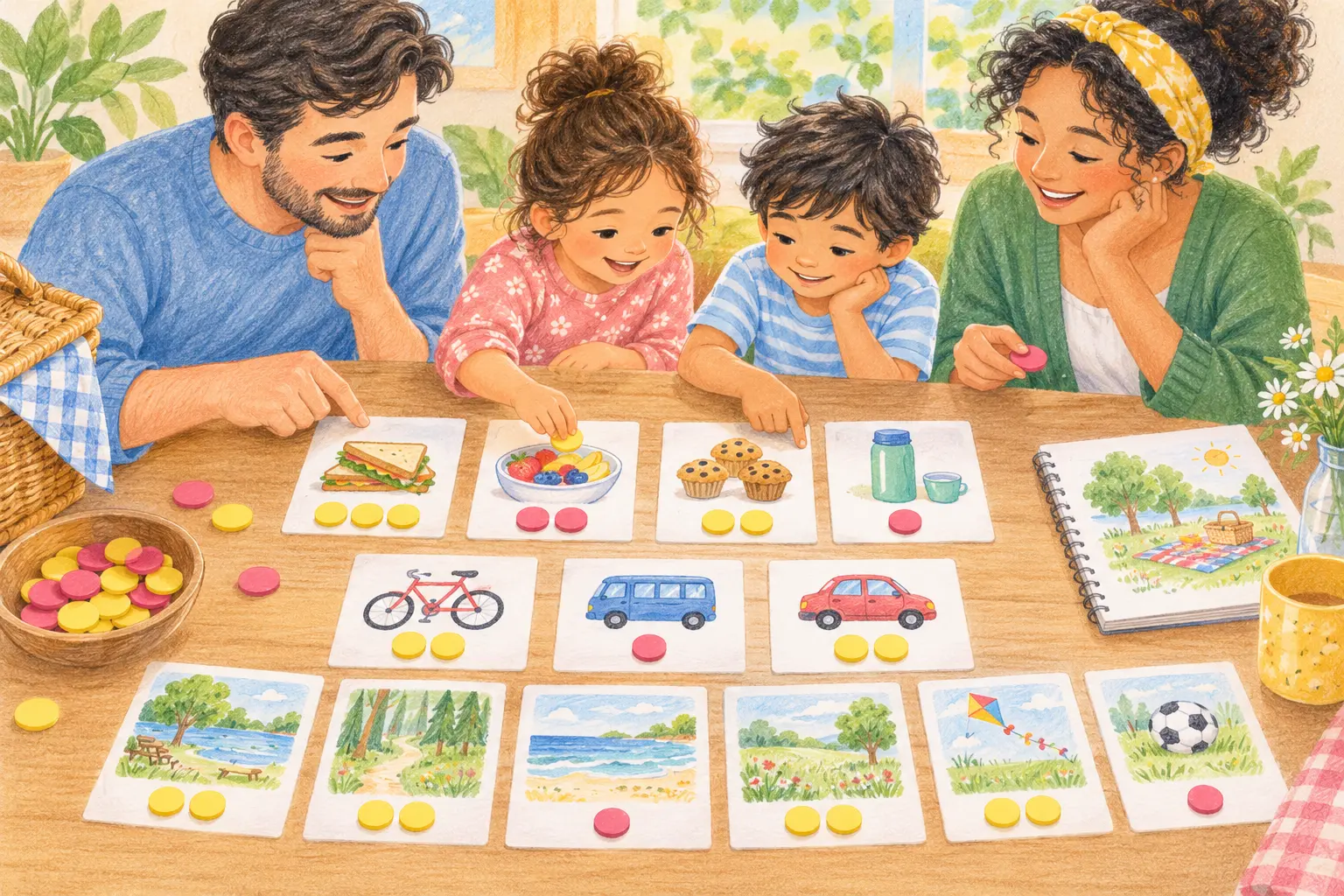
Create ten to fifteen cards with rounded pretend prices. Include free choices: use a public park, borrow a game, make a playlist or reuse decorations. Include a few trade-offs: individual drinks may cost more than a shared jug; a distant venue may be free but require transport.
Make the first plan
- Read the brief. Who is included and what genuinely must work?
- Choose essentials first. Put the cards on the table and keep a running total.
- Add one or two priorities. Let the group decide what would make the event feel special.
- Check the total. If it fits, keep a small buffer for a forgotten cost.
- If it does not fit, revise. Swap, borrow, reduce quantity or change the plan.
Use roles without creating a boss
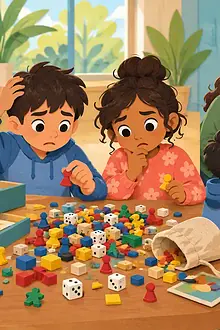
One child reads prices, another totals, another checks the brief and another watches whether everyone has spoken. Rotate roles in a second round. A child with limited numeracy can match tokens to cards, while a child who prefers writing can keep the list.
Add realistic surprises
Introduce one card after the first total: rain requires an indoor backup; one guest needs an accessible venue; a price rises; or a relative offers to lend chairs. The group may change the plan. Revising after new information is responsible planning, not indecision.
Protect children from adult money worries
Use invented amounts and neutral language. Do not say, “This is what happens because we are broke,” or ask a child to solve a real shortfall. Adults can explain that every household has limits without transferring anxiety or responsibility. The game should end when it stops feeling playful.
Reflect on the final plan
- Which item mattered most to the event’s purpose?
- What did we replace without losing much?
- Did a free option work better?
- Where did we leave a buffer?
- What would change if the number of guests changed?
Use the same skills in changing a decision when new information arrives, making a fair choice when needs compete, and guiding a group decision without taking over.
Run a second round with new priorities
When the first plan fits the token budget, change one condition. Perhaps rain moves the picnic indoors, a guest needs an allergy-safe food option, or the family decides transport matters more than decorations. Ask the group to protect the new priority while keeping the same total budget. They may swap, simplify or remove items, but they cannot invent extra tokens.
Give each person one short turn to explain a proposed change: “I would keep transport and replace decorations with drawings we make.” Record the revised total after every decision so the numbers remain visible. Younger children can use physical counters; older children can calculate subtotals and a small buffer for an unexpected cost. Keep the exercise fictional and avoid asking children to solve real household shortages. End by naming the trade-off the family accepted and one value it protected, such as inclusion, safety or time together. A workable budget is a plan aligned with priorities, not simply the cheapest possible list.