By EdCaptain editorial desk · Published
When allowance and chores are mixed together without explanation, children can end up asking whether every plate cleared or sock folded deserves payment. The alternative is not one perfect allowance system. It is a clear family agreement that separates belonging, learning and earning.
Start with three baskets
- Family contribution: small tasks everyone does because they share a home, adjusted for age and ability.
- Learning responsibility: tasks a child is practising with support, such as packing a bag or feeding a pet.
- Optional paid jobs: extra, clearly defined work beyond the ordinary routine, if the family chooses to offer it.
The CFPB suggests age-appropriate conversations about allowance, extra work and family priorities. It does not say every family must pay allowance or attach money to chores.
Write the agreement before money changes hands
Choose two or three ordinary contributions and, if relevant, one or two optional paid jobs. Name what “done” means, when payment happens and what happens if the job is incomplete. “Wash the family car for eight tokens on Saturday, including windows and putting supplies away” is clearer than “help more.” Never make payment depend on affection, school grades, keeping secrets or tolerating unsafe work.
Use a predictable rhythm
- Review the choices at the start of the week.
- Let the child accept or decline optional jobs without losing food, care or belonging.
- Give one neutral reminder if that is part of the agreement.
- Check the result together.
- Pay the agreed amount, or explain calmly which agreed part remains unfinished.
If adults change the terms after the work, children learn that agreements are unreliable. If a task turns out to be much harder than expected, revise it together rather than accusing the child of laziness.
Adapt for age and ability
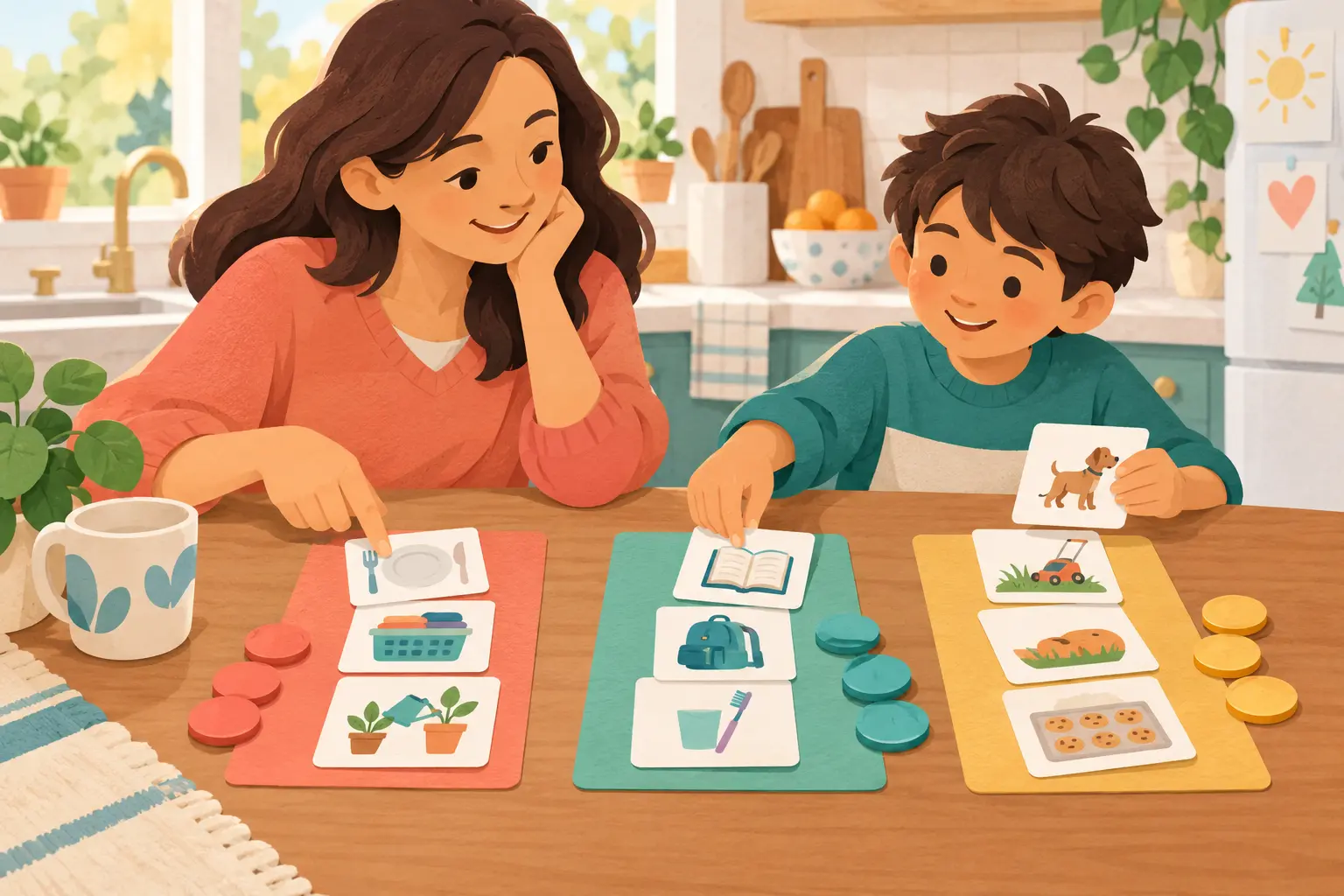
A younger child can match picture cards to tasks. School-age children can record jobs and payments. Teens can estimate time, negotiate a fair rate for an extra job and compare earning with other commitments. A child with limited mobility or attention can choose a contribution that genuinely fits; fairness is not identical work.
Keep the money lesson humane
Allowance is not a wage for being a family member, and unpaid care should not fall automatically to one gender or the oldest child. Adults remain responsible for the household. If money is tight, say so without making the child responsible: “We are not doing paid jobs this month, but your contribution still matters.” Praise reliability and problem-solving, not the amount earned.
Related EdCaptain guides: needs and wants in context, comparing the real cost, and planning within a fixed budget.
Try two family models before choosing
Model A gives a small regular allowance that is not removed for an ordinary mistake. Optional jobs earn an agreed extra amount. Model B has no regular allowance but offers occasional paid projects when the family budget permits. Ask what each model makes clear and what could become confusing. A family might combine them, pause them or use only pretend money.
Discuss what happens when a child is ill, away or needs more teaching. Ordinary care and belonging continue. A contribution may be reassigned, delayed or completed with help. If a paid job cannot be finished, the adult should refer to the agreement rather than inventing a punishment.
Useful phrases for adults
- “This is one of the small jobs we all do because we live here.”
- “That is an extra project. Would you like to hear the payment and deadline?”
- “You may decline this paid job. I will find another plan.”
- “The agreement was not clear enough, so we will rewrite it before next time.”
Review after four weeks. Ask whether tasks fit the child’s age, school load and access needs, whether payment happened predictably and whether unpaid contribution is divided fairly. A system should support responsibility and money practice without making family care feel purchasable.