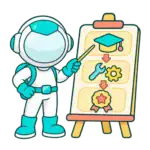

- Write a goal you can observe
- Use the five-part cycle
- Keep recall brief
- Model the thinking, not only the answer
- Choose practice that matches the goal
- Give prompts in a fading order
- Adapt the format
- Add a useful pause
- Stop with a useful record
- When the lesson stalls
- Plan the next lesson from evidence
- Keep materials small and ready
- Sources and further reading
By EdCaptain editorial desk · Published
When a home lesson goes badly, the answer is rarely another ten worksheets. A short lesson works best when everyone knows the one thing the child is trying to understand or do. The task, explanation and review should all point to that goal.
Write a goal you can observe
“Do fractions” is too broad. Try: “Explain why two quarters equal one half using objects or a drawing.” “Study ecosystems” becomes: “Build one food chain and explain what each arrow means.” The goal should describe learning, not time spent.
Use the five-part cycle
- Recall: bring back one useful idea from earlier learning.
- Model: the adult shows one example while explaining decisions.
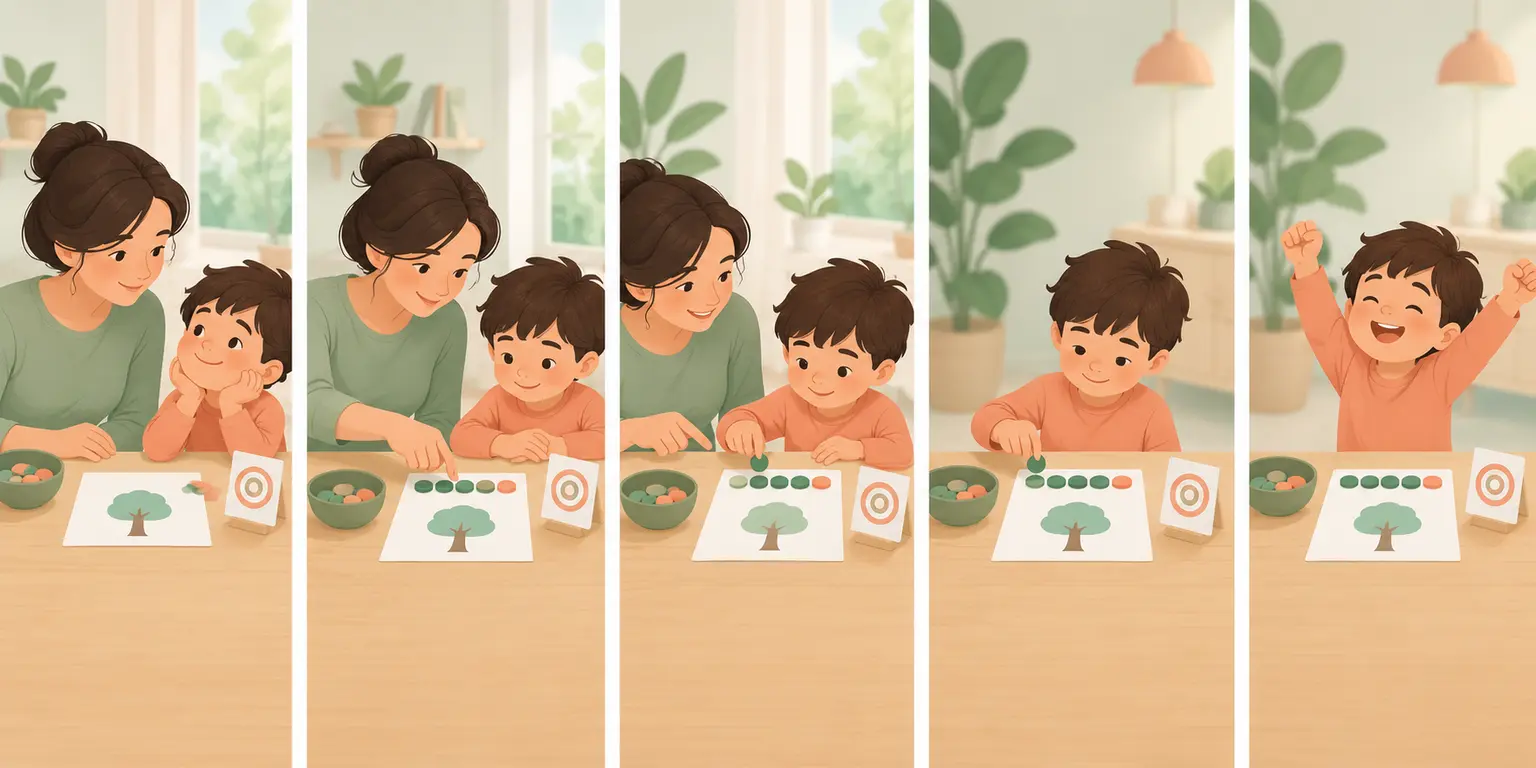
- Try together: complete a similar example with prompts.
- Try alone: the child attempts a small task independently.
- Reflect: the child explains what worked and what remains unclear.
Keep recall brief
Ask two questions, sort three cards or draw a quick concept map. Recall is not a surprise test. Its purpose is to activate knowledge the new idea needs and reveal whether the lesson should step back.
Model the thinking, not only the answer
Say: “I need a common denominator, so first I am looking at the parts,” or “This paragraph needs evidence, so I will return to the source.” Include one realistic correction. Children need to see how a learner notices and repairs a mistake.
Choose practice that matches the goal
If the goal is to explain, the child must speak, write, draw or demonstrate an explanation. Copying ten definitions does not practise explanation. Two well-chosen examples can show more than a page of repetition.
Give prompts in a fading order
- “What is the goal?”
- “Which example is similar?”
- “What could you try first?”
- Offer a visual cue or first step.
- Model again only when needed.
Remove prompts gradually. If the adult supplies every step, the completed page is not evidence of independent learning.
Adapt the format
A child can answer with objects, speech-to-text, drawing, movement or a keyboard. Change the access route without quietly changing the learning goal. If handwriting is not the target, it should not block a science explanation.
Add a useful pause
Halfway through, ask the child to rate understanding with a thumb, number or colour. If they cannot describe the next step, return to the model. If they can, let them continue without more explanation. This keeps support responsive instead of automatic.
Stop with a useful record
Keep one independent attempt and add a brief note: “Understands equivalent fractions with objects; needs help moving to symbols.” This is more useful for tomorrow than marking every error in red.
When the lesson stalls
Check whether prior knowledge is missing, language is unclear, the example jumps too far, or the child needs rest. End with an achievable step rather than extending the conflict. Return with a smaller bridge.
Plan the next lesson from evidence
If the child can explain the idea in a new example, practise retrieval later and move on. If they can copy but not explain, use a different representation. If performance varies, space practice across days instead of repeating everything immediately.
Use EdCaptain’s guides on helping with maths, making thinking visible through sorting, and asking useful questions after play.
Keep materials small and ready
Gather only what the lesson needs before beginning: perhaps counters, two examples, paper and a pencil. Searching for materials midway increases distraction and invites the adult to keep talking. Put away unrelated resources so the goal remains visible.
For a mixed-age family, teach one child while another completes familiar practice, reading or a practical task. Rotate attention deliberately rather than expecting younger children to wait through a long explanation designed for someone else.