Age guide: 3 to 8 years. Use bigger items for the youngest children.
Sorting is something children do all day without noticing: spoons in one drawer, blocks in a box. These four games turn that urge into a game where the thinking is out loud. There is rarely one correct answer, which is part of the fun.
A note on small items
Check small items with a toilet roll tube. If it fits inside, keep it away from children under three. Everything here works fine with larger objects.
1. Which one doesn’t belong?
Time: 5 to 10 minutes. You need: groups of four household items.
Put out four things where three have something in common and one does not. Three spoons and a sock. Three apples and an orange. Three winter hats and a sun hat. Ask: “Which one doesn’t belong? Why?” If your child gives a different answer with a good reason, accept it. Many groups have more than one right solution. Make your own sets from what you are learning about, such as animals, fruit or vehicles.
2. The secret rule
Time: 10 minutes. You need: six objects with something in common, or people in the room.
Choose six things that share a feature, for example all red, or all with wheels. Put out two and ask, “Why might these belong together?” Add a third, then a fourth. Your child watches the group grow and tries to guess the rule. Let them take over as the rule-maker. You can sort the people in the room, too: everyone with socks on, everyone who has a sister.
Extend their words rather than correcting them. If they say “shoes”, you might say “running shoes” if that helps.
3. The shoebox hunt
Time: a day or a week. You need: four shoeboxes with lids, and four items such as a pebble, a twig, a leaf and a pasta shell.
Tape one item to the top of each box. Tell your child, “Find things around the house or garden that are like the thing on the lid. There is no right or wrong. Use your thinking.” Do not tell them what to look for. One child may collect things of the same colour, and another the same size or the same job. At the end of the day, open the boxes together and ask them to explain their choices.
4. The sorting relay
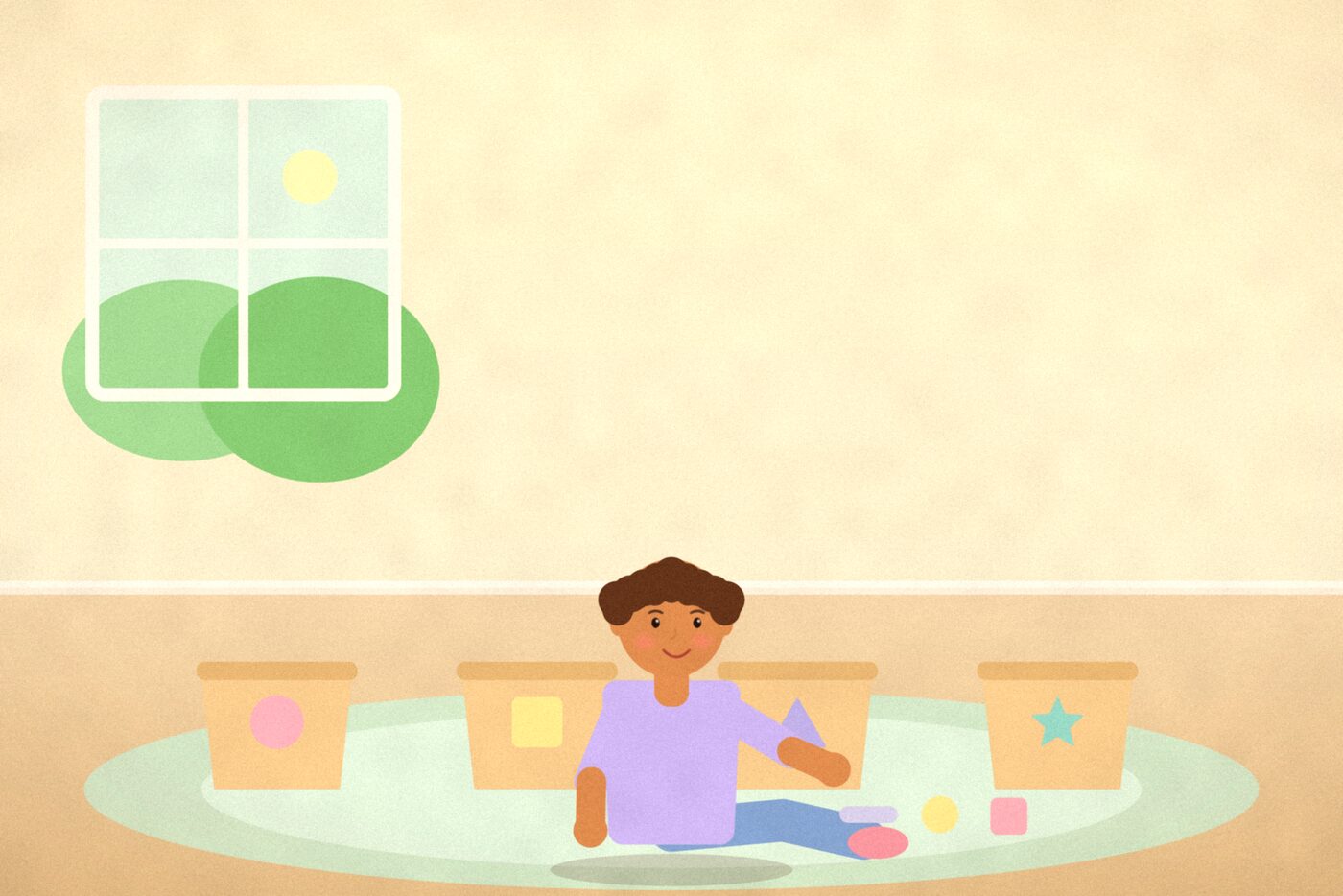
Time: 10 minutes. You need: a bag of mixed small objects, plus four baskets or bags, each labelled with a picture.
Mix up spoons, blocks, balls and cups. One at a time, children run to the mixed bag, sort a few items into labelled baskets, check with you, tip them all back and run back to tag the next player. For younger children, play together without a race, or sort by shape.
Keeping the thinking going
Ask: “What else could we sort these by?” Sorting by colour, then by size, then by use shows them that one pile can have many answers.