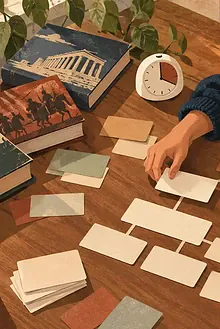
The final evening cannot repair an entire course, but it can protect the thinking, concentration and confidence a student already has. The aim is not perfect calm. It is to reduce avoidable decisions, stop heavy study at a sensible time and make the morning straightforward.
- Agree on a stopping time
- Prepare the practical details together
- Make the room signal that studying is over
- Use calm language from adults
- If worry surges
- Protect sleep rather than chase extra facts
- Keep the morning ordinary
- Know when more support is needed
- If sleep does not go to plan
- Sources and further reading
Agree on a stopping time
Choose it before anxiety argues for “one more hour”. Use any final study for a short confidence-building review: key formulas, a small recall list or the plan for common question types. Do not open a completely new unit. Write unresolved questions down for later rather than carrying them into bed.
Prepare the practical details together
- confirm the start time, route and arrival plan;
- pack permitted pens, pencils, calculator or identification;
- check uniform or comfortable clothing;
- set an alarm and a backup if needed;
- prepare water and an ordinary breakfast.
Follow the school’s and exam board’s rules. Do not rely on a generic checklist for permitted equipment.
Make the room signal that studying is over
Close and move the books, clear one small space and lower stimulation. The NHS advises allowing time to wind down between studying or screens and bed. A shower, gentle music, familiar reading, stretching or a quiet conversation can form the bridge. Avoid turning relaxation into another performance to perfect.
Use calm language from adults
Try: “You have prepared; tonight we are helping your brain and body be ready.” Avoid last-minute quizzing, predictions or stories about your own exam disasters unless the child asks. If they want to talk, listen before solving. Ask whether they need company, practical help or quiet.
If worry surges
Name the next concrete action: put both feet on the floor, breathe slowly, sip water, check the morning plan, then return to the wind-down. Do not promise a certain result. Remind the student that one exam is information, not a measure of their worth or the whole future.
Protect sleep rather than chase extra facts
Good sleep supports thinking and concentration, while all-night cramming is usually counterproductive. Keep the usual bedtime as closely as practical. If sleep does not come immediately, resting quietly is still preferable to reopening revision materials and escalating alertness.
Keep the morning ordinary
Allow enough travel time, offer familiar food, and use one brief reminder about equipment. Before the student enters, reassurance works better than a final lecture: “Take one question at a time. We will see you afterwards.” Afterward, let them decide whether to discuss the paper before moving attention to the next one.
Know when more support is needed
Some nervousness is normal. Seek help if anxiety or low mood is severe, persists, or interferes with sleep, eating, attendance or everyday life. School staff can discuss exam arrangements and pastoral support; a GP or appropriate health professional can advise on health concerns. Urgent safety concerns need immediate local help.
For broader family support, read five ways to support a child during exams. A one-week sleep pattern log can help a family notice routines without surveillance. If study repeatedly becomes conflict, use the home-learning reset to protect the relationship.
If sleep does not go to plan
One imperfect night does not decide an exam result. Avoid watching the clock repeatedly or calculating lost marks. Keep lights low, leave the phone away from the bed if possible and use a familiar quiet activity until drowsiness returns. In the morning, follow the ordinary plan rather than adding panic, excess caffeine or last-minute cramming. Tell the relevant school contact if illness, severe anxiety or another significant problem may affect attendance or performance, and ask about the official procedure; do not assume arrangements can be changed later without evidence. After the exam, restore the normal routine instead of beginning a cycle of compensating with very late study.