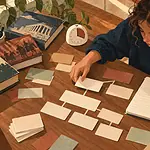
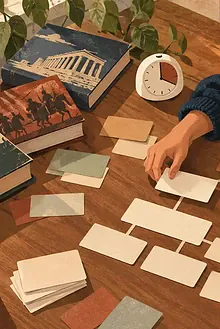
Being quizzed can help a student retrieve knowledge, but only when the interaction feels like support rather than surveillance. A parent who fires surprise questions, corrects every pause or keeps a mental score may accidentally make home feel like another exam room. The answer is not to avoid helping; it is to give the young person control over the format.
Ask before you begin
Try: “Would questions help today, or would you prefer something else?” Then ask the student to choose the subject, length and type of prompt. Five minutes with self-written cards may be useful; a full chapter interrogation may not be. Accepting “not now” protects trust and makes a later yes more likely.
If the student wants a different kind of support, offer practical help: finding a quiet space, bringing water or checking the revision timetable together. Do not make quizzing the price of being left alone.
Use prompts that reveal thinking
Begin with an easy retrieval cue so the student settles. Mix short facts with explanation prompts: “What are the three stages?”, “Why does that happen?” or “What would change if this condition were different?” For essays, ask for a one-sentence argument and two pieces of evidence. For maths or science, ask the student to talk through a method rather than merely state the answer.
Use questions from the student’s course materials, cards or teacher guidance. Parents do not need to become the subject expert. If an answer is disputed, mark it to check rather than improvising a confident correction.
Respond without turning errors into drama
Wait several seconds. A pause is part of retrieval. If the student is stuck, offer a choice of prompts: first letter, category, diagram or one step. Then reveal the answer and ask what might make it easier next time. The Education Endowment Foundation’s feedback summary stresses information that improves the task, process or self-regulation, not personal judgment.
Useful language includes: “You remembered the idea but not the term,” “Which step went missing?” and “Shall we put that card back for later?” Avoid “We did this yesterday,” eye-rolling or comparisons with siblings. A wrong answer is data for the next session.
Let the student run the session
- The student chooses ten to fifteen cards.
- They decide whether answers are spoken, written or drawn.
- Correct cards go into a “later” pile; uncertain cards return once near the end.
- The student explains one repaired answer in their own words.
- Finish at the agreed time, even if cards remain.
This follows the active approach in retrieval practice while keeping ownership with the learner.
Notice when help is not helping
Stop if voices rise, the student becomes tearful or the interaction turns into an argument about effort. Say, “This is adding pressure; let’s pause.” Revisit what form of help would feel safer. Some teenagers prefer a friend, teacher or app to deliver questions and want parents to focus on meals, transport and encouragement.
Keep sleep, movement and breaks in view. The guide on supporting a child during exams offers broader ways to help. If exam stress brings persistent panic, low mood, sleeplessness, hopeless talk or major changes in daily functioning, contact the school and a qualified health professional. Seek urgent local help for immediate safety concerns.
End with information, not a score
Ask: “What felt secure?” and “What is one thing to revisit?” Record no more than two next steps. Then return to ordinary family life. A short, respectful quiz should clarify learning and end cleanly—not become a referendum on the child’s future.