The best school water bottle is not necessarily the most insulated, expensive or decorated one. It is the bottle a child can open, drink from, close and bring home—and that an adult can clean thoroughly. Testing those tasks before buying is more useful than comparing long feature lists.
Begin with the school routine
Ask where bottles are stored, whether they can be refilled, and whether the classroom permits open straws or flip tops. A bottle that fits a desk but not the backpack pocket may leak over books. If the school has filling stations, a modest capacity may be enough; if access is limited, the child may need more.
The US Centers for Disease Control and Prevention encourages access to drinking water in schools and choosing water instead of sugary drinks. The bottle supports that habit, but it does not need health claims or special additives.
Put the child in charge of a shop-floor test
- Ask the child to open and close the lid several times.
- Have them lift the empty bottle as if taking a drink.
- Check that the drinking opening suits their coordination and sensory preferences.
- Place it in the backpack pocket and shake the bag gently.
- Confirm that every seal and removable part can be taken apart for cleaning.
For small children, avoid caps or detachable pieces that could become choking hazards. A loop or handle may make carrying easier, but it should not catch on playground equipment. If the bottle is metal, inspect dents that could affect stability or make cleaning difficult.
Look closely at cleaning
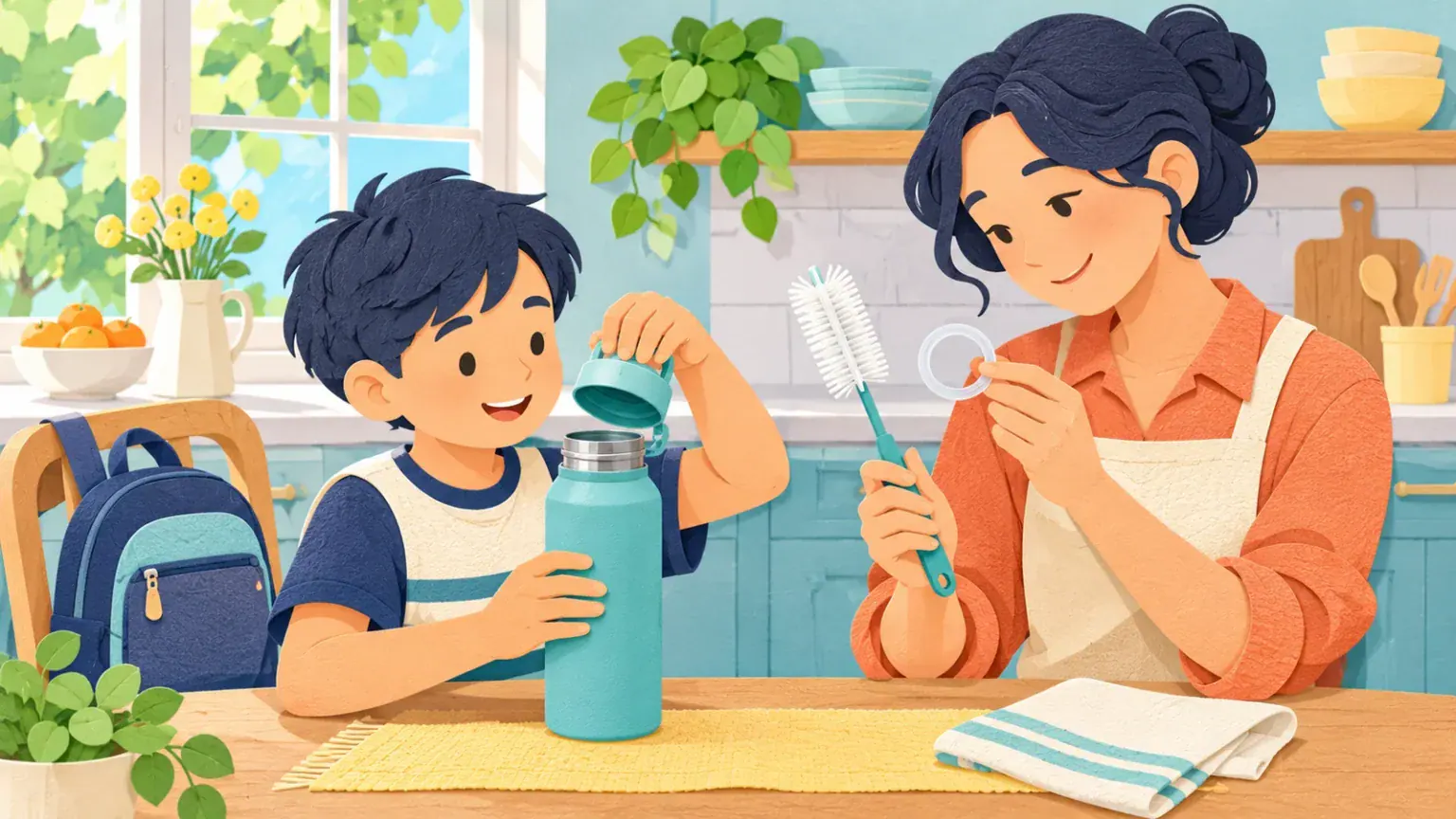
Wide openings are easier to see and scrub. Straws, bite valves and silicone seals can trap residue, so check whether replacements are available and whether the manufacturer provides clear cleaning instructions. “Dishwasher safe” is helpful only if every component is safe on the rack you use. Allow parts to dry fully before reassembly.
- Choose a shape your bottle brush can reach.
- Avoid designs with inaccessible decorative cavities.
- Label the bottle without covering care instructions.
- Replace cracked lids, damaged seals and parts that retain odour after cleaning.
Wash bottles regularly and more promptly when they have held anything other than plain water. Do not share bottles between children. The CDC’s general water guidance notes that water supports normal body functions and helps prevent dehydration; EdCaptain’s guide to recognizing dehydration in children explains signs that need attention.
Decide whether insulation is worth the trade-off
Insulated bottles keep water cooler but are usually heavier. Test the bottle filled, not empty. Clear or translucent bottles make the remaining amount visible, while opaque insulated bottles may need a routine for checking refills. Glass is often impractical for school because it can break; follow the school’s rules.
“BPA-free” is not a complete quality test, and broad claims such as “toxin free” can be vague. Buy from a seller that identifies the manufacturer, materials, care instructions and replacement parts. Check official recall notices if a product has an unfamiliar brand or unusual lid mechanism.
Build a simple return-home system
Give the bottle one home location after school: beside the sink or in a wash basket. Pair unpacking it with another reliable action, such as putting the lunch box away. Once a week, inspect the seal, mouthpiece and base. A spare need not be identical, but it should pass the same open–drink–close–clean test.
For a broader family project, try EdCaptain’s family water-saving audit without turning hydration into a contest.
Check fit, temperature and accessibility
A child with limited grip, strength or oral-motor control may need a lighter bottle, a different valve or an adapted handle. Ask an occupational therapist or other qualified professional when specialist advice is needed. Water should be comfortable to drink, not so cold that the child avoids it. Teach the child not to chew damaged mouthpieces or use a bottle as a toy.
No bottle can guarantee how much a child drinks. Offer regular opportunities, make refilling predictable and respond to thirst. If a child repeatedly refuses fluids, has signs of dehydration, or has a condition requiring fluid management, seek medical advice rather than relying on a new product.