By EdCaptain editorial desk · Published
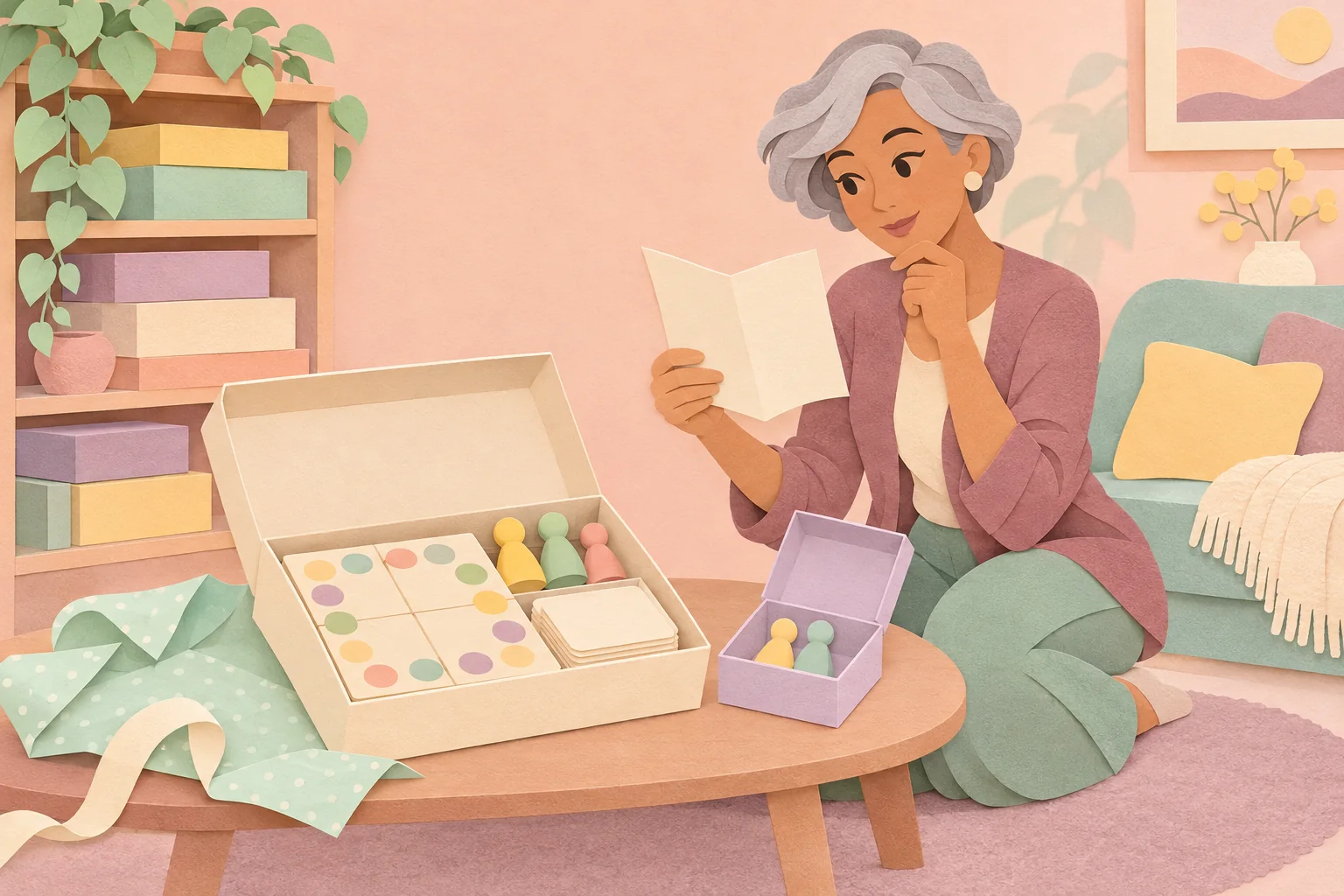
A familiar title is on the box, the artwork looks right and the price is lower than expected. Yet the small print says another game is required. For a family buying a gift or adding seats for visiting cousins, that detail can determine whether anything is playable when the box is opened.
Before comparing deals, answer one question: What must already be owned to use this exact product? This is a research-based buying check for adult caregivers. The named examples illustrate packaging and compatibility questions; they are not recommendations that a game suits a particular child.
Give the product one of four jobs
Start with the publisher’s description, then check the seller’s exact selected option. Similar names can refer to very different purchases:
- A complete game: supplies the components required for its stated basic play, apart from any ordinary items explicitly listed in the rules.
- An expansion: adds something to another game and may depend on that game’s pieces or rules.
- A player extension: adds support for more players, sometimes only when other boxes are also present.
- An accessory: helps organise, protect or display a game without supplying a playable game itself.
These are useful shopping distinctions, not a universal naming system. If a listing uses phrases such as “standalone expansion”, read what the publisher says is actually needed. A family name, attractive board or substantial box is not enough to establish completeness.
Read the requirement as a list, not a suggestion
Find wording such as “requires”, “not a complete game” or “base game sold separately”. Save the official requirement with the model or edition you intend to buy. Then compare it with the boxes already at home.
For example, CATAN’s Seafarers page identifies Seafarers as an expansion needing the CATAN base game. Its five-to-six-player setup needs four boxes: the base game, Seafarers, the base game’s five-to-six-player addition and the Seafarers five-to-six-player addition. Buying just the last box does not supply that whole setup.
This example shows why the number on the front deserves a second look. “Five–six players” may describe the additional capacity enabled by a product, rather than the full contents of a self-contained game. Check the publisher’s complete requirement for your intended player count.
Write two short lists: already owned and still required. If the second list contains another purchase, include that in the decision before treating the add-on as a bargain. Do not buy several missing boxes merely to justify the first attractive price.
Match the edition and language
Photograph the existing box’s title, edition, publisher and product identifier. You do not need to include your child or family details in the photograph. Compare those details with the actual listing, including the option selected after choosing a size, version or bundle.
New artwork can indicate a different edition, but old artwork alone does not prove incompatibility. Use the publisher’s guidance rather than guessing from colours. CATAN’s English-edition compatibility page, for instance, says previous and current editions can be used together while noting differences in card backs and some accessory compatibility.
At the same time, the official shop’s specific Seafarers sixth-edition listing states a sixth-edition base-game requirement. If the listing and broader guidance leave your older combination unclear, ask the publisher about the exact products you own and plan to buy. Do not turn either page into a blanket promise that every box will match.
Check the supplied rules and any text printed on cards too. A rulebook in a familiar language does not establish that all gameplay text uses that language. For a gift, ask the receiving family which version they have before buying an add-on whose usefulness depends on it.
Check the contents before the family needs it
A sealed expansion may be complete as an expansion while still being unusable alone. A used complete-game box may have lost essential pieces. These are separate questions.
- Find the official contents list or rulebook for the exact edition.
- Check what the seller says is included, especially for second-hand items, bundles and replacement packs.
- Look for any components that must come from another box.
- Confirm that the intended number of players is supported by the entire proposed setup.
- Save any written clarification with the receipt or order record.
“All pieces included” should refer to an identifiable contents list, not a seller’s memory. If buying used, combine this check with our second-hand children’s product checklist, including identity, condition, recalls and safety information. Do not accept a homemade substitute for a safety-critical part.
For a new purchase, read the actual return terms before removing wrapping or mixing pieces between sets. Do not assume an opened game can be returned simply because a different shop permits it.
Ask a question the seller can answer
A useful message is: “Please confirm the exact edition and what other game boxes are required for four-player use. Does this listing include the base game, or only the add-on shown? Please send the publisher’s requirement and a photograph of the actual box.” Adjust the player count and question to your situation.
Check that the reply refers to the selected product rather than a general description of the series. If the answer remains vague, pause the purchase. You can send the publisher the existing and proposed product identifiers without sharing account passwords or payment information.
Also confirm the format. A physical box, downloadable file, digital game add-on and replacement component pack are different purchases even when the title is similar. Read what will be delivered and which platform or physical components it needs.
Completeness is only the first decision
Once the boxes match, check age guidance, small-parts warnings, reading demands, player count and the family’s actual interest. An expansion does not automatically make a game suitable for a younger child or solve an access barrier.
Our standard Kingdomino review shows why an assessment names the precise version it covers. A review of one edition should not silently become approval of every similarly named box.
If this is the family’s first game in a series, consider borrowing a complete set before buying additions. Playing what is already owned is another valid choice. The aim is a purchase that works with the family’s real collection and plans, not a shelf of boxes that each require another one.