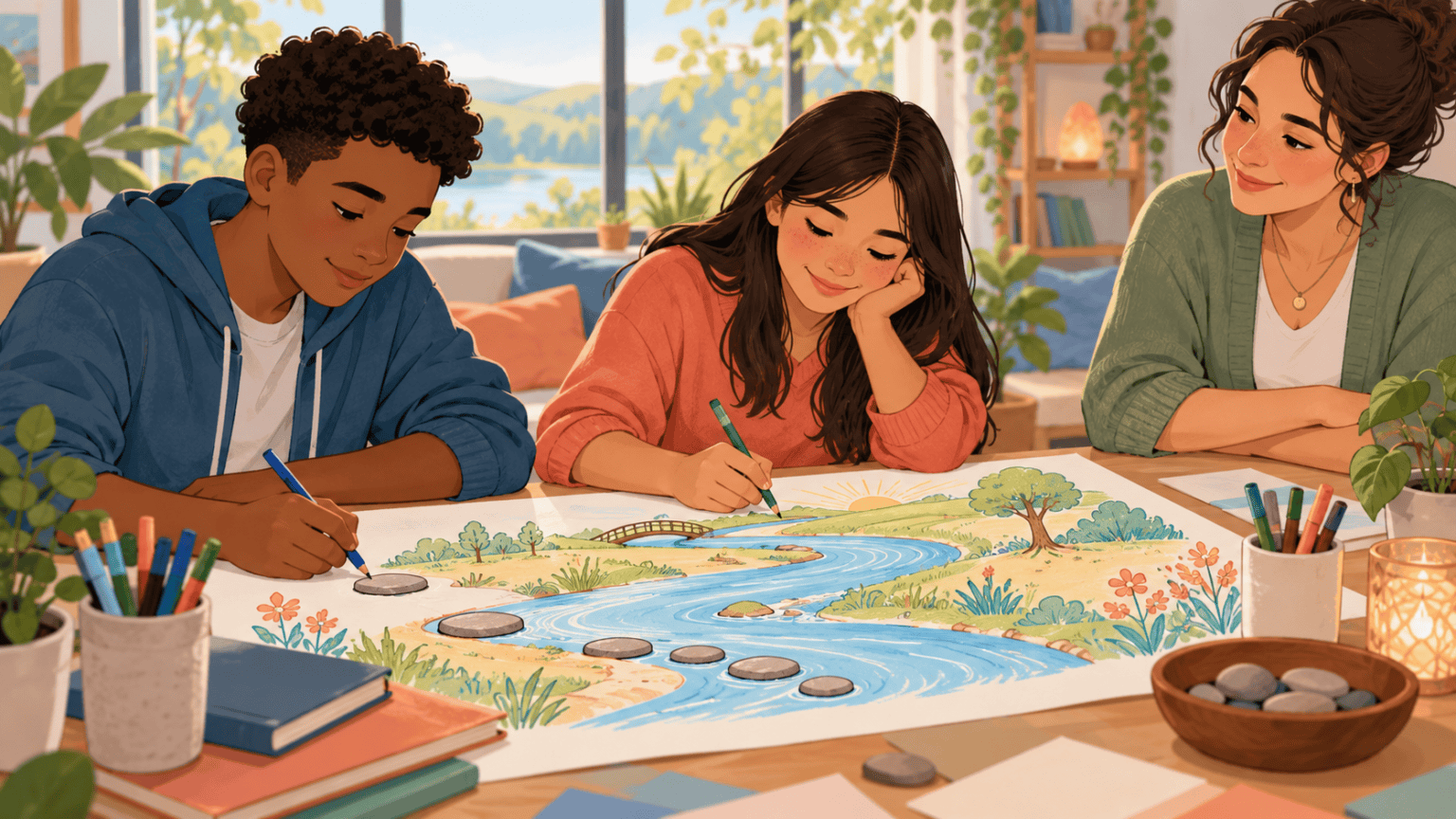
A river can represent change without requiring a neat timeline. Bends, tributaries, calm water and stepping-stones can stand for interests, people, choices and moments of growth.
Contents
At a glance
- Time: 45–60 minutes
- Group: 2–12
- Setting: A calm, private room
What you need
Large paper, pens and optional coloured pencils.
How to play
- Begin with the right to pass. Participants may invent a fictional river, keep their drawing private or leave at any time.
- Draw a river from an earlier point to today. Add only events, people or places that feel safe to include.
- In pairs, share selected parts. The listener does not probe, interpret or ask for painful details.
- If everyone agrees, each person may present one safe part of a partner’s river. Finish with a present-day strength or source of support.
Keep it comfortable
This is not a trauma-processing exercise. Do not use it after a crisis or ask children to revisit loss. A trained safeguarding or mental-health professional should lead if difficult disclosure is likely.
Try this variation
Use a “river of interests” or a fictional character’s journey when personal storytelling is unsuitable.
What children practise
Used carefully, the metaphor helps teenagers organise a story, notice change and practise listening without forcing disclosure.