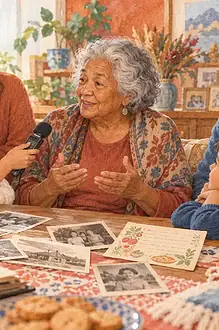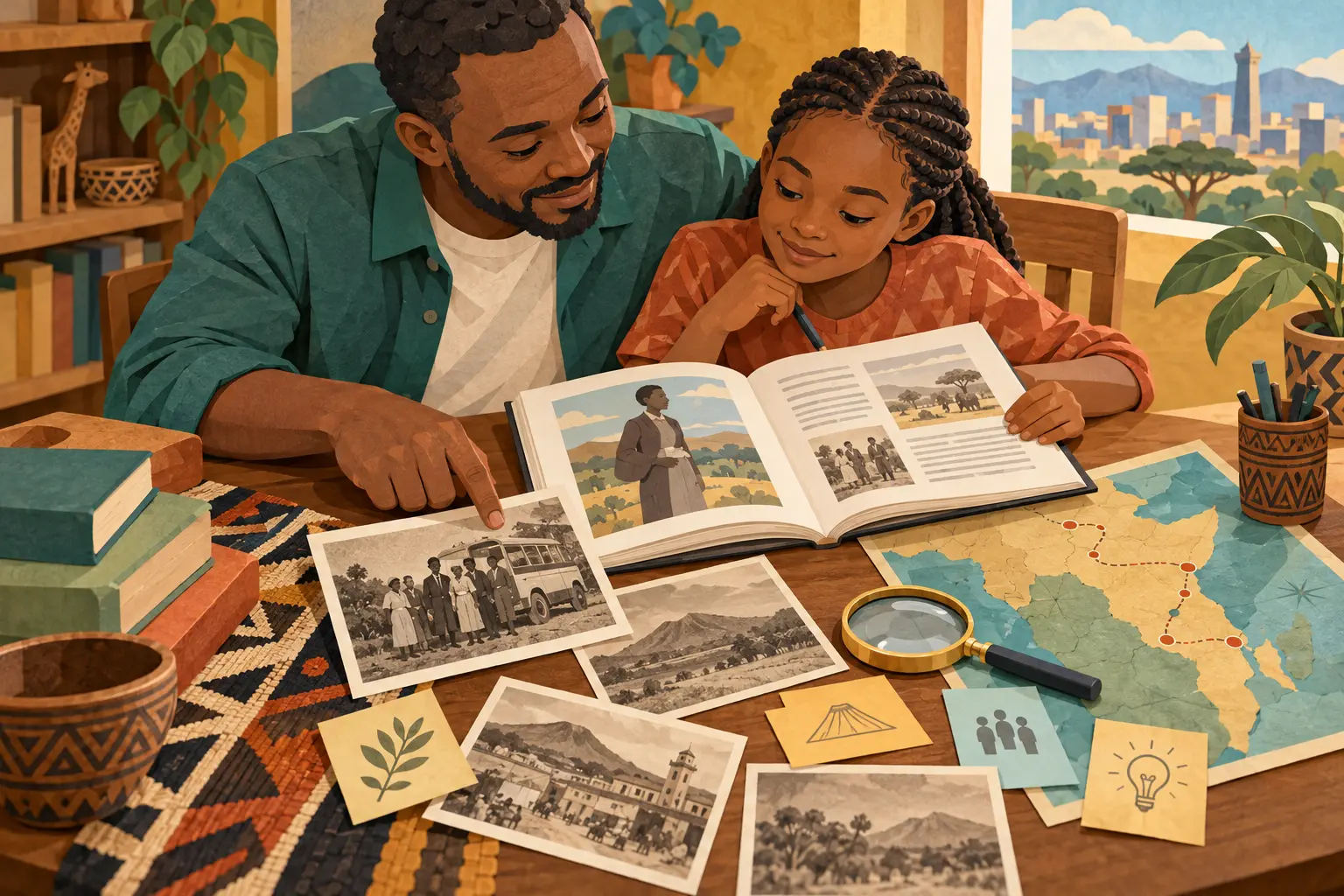
A gripping biography can make history feel personal, but children’s versions often compress a complicated life into a neat arc: a gifted person faces obstacles, works hard and triumphs alone. That structure is memorable—and incomplete. Reading critically does not mean tearing down every admired figure. It means asking how the story was built and what else belongs in the picture.
Read once for the story, then again for the evidence
Let the child enjoy the first reading. On a second pass, choose one or two questions rather than interrupting every page. Ask: “How does the author know this?” “Is that a quotation, a photograph, a letter, or the author’s interpretation?” The Library of Congress encourages learners to observe, reflect and question primary sources. Even a single photograph can prompt careful thinking about who created it, when and for what audience.
Use the FRAME check
- Facts: Which claims have a named source or visible evidence?
- Relationships: Who taught, funded, cared for, challenged or worked alongside this person?
- Advantages and barriers: What access, discrimination, luck or public support mattered?
- Missing voices: Whose experience is absent or reduced to a sentence?
- Evolution: Did the person change their mind, make mistakes or learn?
This turns “Was this person good?” into more useful questions about choices, power and context.
Compare two tellings of one event
Choose a moment described in the biography and look for a museum page, archive item, interview or another carefully sourced account. Make a simple table: what both versions agree on, what differs, and what remains unknown. A disagreement is not automatically proof that one source lies; authors may have different evidence, dates or purposes.
Model honest uncertainty: “We have evidence for this part. We do not know exactly what she felt.” That is more trustworthy than filling gaps with certainty.
Restore teamwork and ordinary labour
Perfect-hero stories often hide assistants, family members, technicians, organisers and communities. Ask the child to draw a “support map” around the central figure. Who provided food, childcare, equipment, knowledge, transport or political support? Who paid a cost that the hero story ignores?
Link this to everyday role models, where shared credit and local contribution are easier to see.
Discuss harm without demanding a final verdict
If the person did admirable work and also caused harm, name both with age-appropriate facts. Try: “This discovery mattered, and this decision hurt people. We do not have to erase either truth.” Avoid using historical context as an excuse; context helps explain choices but does not automatically justify them.
For younger readers, focus on a clear choice and its effect. Older children can examine power, whose account became official and whether repair occurred.
Create a one-page critical biography
- Choose one contribution rather than an entire life.
- Find two reliable sources, including one primary item where possible.
- Name at least two helpers or collaborators.
- Include one uncertainty, limitation or criticism.
- End with a question the child would ask the person.
A child may draw, record audio or make a timeline instead of writing. Cite images and words, and do not invent dialogue.
Adapt by age
- Ages 6–9: Ask who helped and whether the picture shows the whole event.
- Ages 10–12: Compare sources and identify missing perspectives.
- Teens: Examine authorship, institutional power, reputation management and contested legacies.
Critical reading protects admiration from becoming worship. A child can value courage or creativity while retaining judgment. If difficult information changes their feelings, helping a child when a role model disappoints them offers a next step; questions to ask while reading can support younger readers.