Inspiration creates energy, but it rarely supplies a plan. A child may watch a musician, coder or athlete and jump straight to the finished performance. Copying the person’s clothes, schedule or public persona will not reveal the years of learning underneath. Help the child borrow a process, not a life.
Name one learnable quality
Ask, “What exactly do you want to be able to do?” Replace “be like her” with something observable: play a steady rhythm, sketch faces, explain a science idea, dribble with both feet or speak clearly to a group. Then ask what evidence shows the role model practised that skill. Do not assume every online claim about a routine is true.
Make a two-week experiment
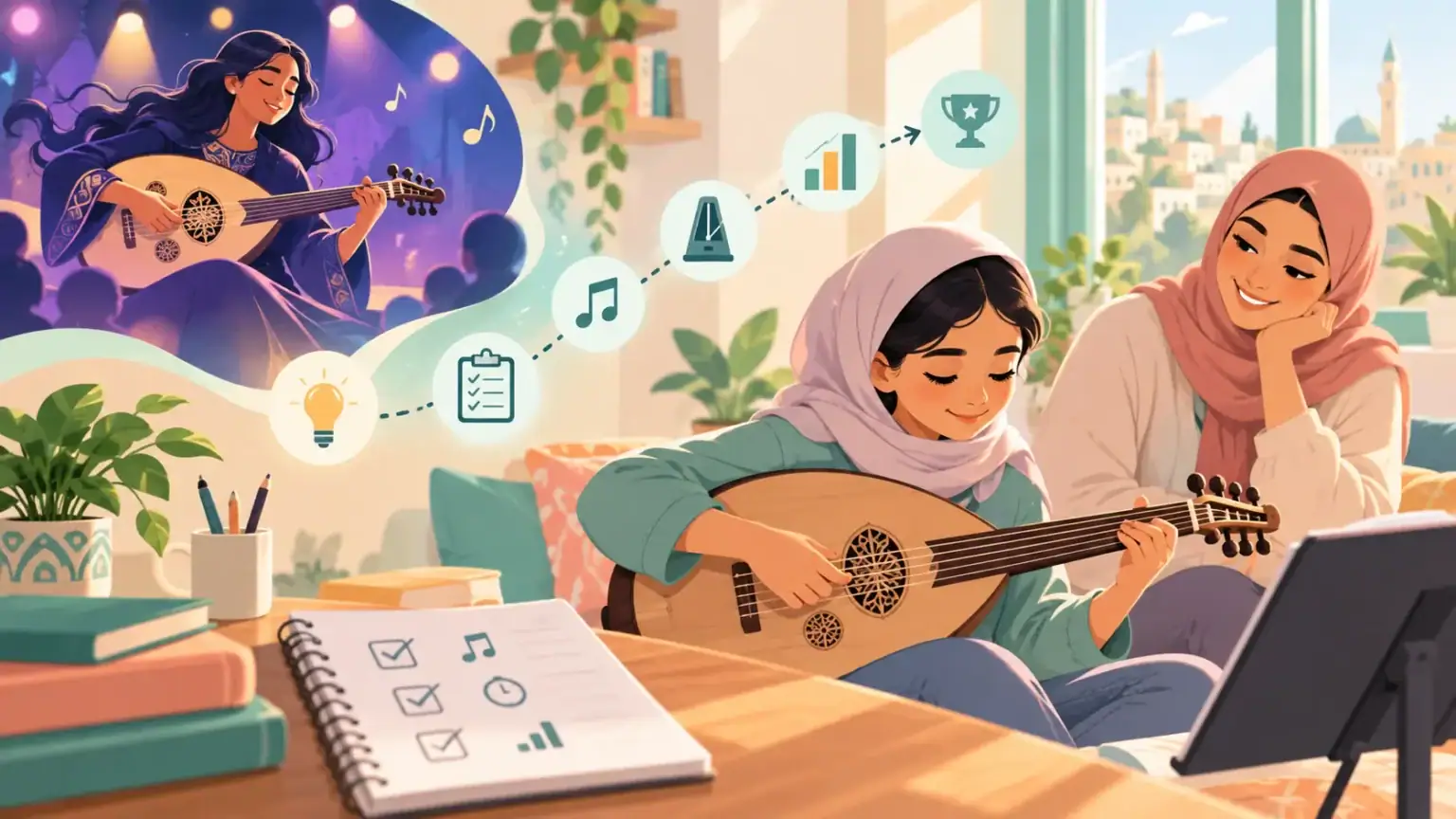
A short experiment feels safer than a grand identity promise. Write down:
- Skill: one specific thing to practise.
- Minimum: a version small enough for a difficult day—perhaps five minutes or one attempt.
- Schedule: two or three realistic times, including rest.
- Support: a teacher, video, adaptive tool or quiet space.
- Evidence: a recording, checklist or brief note that shows change.
Let the child choose the plan. Adult enthusiasm can quietly turn an interest into another obligation.
Separate practice from performance
Practice is allowed to be awkward, private and unfinished. Build sessions around a tiny challenge: warm up, attempt one difficult part slowly, use feedback, then finish with something enjoyable. Public posting is optional and often unnecessary.
If the child admires a creator, try making for a trusted audience first. The article on sharing achievement without bragging helps children describe work honestly.
Use feedback the child can act on
“Great job” feels warm but gives little direction. Ask the child what kind of feedback they want. Offer one observation and one question: “The second verse stayed steadier. Which transition do you want to slow down next?” Coaches and mentors should respect the child’s body, communication and boundaries.
Plan for access, energy and competing needs
There is no universal ideal routine. A child with pain, fatigue, attention differences or caring responsibilities may need shorter sessions, visual steps, movement breaks or different tools. Progress is not proof of worth, and a missed session is information rather than failure.
Ask what blocked practice: the goal may be unclear, the environment noisy, the task too hard or the interest fading. Adjust the system before labelling the child unmotivated.
Review without ranking
After two weeks, compare the child with their starting point, not with the admired expert or a sibling. Use four questions:
- What became easier?
- What stayed frustrating?
- What support helped?
- Do you want to continue, change the goal or stop?
Stopping can be a reasonable conclusion. Inspiration may have taught the child what they do not enjoy.
Keep the role model human
Notice collaborators, resources and luck in the person’s path. Avoid copying extreme schedules, restrictive diets or risky training. For physical activity, use age-appropriate coaching and stop for pain, dizziness or injury concerns. For online tutorials, check the source and avoid challenges involving fire, chemicals, weapons or unsafe heights.
Adapt by age
- Ages 6–9: Use picture steps, playful five-minute practices and visible rest days.
- Ages 10–12: Let the child track one skill and request specific feedback.
- Teens: Discuss deliberate practice, access, identity pressure and balancing the goal with sleep, school and relationships.
Use choosing role models by values to clarify the starting point and responding when a role model disappoints to keep the plan independent of one person’s reputation. The best outcome is not a miniature copy of the expert; it is a child who can design, test and revise their own next step.