Two paper cups, a length of taut string, and a child’s own voice travelling somewhere it has never gone before. The String Telephone is a genuine classic for good reason: it demonstrates, in a single simple build, exactly how sound actually moves.
What you need
Two paper or plastic cups. A long piece of string, several metres. A sharp pencil or similar to poke a small hole in the base of each cup.
How to play
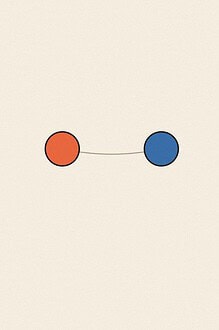
Poke a small hole in the base of each cup. Thread one end of the string through each hole and tie a knot inside each cup so it can’t slip back through. Give one cup to your child and keep the other yourself, walking apart until the string is pulled completely taut, with no slack at all.
Have your child hold their cup to their ear while you speak quietly into yours. Even a very quiet voice should carry clearly through the taut string. Then let the string go slack, and try again: the sound should noticeably drop off or vanish entirely.
The experiment that explains why
Ask your child directly: why did the sound travel so well through the tight string, and barely at all through the slack one? Explain that sound is actually vibration, tiny, rapid movements travelling through a material, and that a tight string gives those vibrations a direct, efficient path to travel along, while a loose, slack string has nowhere firm to carry the vibration through.
Extend the experiment to test the idea further: bang the two cups together directly, without the string, and compare how that sounds to the string-telephone version. Then try the same comparison with the string held taut versus held loosely, making the connection explicit each time, sound travels better through something firm and connected than through something loose or through open air alone.
A second experiment, underwater
For a nice follow-up, fill a basin with water, cut the bottom off a plastic bottle, and place the open bottle top-down into the water. Put your ear to the top of the bottle while someone taps two stones together underwater, then repeat the tapping above the water’s surface and compare. Most children are surprised to find that sound actually travels very well through water, sometimes even more clearly than through air.
Safety notes
Keep the string telephone experiment to speaking and listening rather than shouting directly into the cup, which can be uncomfortably loud for the listener.
Why it works
Sound is one of those everyday phenomena a child experiences constantly without ever having a reason to think about what it actually is. A string telephone turns an invisible, abstract idea, vibrations travelling through a medium, into something a child can directly feel the difference of: taut versus slack, string versus open air, water versus air. That direct, felt comparison does more to build real understanding than any explanation of sound waves delivered without a hands-on demonstration to back it up.