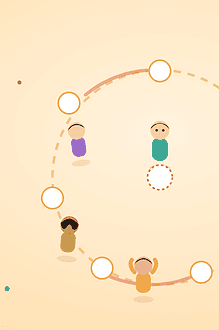
Two siblings arguing about whose turn it is to clean the room are usually arguing about more than just the room. The Real Problem Underneath gives a child a genuinely useful way to look past the surface argument and find what’s actually driving a disagreement.
Why this matters
Most conflicts get stuck not because the two sides can’t agree, but because both are defending a fixed position, “I want this,” “no, I want that,” without ever getting to the actual need or worry underneath it. A child who learns to look for the real concern behind a stated demand finds real, workable solutions far more often than one who only knows how to argue positions back and forth.
The idea, explained simply
A “position” is what someone says they want, often stated firmly: “I’m not cleaning the room, ever.” The “real need or worry” underneath it is the actual reason, which might be something like feeling like the only one who ever gets asked, or feeling like cleaning time eats into time they’d rather spend elsewhere. Two people can seem to want completely opposite things on the surface, while actually having needs that aren’t in conflict at all, once both sides are honest about what they’re actually worried about.
Working through it with a child
When a real disagreement comes up, help your child separate the stated position from the actual worry underneath: “You’re saying you won’t clean up at all. What’s the actual problem, is it the time, is it feeling like it’s unfair, is it something else?” Encourage honesty about the real concern, even though it can feel more vulnerable to share than simply repeating a firm demand.
Once both sides’ real concerns are out in the open, look together for a genuine solution: is there a way both people’s actual worries get addressed, not just one side winning the argument?
Four ways a disagreement can end
It’s worth naming the range of outcomes honestly: a true win-win, where both real needs get met; a fair compromise, where both sides give a little; leaving something to chance when the stakes are genuinely low; or one side reasonably stepping back when the issue matters far more to the other person. None of these is automatically the right choice, it depends on the actual situation.
Why this beats simply “agreeing to disagree”
Two people stuck defending opposite positions can stay stuck indefinitely, each one waiting for the other to give in. Finding the real need underneath almost always opens up more possible solutions than either side could see while they were only defending their original stance, which is exactly why it’s worth teaching as a deliberate first step, not an afterthought.
A child who’s learned to ask “what’s actually bothering me about this, underneath what I’m saying I want” has a genuinely powerful tool for working through disagreements, one that serves them far better than simply getting louder or more stubborn ever does.