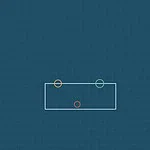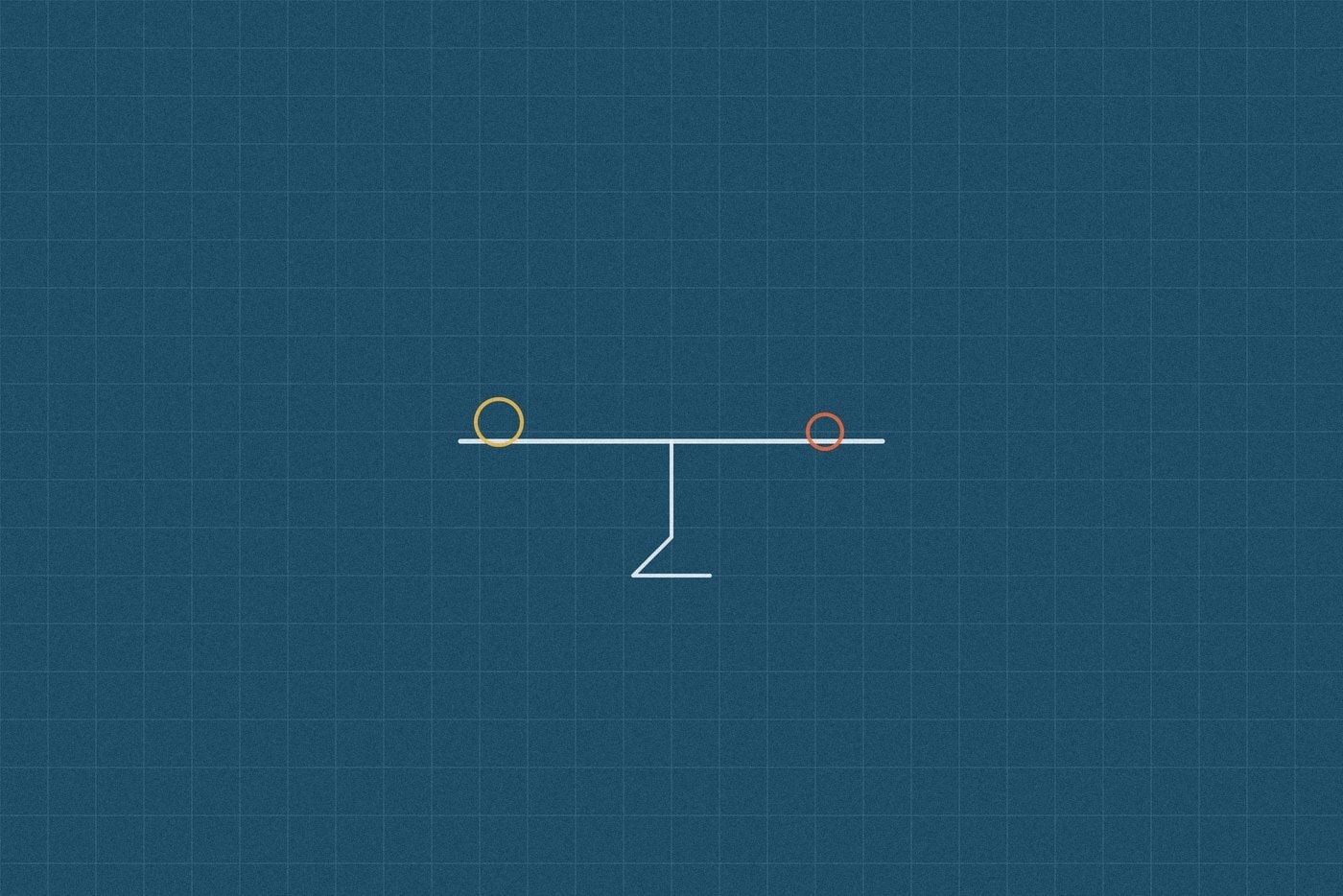
A ruler balanced on a pencil, a small weight on each end, and a child discovering, through trial and error, exactly how a seesaw actually works. The Balance Beam is a simple lever demonstration that makes a genuinely useful physics principle, leverage, something a child can feel through their own hands.
What you need
A ruler or a flat piece of wood. A pencil, a rounded block, or anything else that can act as a pivot point underneath it. A set of small, equal weights: coins, small stones, or washers all work well.
How to play
Balance the ruler across the pencil, finding the exact centre point where it sits level. Place one coin on each end, equal distance from the centre, and confirm the ruler stays balanced.
Now move one coin closer to the centre, while leaving the other where it was. Ask your child to predict what will happen before you let go. The side with the coin further from the centre should tip down, demonstrating that distance from the pivot point matters just as much as weight.
Experiment systematically: how many coins placed close to the centre does it take to balance one coin placed far from the centre? Let your child test different combinations and keep track of what balances and what doesn’t.
The vocabulary worth introducing
Once your child has a feel for how this works, introduce the proper terms: the pivot point is called the fulcrum, and the whole arrangement is a lever. Point out real levers around your home and in daily life, a seesaw, a pair of scissors, a bottle opener, a wheelbarrow, and ask your child to identify where the fulcrum is in each one.
Variations
Challenge your child to balance three or four different objects of different weights all on the beam at once, working out through trial and error where each one needs to sit relative to the fulcrum. This turns the basic principle into a genuine puzzle rather than a single demonstration.
For an older child, introduce the idea more formally: the “turning effect” of a weight depends on both how heavy it is and how far it sits from the fulcrum, which is why a small child can balance, or even lift, a much heavier adult on a seesaw simply by sitting further from the centre.
Why it works
A seesaw is something almost every child has used without ever stopping to think about why it works the way it does, why sitting further out changes things, why a smaller person can sometimes outweigh a bigger one. A simple ruler-and-pencil balance beam lets a child systematically test and feel that relationship for themselves, building real, intuitive physics understanding well before they ever meet the formal concept in a textbook.
A ruler, a pencil, and a handful of coins is about as low-cost an experiment as physics gets. What a child takes from it, a genuine, hands-on feel for leverage, a concept that shows up in tools and machines throughout daily life, tends to be well worth the few minutes it takes to set up.