Age guide: 3–9 years. Adapt suggestions to your child’s interests, communication and support needs.
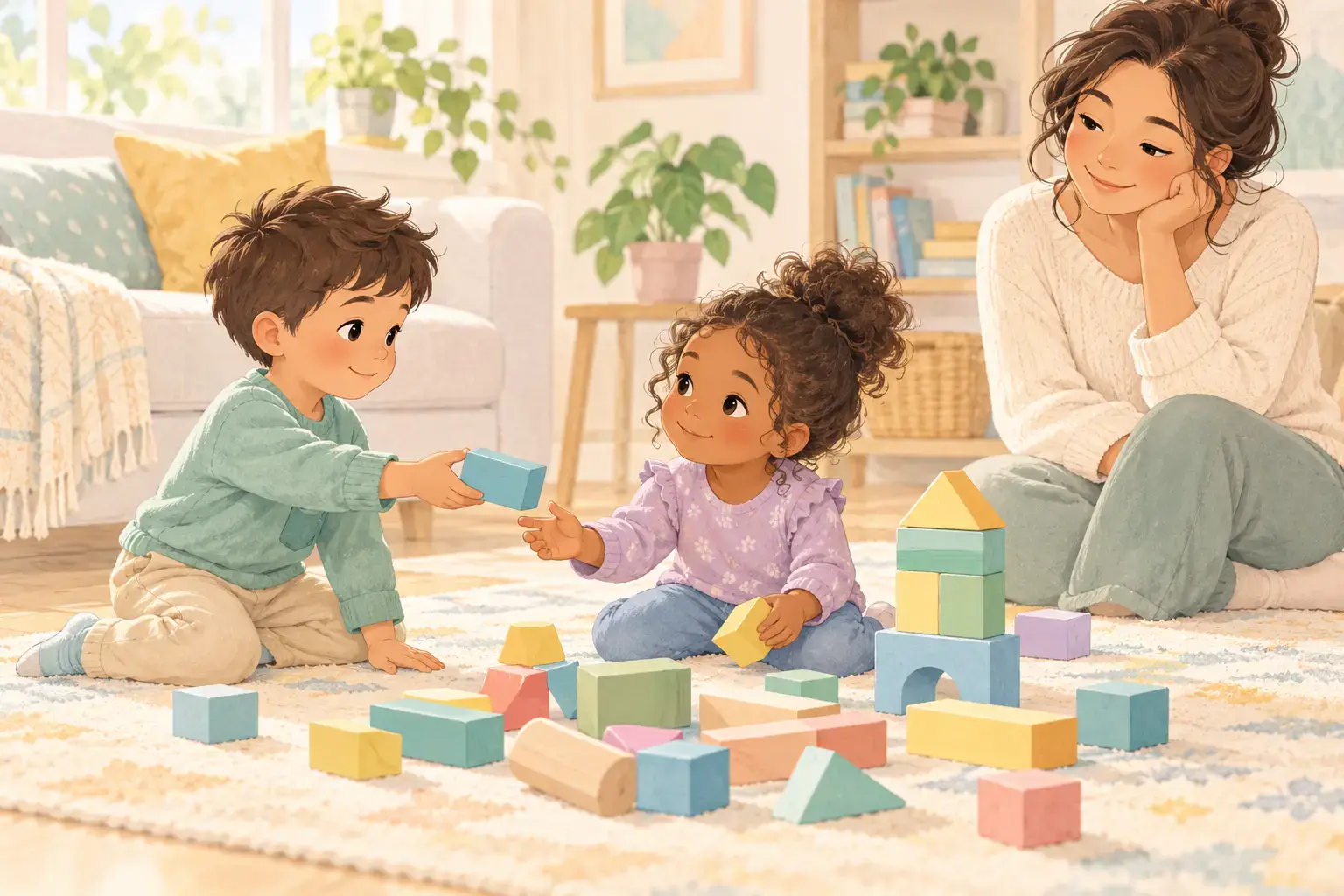
“Say sorry.” “Sorry.” The words arrive, but the block tower is still down and the other child is still crying. An apology can matter. It also helps to show a child what happens around those words.
Begin with safety and care, then return to responsibility when your child is able to take part.
1. Help the person who was hurt
Stop any hitting or unsafe behaviour. Check on the other child and get appropriate adult help if someone is injured. You can say, “That hurt. I’m going to help you.”
Avoid making the injured child wait while you try to extract an apology. Their immediate needs come first.
2. Describe the action without labelling the child
Try: “You pushed the tower over while Arun was building.” Then give your child a chance to tell you what happened. Understanding the situation does not mean excusing the behaviour.
“You are mean” gives them an identity to defend. A specific action gives you something you can address.
3. Wait until they can use the conversation
A child who is overwhelmed may need help settling before discussing repair. Keep the limit clear: “I won’t let you knock down someone’s work. We can talk when you’re ready.”
Do not use a delay to forget the event. Return later in simple language, without replaying it as a courtroom scene.
4. Offer a repair that fits what happened
- Ask whether the other child would like help rebuilding.
- Return the item that was taken.
- Get fresh paper if a picture was damaged.
- Practise how to ask for space next time.
The other child can decline help or prefer distance. They do not owe a hug, immediate forgiveness or reassurance that everything is fine.
5. Give the apology somewhere to go
When your child is ready, offer a simple structure: name what happened, acknowledge its effect and say what they will try differently. A younger child may manage only a few words or a supported gesture. You can model: “I knocked it down. I’m sorry. Can I help put it back?”
Do not make the child repeat a perfect speech. Keep your attention on understanding and action rather than a performance for nearby adults.
6. Let them see you repair, too
If you snap unfairly, own your part: “I raised my voice. That was upsetting. I’m sorry. I’m going to start again.” Avoid attaching a “but you made me” to the end.
Children will still make mistakes. Having a familiar way back gives the next mistake somewhere useful to lead.
Try next
- When a friend is sad: small ways your child can offer comfort
- “You can sit here”: small ways to welcome a new child