Age guide: 4–9 years. Adapt suggestions to your child’s interests, communication and support needs.
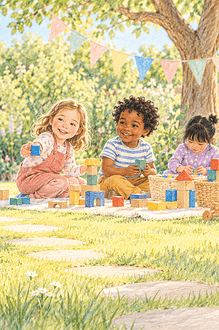
The new child is standing near the game. Your child notices, but does not know what to say. “Go and be friendly” may feel like a surprisingly large job.
A small, specific invitation can be easier. It gives the newcomer a way in without requiring either child to become instantly confident.
1. Practise an invitation your child can use
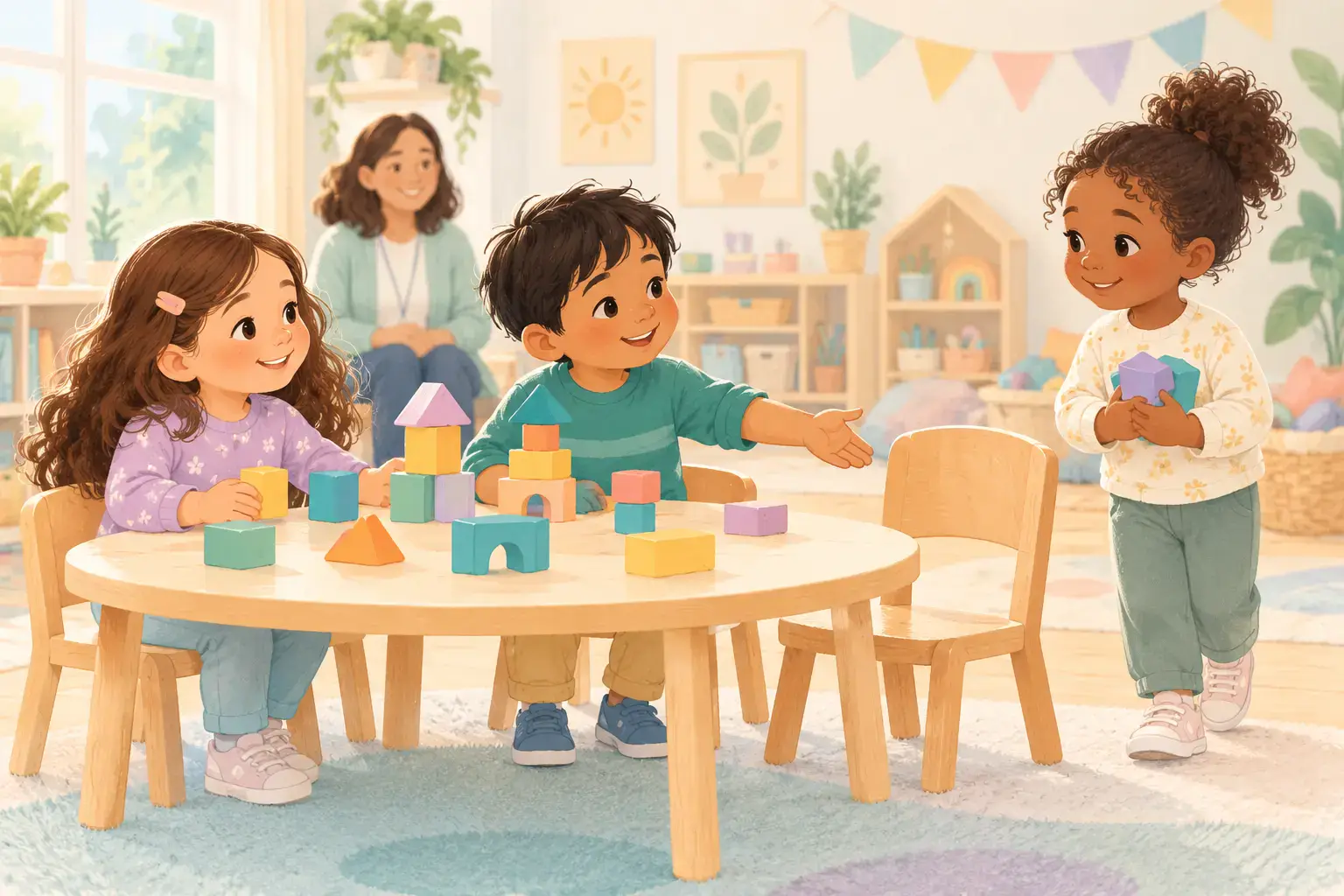
Try: “Would you like a turn?” “You can sit here,” or “We’re making a road. Want to add a piece?” Let your child choose words that sound like them.
Showing an empty space or offering a large block can also communicate welcome. A child does not need a polished introduction to make room for someone.
2. Explain the game without testing the newcomer
“The blue pieces are the river” gives useful information. “Don’t you know how this works?” puts someone on the spot.
If the game has complicated rules, suggest a simple starting role that still has real choice. The newcomer should not always have to be the baby, the customer who never speaks or the person who tidies up.
3. Make watching an acceptable first step
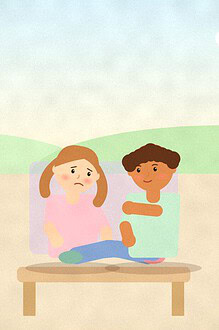
Some children want time to observe before joining. An invitation is an offer, not a demand. Teach your child to accept “not yet” and carry on without teasing or repeated pressure.
Your child can be welcoming and still return to their own play. They do not have to entertain one person for the whole day.
4. Notice practical barriers
- Is there a reachable place to sit or play?
- Can someone join without speaking the same language fluently?
- Are the rules explained through a demonstration?
- Is the group too crowded or loud for this game to work?
NAEYC’s inclusive-classroom guidance highlights warm welcomes and materials that reflect different identities. At home or in a playgroup, a small change to the setup can make an invitation easier to accept.
5. Ask an adult for help with repeated exclusion
If a child is consistently left out, mocked or targeted, the solution needs adult attention. Your child can tell a teacher what they saw and offer safe company. They are not responsible for fixing the group dynamic alone.
AAP kindness guidance encourages small ways to help a new student feel welcome. You can begin with one action rather than asking your child to become everybody’s best friend.
Afterwards, ask how it felt rather than whether the newcomer thanked them. A welcome matters because it opens a door, even when the person takes a little time to walk through it.
Try next
- Kindness that fits a Tuesday: small family habits that matter
- Different ways to play, the same right to belong