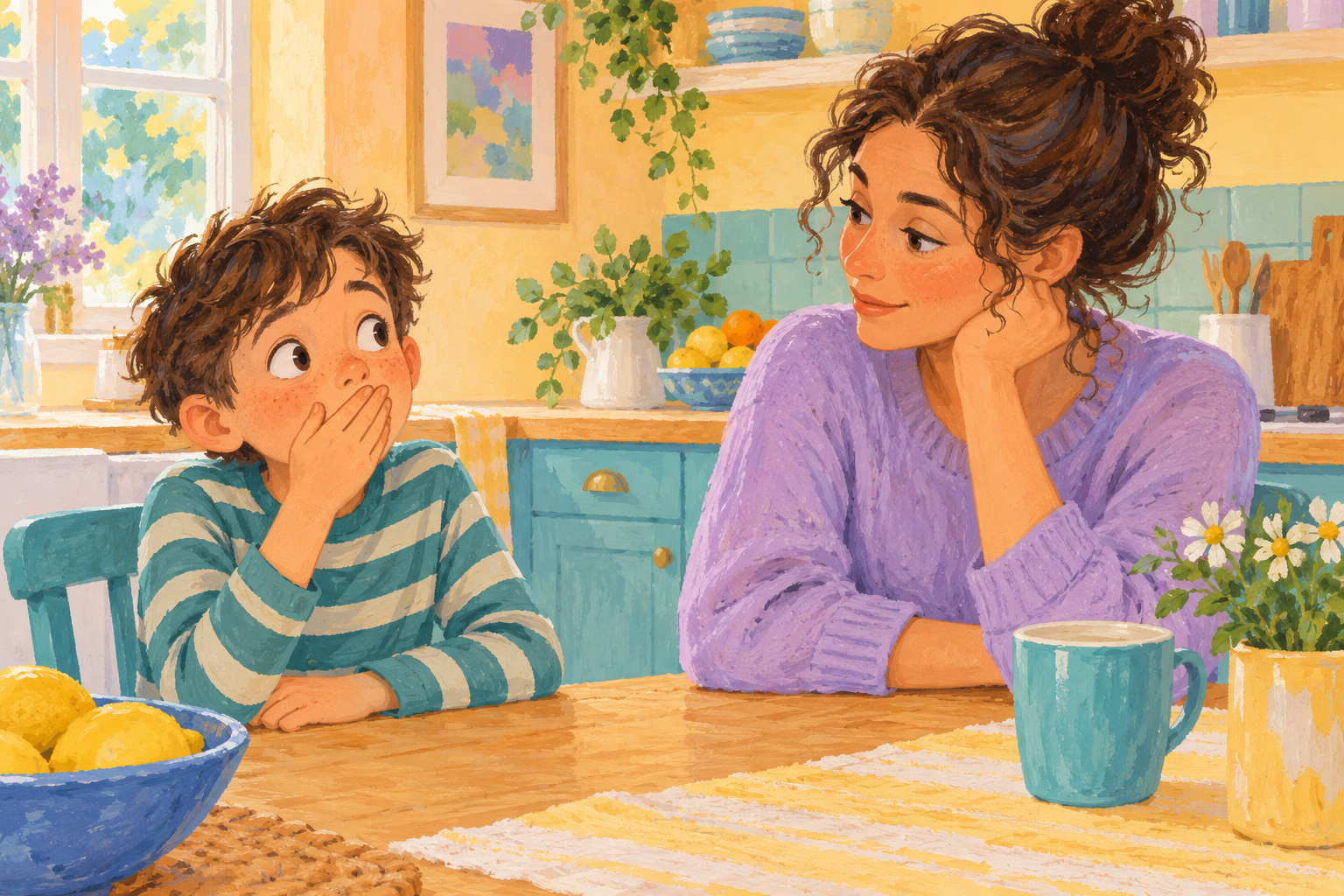
A new word can arrive from the playground, a video, an older sibling or an adult who forgot children were listening. Your child says it at dinner and then watches every face. The size of the reaction can decide whether the word disappears or becomes tomorrow’s encore.
First, work out what happened
A preschooler may be copying a sound without knowing its meaning. A school-age child may be testing a rule, trying to impress friends or releasing frustration. A teen may use language that is ordinary among peers but unacceptable when aimed at another person. The response should fit the purpose.
For a one-off copied word, stay neutral: “That is a word we do not use in our family. You can say ‘I’m really annoyed’ instead.” If your child asks what it means, give a short, factual answer suited to their age. Mystery can make a word more interesting.
Make the boundary specific
“No bad words” is hard to apply because families, languages and communities differ. A clearer rule is: “We do not use words to humiliate, threaten or target someone’s body, identity or family.” You might allow a frustrated “That stinks” while drawing a firm line at insulting a person.
If the language is directed at you, avoid debating the insult. Say, “You can be angry. You may not call me names. Try again, or we will pause and talk when you are ready.” This keeps the emotional message separate from the harmful behaviour, much like the approach in when a child says “I hate you”.
Do not accidentally turn it into a performance
- Avoid laughing if you do not want the word repeated.
- Skip a long lecture in front of siblings or friends.
- Do not ask the child to repeat the word for another adult.
- Notice the replacement: “You were furious and you told me without insulting anyone.”
If a child keeps swearing to get a reaction, respond briefly and consistently, then shift attention to acceptable language. If the word hurt someone, include repair: a sincere apology, checking on the person and trying the sentence again. Our guide to apology and repair can help.
Offer words that actually match the feeling
Children are more likely to use replacements that have energy. Build a family list: “I’m furious,” “That was unfair,” “I need space,” “What a mess,” or a silly invented exclamation. A preschooler may need two choices. Older children can help decide which language is acceptable at home, school and online.
Check the adults and media environment
Children learn language by listening. If adults swear, acknowledge the mixed message and choose a realistic family standard. You can say, “You heard me use that word. I am working on it too.” Review age-inappropriate videos or chats without assuming one exposure explains everything.
Seek help from a teacher, doctor or qualified professional if the language comes with threats, persistent bullying, escalating aggression, severe distress or a sudden change across home and school. Take any credible threat of harm seriously.