
- Find out which part is getting lost
- Give the place setting a dependable starting point
- Describe what is on the plate, then pause
- If your child uses vision, test one visual change
- Try a small change at one ordinary meal
- Carry the useful arrangement to school or a relative’s home
- Know when the issue needs medical attention
- Sources and further reading
By EdCaptain editorial desk · Published
General educational guidance. No qualified clinical review is recorded for this article. Health and safety information.
“It’s right there” gives a child very little help when the food, spoon or cup is difficult to see. You may find yourself moving the plate, pointing again or loading the spoon, even though the child could manage more with clearer information.
For a blind or low-vision child aged 6–12, a predictable place setting and a useful description can make a familiar meal easier to navigate. Start with food they already eat safely and utensils they already use. Locating food is a different task from chewing or swallowing it; difficulties with either deserve the right kind of support.
Find out which part is getting lost
Before buying equipment, notice the moment when help is needed. Can your child find the plate but not a pale food on it? Does the cup move halfway through dinner? Are several adults giving different directions? Ask the child what would help, using their usual communication method.
You might say, “Would you like me to describe the plate, help you find the spoon, or leave things as they are?” A child can accept one kind of assistance and refuse another. Avoid interpreting an uneaten portion as dislike or refusal before checking whether they know it is there.
Use this as an access check, not an eating test. Keep any existing advice about food texture, seating, utensils or swallowing in place. If your child needs a new feeding technique or physical support, ask their clinical team rather than experimenting from a general article.
Give the place setting a dependable starting point
Agree where the plate, cutlery and drink will be. Describe the arrangement from the child’s position: “Your spoon is beside the plate on your right. Your cup is beyond it.” Check that these words are meaningful to them; a familiar alternative may work better.
Use a stable surface and keep the items comfortably within reach. APH FamilyConnect identifies nonslip mats, suitable tableware and individual equipment advice as possible supports. Ask the child’s occupational therapist or vision specialist when a plate rim, grip or other adaptation might help. A new product is not automatically necessary.
Tell the child before moving or replacing anything. If you refill the cup or bring another dish, explain where it has gone. Keep hot serving dishes, sharp tools and crowded shared platters out of the practice area. An adult still checks that food is prepared safely for this child, is an appropriate temperature and meets their allergy or other care requirements.
Describe what is on the plate, then pause
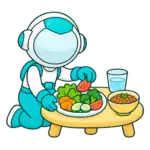
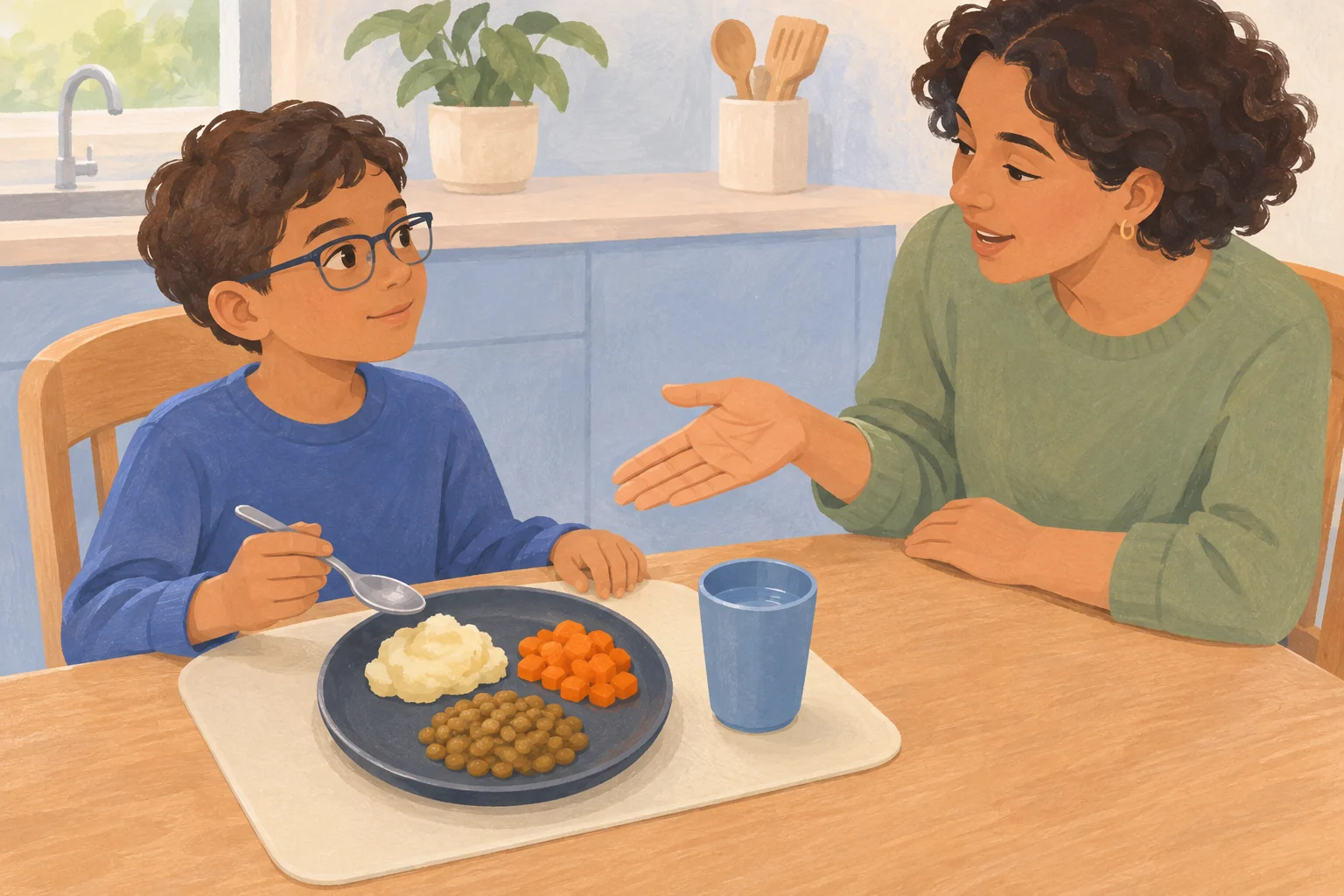
Name the foods and their locations before the child begins. A short description is usually more usable than commentary through every mouthful. For example: “The mashed potato is nearest you. The carrots are on the left. The lentils are on the right.” Use the actual arrangement, not a script you repeat when the plate has changed.
RNIB describes clock-face directions as one way to explain food positions. If the child understands the method, imagine the plate as a clock: twelve is farthest away and six nearest them. “The carrots are at nine o’clock” identifies the left side from the child’s seated position. Check the child’s understanding away from a busy meal rather than assuming that knowing numbers means knowing a clock face.
Near, far, left, right or familiar sections may be better. Choose the language together. If the plate turns or food moves, update the description. Do not rotate it silently and expect the previous directions to keep working.
If your child uses vision, test one visual change
Consider whether the food stands out from the plate and the plate from the table. APH gives the example of pale food being easier to distinguish against a darker dish. Patterned crockery or a busy tablecloth may make the meal harder to identify.
For a child with cerebral or cortical visual impairment (CVI), access may depend on more than contrast. Perkins’ mealtime guidance emphasises individual assessment, visual simplicity, familiarity and lighting matched to the child. Brighter is not always better, and one preferred colour does not suit everyone.
Try one agreed change using things already available: a plain mat, a familiar plate or a different seat that reduces glare. Ask whether it helped. Do not cover the child’s eyes to simulate blindness, or remove useful vision to make them practise without it.
Try a small change at one ordinary meal
Use a familiar safe meal, the usual plate and utensils, and the chosen mat if needed. There is no need for extra food, timed challenges or rewards for finishing.
- Agree one aim. “Let’s check whether knowing where the cup is helps.” The child can choose a different aim or decline.
- Describe the setup. Give the short location information and allow time to find what is needed. Ask before touching the child or their belongings.
- Wait and respond. Help when requested, or when safety requires it. Offer a description before taking over a task the child wants to do.
- Review afterwards. Ask, “Was anything still hard to find?” Keep the change that helped and drop one that did not.
If the meal is tiring, keep the familiar support. APH’s guidance recognises partial participation: adults can do some parts while the child does others. A meal does not have to become a lesson from start to finish.
Carry the useful arrangement to school or a relative’s home
For ages 6–9, an adult can share one clear request: “Please describe the plate and tell her before moving the cup.” Use the same familiar location words where possible.
For ages 10–12, invite the child to choose what staff or relatives need to know. A brief note might say, “Tell me what is on the plate. I use near and far, not clock numbers. Please ask before helping with my spoon.” Speech, accessible text, braille or AAC can carry the message.
At school, agree who provides descriptions and practical help without routinely separating the child from friends. RNIB stresses balancing assistance with participation. Our school-access planning guide can help record the arrangement, and our guide to requesting the right help offers further language.
Know when the issue needs medical attention
Seek urgent medical advice if your child has difficulty swallowing, coughs or chokes with food or drink, develops a wet or gurgly voice afterwards, or is short of breath after eating. NHS guidance identifies these as reasons for prompt assessment. Do not try to solve them by changing the plate layout, thickening drinks or altering food textures yourself.
If your child is choking with an ineffective cough, cannot breathe properly or becomes unconscious, get emergency help immediately and follow appropriate child first-aid guidance. The NHS child-choking guidance explains the response. Contact your local emergency service in an emergency.
Clearer access should help the child know what is available and choose what to do. It should never become pressure to clear the plate or prove independence.