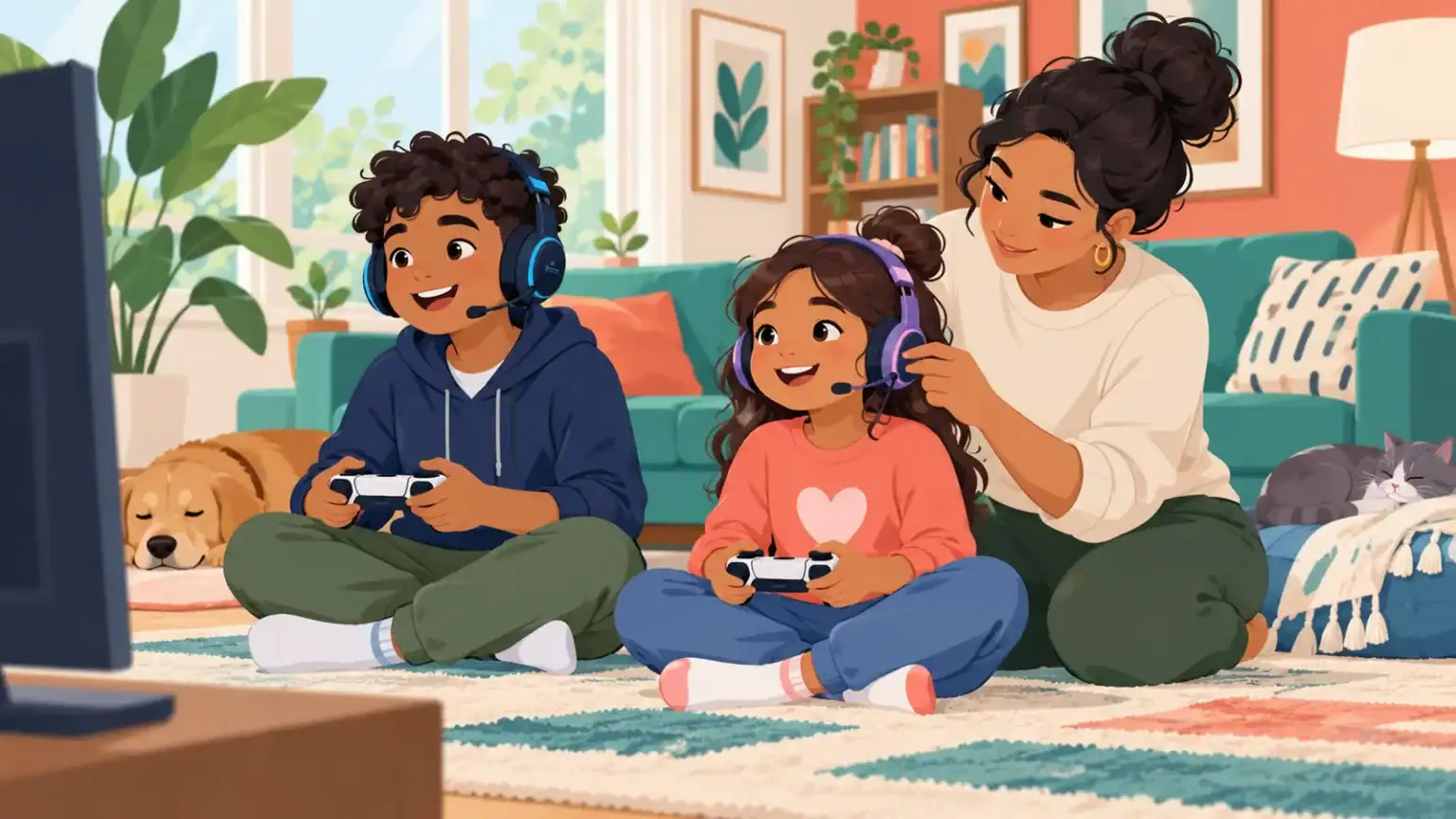
Multiplayer games can be creative and social, but the chat box, headset and friend list can connect a child with people the family does not know. The safest agreement is specific about communication features, not simply “be careful online.”
The goal is to keep help-seeking easy. A child who fears losing every game or device may hide an uncomfortable message. Pair technical controls with a clear promise that telling an adult will not be punished.
Start with a calm conversation
Open the actual game together. Find the friend list, public chat, private messages, voice chat, reporting and blocking controls. Decide which features fit this child and this game rather than assuming one rule works everywhere.
Put these points in the agreement
- Approved contacts: Define whether play and chat are limited to people known offline, parent-approved contacts or supervised public spaces.
- Chat modes: Name whether text, voice, video, private messages, live streaming and “whispers” are on or off.
- Personal information: No school, address, schedule, live location, passwords or private family details are shared.
- Gifts and trades: Unexpected valuable gifts, requests for money or pressure to trade are brought to an adult.
- Stay on the platform: A player asking to move to a private app, encrypted chat or video call triggers a pause and adult check.
- Stop, block, save, tell: The child can leave, block, save evidence when safe, and tell a trusted adult.
- No retaliation: The family will solve the safety problem first; consequences for an unrelated rule can wait.
Words you can use
“If anyone asks for private information, secrecy, pictures, money or a move to another app, stop the chat and come to me. You will not be in trouble for telling me.”
Practise where the block and report buttons are before a problem occurs. If voice chat makes it hard to notice warning signs, turn it off or use it only with known friends.
Adapt it as children grow
Ages 6–9 need close adult supervision and very limited contact features. Ages 10–12 can help review friend requests and practise short exit lines. Teenagers need increasing autonomy alongside clear boundaries about sexual requests, threats, money, location and in-person meetings.
When the agreement is missed
If a child accepts a stranger or shares information, stay calm, secure the account, review what was revealed and block or report as needed. Shame makes the next disclosure less likely. Change the setting that failed rather than relying on another warning.
Threats, grooming, sexual requests, extortion or plans to meet require prompt adult action and appropriate local reporting. Preserve evidence without repeatedly viewing or sharing harmful material.
Review the system, not just the child
Review after a new game, new headset or change in age rating. Let the child show you the game culture; harmful behaviour varies across communities and updates.
Use this with the family screen agreement, the in-app purchase agreement and EdCaptain’s guide to switching off games without a battle.
Run a five-minute game safety tour
Before the first session, have the child show you how a stranger could contact them and how they would leave. Check whether the game automatically enables proximity chat, cross-platform play or friend suggestions. Review the display name and avatar for identifying information, then test blocking from a harmless family account. A written rule is much easier to use after the buttons have been rehearsed.
Agree on one short exit line, such as “I only chat here with people I know,” but make clear that the child never owes an unsafe player an explanation. Leaving silently is allowed. When friends known offline are playing, the same rules about insults, exclusion and forwarding clips still apply.
Separate play problems from safety problems
A quarrel about teams or losing may need coaching and a break. Repeated harassment, sexual language, requests for images, threats or pressure for secrecy need adult safety action. Ask what happened without grabbing the headset mid-sentence, unless there is immediate danger. Then tell the child what you plan to report and what information the platform may receive. This keeps the adult response predictable and preserves trust.