Video calls can keep children close to relatives and friends, but being on camera can also feel tiring, exposing or compulsory. A good agreement protects privacy and makes ending the call as normal as beginning it.
Connection is not measured by how long a child performs on screen. Young children may wave and leave; older children may prefer audio, messages or a planned activity.
Start with a calm conversation
Review who may call, which account is used and what the camera reveals. Test mute, camera-off, background blur, block and end-call controls together.
Put these points in the agreement
- Trusted contacts: Calls happen only with agreed people and through approved accounts.
- Invitation: The child may decline, join later or choose audio without being guilted.
- Background: Keep addresses, school information, family documents and private household activity out of view.
- Adult proximity: Agree when an adult stays nearby, within earshot or simply available.
- No recording: Nobody records, screenshots or posts the call without clear permission.
- Private requests: A request to move rooms, remove clothing, keep secrets or hide the call ends it immediately.
- Ending: Use an agreed phrase, gesture or button; the adult handles relatives who feel disappointed.
Words you can use
“You can say hello, keep the camera off, take a break or end the call. If anyone asks for secrecy, private pictures or something uncomfortable, leave and tell me.”
Prepare a short shared activity—showing a drawing, reading a page or looking at an object—rather than requiring open-ended conversation.
Adapt it as children grow
Ages 3–5 need an adult close and brief flexible calls. Ages 6–9 can choose an activity and practise ending. Ages 10–12 can manage known contacts with periodic support. Teenagers need more privacy but the same clear route for unsafe requests.
When the agreement is missed
If someone records or posts without permission, request removal, preserve evidence if necessary and adjust future access. Do not blame the child for trusting a known person.
Unknown callers, sexual requests, coercion or threats require blocking and appropriate local reporting. Avoid showing private documents, addresses or real-time travel plans.
Review the system, not just the child
Revisit before a new platform, device or unsupervised call. A relative’s expectations do not override the child’s safety or comfort.
For broader privacy, see the photo-sharing agreement, the long-distance grandparents guide and the family screen agreement.
Prepare the space, not a performance
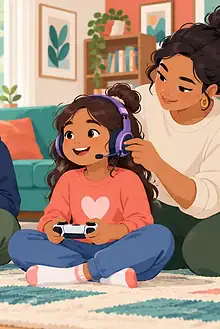
Place the device where the child can leave without climbing over furniture, and preview the camera frame. Headphones may improve clarity but can prevent a nearby adult from hearing a concern, so match them to the child’s age and the trusted contact. Disable automatic answering and review who can add participants.
For a planned family call, agree on a start window and a modest duration. Give the child a concrete role—showing a model, choosing a song to discuss or asking one prepared question—then allow them to return to play. A visual timer or “two more minutes” cue can make the ending predictable without forcing eye contact or conversation.
Respect different communication needs
A child may wave, type, use signs, AAC, captions or keep the camera off. Relatives should address the child without demanding a response. If language or hearing differences make the call tiring, shorten it or send recorded greetings only with consent and safe storage.
Choose a family exit signal that does not require explaining discomfort in front of the caller. The supporting adult can say, “We’re finishing now; we’ll arrange another time.” Afterwards, ask one neutral question—“How did that call feel?”—and accept a brief answer. Repeated reluctance toward a particular person deserves calm attention rather than pressure.